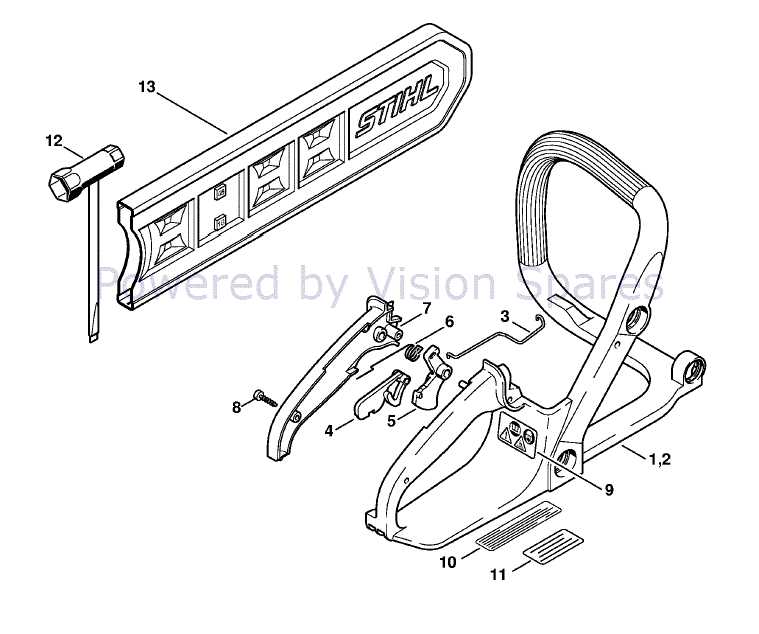
To maintain the proper functioning of your chainsaw, it’s crucial to be able to identify the main elements that make up the assembly. Start by reviewing the fuel system, which includes the carburetor, fuel lines, and air filter. Proper maintenance of these components ensures the engine runs smoothly and reliably.
The ignition system is equally important. Pay attention to the spark plug and coil. A malfunctioning spark plug can cause issues with starting and performance, so it’s a good practice to check for wear or carbon buildup regularly.
Next, check the mechanical elements such as the clutch, drive sprocket, and guide bar. These parts work together to ensure proper chain movement and cutting performance. Regular lubrication of the bar and chain is necessary to avoid overheating and wear, which can reduce efficiency.
Understanding these key elements will help you identify any issues and address them promptly, keeping your chainsaw in optimal working condition. Be sure to refer to your model’s specific manual to find part numbers and layouts for accurate maintenance.
MS Chainsaw Component Breakdown Guide
To effectively maintain your chainsaw, begin by understanding the key components. The engine housing is where everything starts–ensure that the air filter and carburetor are cleaned and properly aligned to avoid power loss. These parts are responsible for the air-fuel mixture, directly affecting performance and efficiency.
The starter assembly should be checked for wear, including the recoil starter and cord. A worn-out starter can lead to difficulty starting the machine, causing unnecessary frustration. Always inspect the ignition coil and spark plug to confirm the spark is strong and consistent. A weak spark could cause the engine to sputter or fail to start.
The drive mechanism includes the clutch and sprocket system. These elements work together to transfer power to the chain. If you notice difficulty in chain movement, check for wear and lubrication levels. Don’t forget to check the chain brake assembly, which ensures safety during operation by halting the chain’s movement when needed.
The guide bar and chain must be lubricated regularly to minimize friction and prevent overheating. Always inspect the bar for any signs of wear or damage, as a damaged bar can cause the chain to move erratically. Regular maintenance of these components will ensure a smooth and efficient cutting experience every time.
Identifying and Understanding Key Components of the MS Chainsaw
Start by inspecting the engine assembly, which includes the engine housing and vital components such as the air filter and carburetor. These elements manage the airflow and fuel, directly affecting power and efficiency. Keep these parts clean and properly aligned to prevent engine performance issues.
Check the starter system, which includes the recoil starter and the cord. Over time, the cord may stretch or wear out, leading to difficulty starting. Regularly inspect this assembly for proper function to avoid potential startup problems.
The ignition system is another critical area. Ensure that the spark plug is functioning properly by checking the condition and cleanliness of the plug. A weak or dirty spark plug can cause misfires and performance drops, so replace it if necessary.
Inspect the clutch and sprocket assembly, which are crucial for power transmission to the chain. If you experience sluggish chain movement or difficulty cutting, check these parts for wear and tear. Regular lubrication is key to maintaining smooth operation.
The guide bar and chain should be lubricated regularly to reduce friction and prevent overheating. Inspect the bar for signs of damage or wear, as any damage here will affect chain movement. Additionally, always ensure the chain tension is properly adjusted.
Lastly, don’t overlook the safety features such as the chain brake. Test its responsiveness to make sure it will engage when needed. A malfunctioning brake system could lead to dangerous situations during use.
How to Replace and Maintain Components Using the MS Chainsaw Parts Layout
To replace a worn or broken component, start by identifying the exact part using the layout, ensuring compatibility. For example, if the chain is damaged, locate the bar and chain assembly and ensure the size matches the replacement. Carefully remove the existing chain by loosening the tensioner, and then install the new one, adjusting the tension appropriately.
Next, inspect the air filter. If it’s clogged, remove it by detaching the cover and cleaning or replacing it as needed. A clean air filter ensures optimal engine performance and prevents debris from entering the engine.
If you need to replace the spark plug, refer to the ignition system in the layout. Use a spark plug wrench to remove the old plug and install a new one with the correct gap measurement. Ensure the new spark plug is properly tightened to avoid air or fuel leaks.
For the fuel system, check the fuel filter and fuel lines. If fuel flow seems restricted, remove the filter and inspect for any blockages. Replace the filter regularly to maintain proper fuel flow and engine function.
Examine the starter assembly, especially the recoil spring and rope. If the starter rope is frayed or the recoil spring is malfunctioning, use the parts guide to disassemble the unit, replace the faulty part, and reassemble the starter system to restore smooth operation.
Lastly, check the clutch and sprocket regularly for signs of wear. If the chain is not moving properly or you hear unusual noises, refer to the clutch assembly in the layout. Replace any worn components to ensure proper power transmission to the chain.