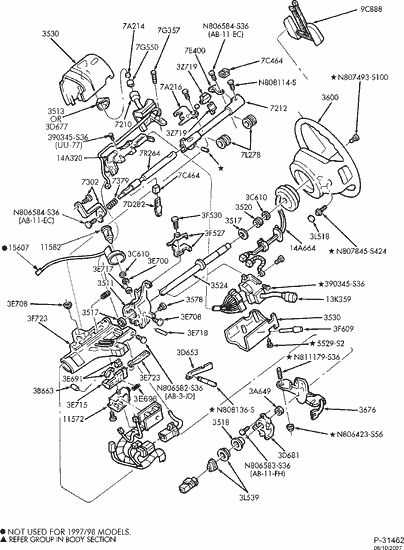
To perform accurate repairs or maintenance on the vehicle’s front assembly, it’s important to familiarize yourself with the individual components that make up this critical section. Start by identifying major pieces such as the suspension arms, steering mechanisms, and frame sections. Having a clear understanding of each part’s role will allow for faster diagnostics and precise adjustments when needed.
Inspecting and replacing specific elements, like the shocks, struts, or sway bars, requires careful attention. The layout of these elements is vital for alignment and overall vehicle stability. A detailed guide to each part’s positioning can significantly aid in reducing errors during repairs.
Next, refer to accurate reference materials for diagrams showing the precise locations of these components. With a breakdown of the vehicle’s structural layout, performing maintenance tasks becomes a more straightforward process. Take note of wear and tear signs in high-stress areas like the shock absorbers or control arms to prevent further damage.
Key Components of the Vehicle’s Front Assembly and Their Functions
The suspension arms are a fundamental part of the vehicle’s front setup. They connect the chassis to the wheel assembly and allow for smooth movement while absorbing shocks from road imperfections. The lower control arm, in particular, ensures proper wheel alignment and maintains stability during turns and stops.
Steering components such as the steering rack and tie rods facilitate precise handling. The rack converts the rotational motion from the steering wheel into lateral motion, moving the wheels in the desired direction. The tie rods connect the steering rack to the wheels, transmitting the force needed for turning.
The shock absorbers, placed in the front assembly, work alongside the springs to dampen the impact of bumps and irregularities on the road. They prevent excessive movement and bouncing, ensuring a smooth driving experience. It’s important to check these regularly for wear, as faulty shocks can lead to poor handling.
The sway bar, also known as the stabilizer bar, helps minimize body roll during cornering by linking the left and right sides of the suspension system. It reduces the chances of the vehicle tipping or swaying excessively, improving overall stability.
Finally, the frame sections, such as the crossmembers and subframe, provide structural integrity and support for the front end components. They also help distribute forces evenly throughout the vehicle, especially during collisions or high-stress situations, keeping the vehicle’s structural integrity intact.
How to Identify Common Front Suspension Components
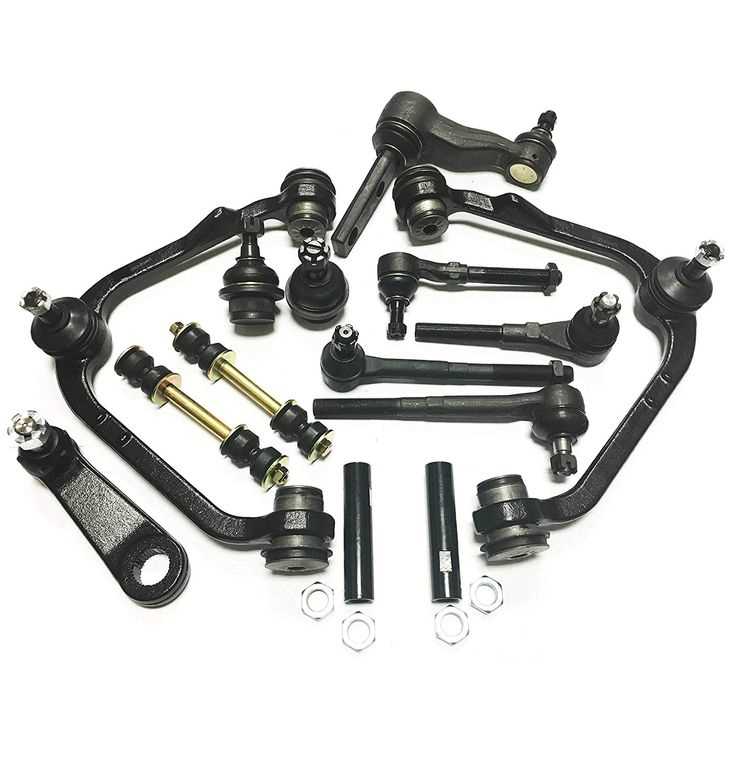
Start by locating the control arms, which are easy to spot as they connect the wheel assembly to the vehicle’s main frame. These components are often L-shaped or triangular, depending on the design. Look for any noticeable wear or cracks along their length, as they are prone to stress.
The steering rack is typically placed between the wheels and the vehicle’s center, running parallel to the engine. It’s a long, cylindrical metal part with tie rods connected to it on both ends. Check for leaks around the seals or noticeable steering play, which could indicate a malfunction.
Next, identify the shock absorbers, which are mounted near the wheels and usually have a coil spring wrapped around them. If your vehicle bounces excessively after hitting bumps, it’s a sign that the shock absorbers might need attention. Look for any oil leakage or dents on the metal casing, which are signs of wear.
The sway bar is located across the vehicle, connecting the left and right suspension. It’s a metal rod that runs horizontally, often visible near the undercarriage. If the vehicle feels unstable while cornering, a broken or loose sway bar could be the cause.
Lastly, check the subframe and crossmembers. These are large, sturdy components that hold the suspension and steering assembly in place. Inspect these parts for any signs of rust or bending, especially if the vehicle has been in an accident or regularly driven over rough terrain.
Step-by-Step Guide to Replacing Front Suspension Components
Begin by lifting the vehicle with a hydraulic jack and securing it with jack stands. Ensure the vehicle is stable before proceeding. Remove the wheel and inspect the area to identify the components you need to replace.
Next, disconnect the sway bar links by using a wrench to loosen the bolts. These links connect the suspension to the sway bar, and removing them will provide more room to work on other parts.
Loosen the bolts on the control arms, which connect the wheel assembly to the vehicle’s frame. Use a socket wrench to remove the nuts and bolts, then carefully detach the control arm from its mounting points. Inspect the bushings for wear while removing the part.
Next, remove the shock absorber by unbolting the top and bottom mounts. If your vehicle has coil springs, take extra caution when removing the shock absorber to avoid injury, as the spring can be under pressure.
After the shock absorber is removed, locate the steering rack. You may need to remove other components that block access to the rack, such as the lower control arms. Once clear, unbolt the steering rack from its mounts and disconnect the tie rods, which link the rack to the wheels.
Finally, install the new components in the reverse order. Tighten all bolts securely and ensure that each part is properly aligned. Before reattaching the wheel, check all suspension connections for tightness and safety. Test the vehicle by driving at low speed to ensure everything functions correctly.