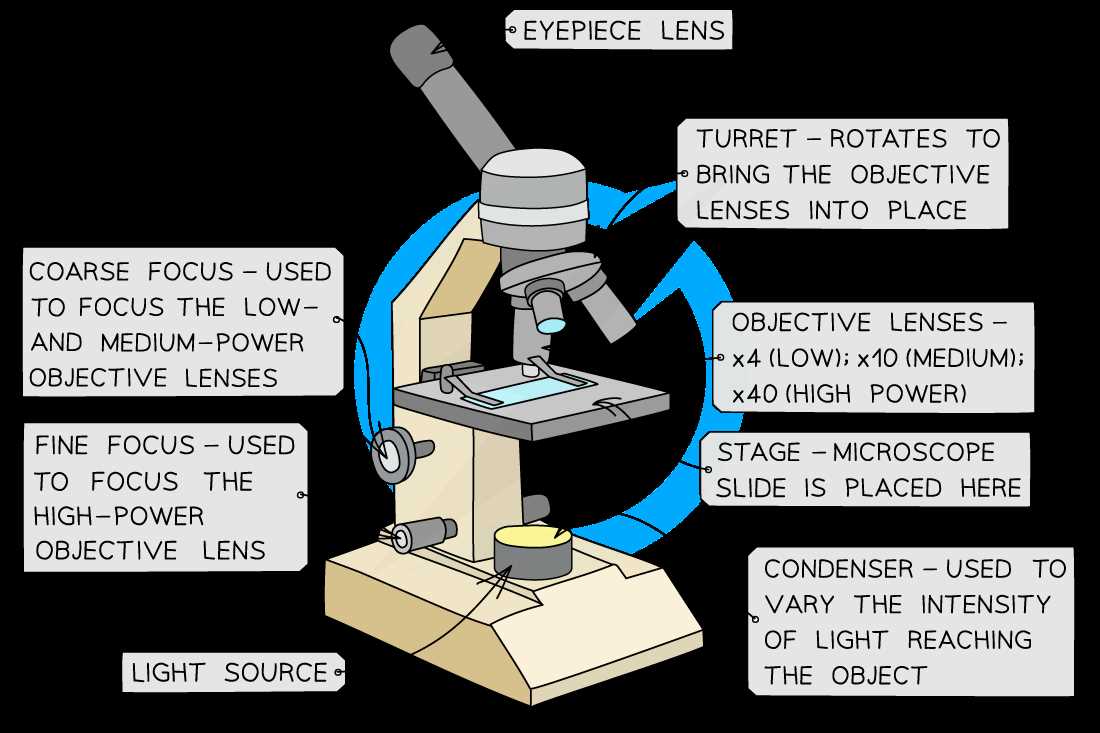
The base of any optical tool serves as the foundation for all other components. Start by identifying the main structure that supports the entire system. Ensure that the frame is secure and free of any damage. The base typically includes the stage and mechanical components that allow for precise adjustments.
Next, turn your attention to the lenses. These are crucial for magnification and focus. Ensure that the objective lenses and eyepieces are correctly aligned and securely attached. If any lenses appear scratched or dirty, clean them gently with appropriate tools. Always handle lenses with care to avoid damaging their surface.
Assembling these components requires patience and precision. Each part should be placed in its designated location, and every screw or fastener should be tightened to ensure stability. Carefully check for any misalignments, as these can affect both functionality and clarity. Make sure the illumination system is functioning and adjust the light source as needed.
Microscope Parts Breakdown and Assembly
Begin the assembly process by organizing the main frame. Ensure it is securely positioned and stable, as it will support all other components. Verify that the stage and arm are properly aligned and free from any obstruction.
Next, focus on the lens system. The objective lenses and eyepieces should be checked for cleanliness and clarity. Place the eyepiece into its designated slot, ensuring it is tightly secured. For the objective lenses, carefully thread them into their respective mounts, ensuring they are locked in place.
- Base: Verify that the support arm is firmly attached to the base. This component holds the structure in place and allows adjustments for height and movement.
- Stage: Secure the stage where slides are placed. Make sure it moves smoothly and is properly mounted on the arm.
- Illumination System: Check the light source and adjust the intensity. Ensure that it is positioned correctly to provide proper lighting through the lenses.
Once the core components are assembled, move on to securing the remaining elements, including the focus knobs, condenser, and the mirror or light source. Double-check that all parts are fixed correctly and aligned for optimal performance.
Finally, test the tool by observing different objects at various magnifications. Make sure that everything functions smoothly, and that the image is clear and sharp. Perform adjustments as necessary to fine-tune the setup.
Understanding the Structure and Function of a Microscope’s Base
The base is the foundational support for the entire instrument. It provides stability and ensures that all other components remain in proper alignment during use. Typically made from metal or sturdy plastic, the base must be heavy enough to prevent any wobbling or movement during observations.
When setting up the instrument, place it on a flat, stable surface. The base usually includes features like an arm for supporting the structure, and in some cases, it also houses the light source for illumination. Ensure that the base is level to guarantee smooth operation and clear imaging.
The size and weight of the base determine how easy the instrument is to transport and adjust. For optimal performance, avoid placing additional weight on the base, as this may disrupt the balance and lead to inaccurate readings or poor-quality images.
Lastly, some bases come with built-in adjustments for fine-tuning the height and tilt of the stage. These mechanisms allow for precise positioning of the specimen for enhanced viewing clarity. Regular maintenance of the base’s adjustable parts ensures longevity and smooth operation.
How to Identify and Replace the Lens and Optical Components
Start by carefully examining the lens for any visible cracks, scratches, or signs of dirt. If the lens is damaged or the image is blurry, it’s time for a replacement. To remove the lens, gently unscrew it from the rotating nosepiece or holder, ensuring no force is applied that might damage the internal threads.
Before replacing the lens, clean both the objective lens and the eyepiece using a lens cleaning solution and a soft, lint-free cloth. Be cautious not to use abrasive materials that could cause further damage.
When selecting a new lens, make sure it is compatible with the optical system. Check the magnification, focal length, and size of the lens to ensure proper fit. For example, high-powered objective lenses should be replaced with lenses of similar magnification and design.
Once the new lens is in place, test the setup by adjusting the focus and ensuring clear imaging. If the alignment is off or the image is distorted, check that the lens is securely mounted and properly aligned with the optical axis.
Step-by-Step Guide to Assembling the Microscope Components
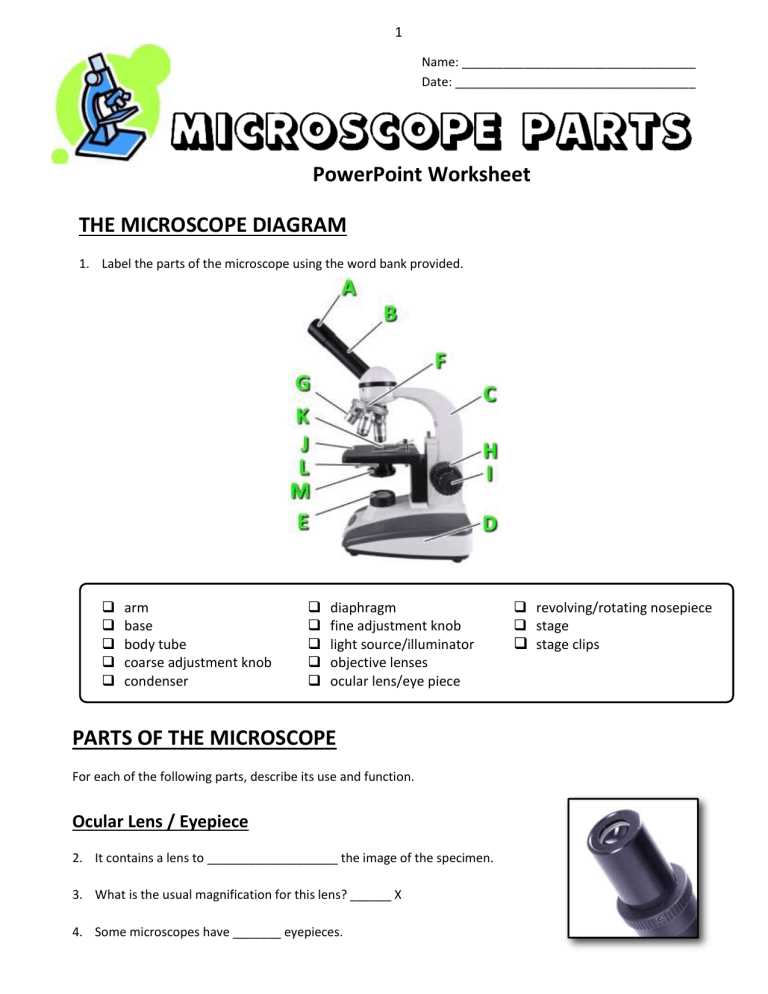
Begin by placing the base on a flat, stable surface. Ensure the power switch and light source are easily accessible for future adjustments. Attach the arm to the base using the provided screws, ensuring the arm is secure and positioned at a right angle.
Next, install the stage by aligning it with the mounting platform on the arm. Secure it tightly using the screws provided. This part will hold your slides, so it must be firmly attached.
After that, mount the focusing mechanism onto the arm. It should align smoothly with the stage and be positioned in a way that allows for easy adjustments of both coarse and fine focus knobs.
Now, proceed to attach the optical components. Start by carefully screwing the eyepiece into the top of the arm, making sure it is securely fastened. Follow this by mounting the objective lenses to the rotating nosepiece, ensuring they are properly aligned with the optical axis.
Finally, check all components for stability. Test the movement of the stage and focus knobs. Adjust the light source and confirm the alignment of the optical system to ensure proper functioning.
| Step | Component | Action |
|---|---|---|
| 1 | Base | Place on flat surface |
| 2 | Arm | Attach securely to base |
| 3 | Stage | Align and secure to arm |
| 4 | Focusing Mechanism | Attach to arm and adjust |
| 5 | Optical Components | Attach eyepiece and objective lenses |
| 6 | Final Check | Ensure stability and proper functioning |