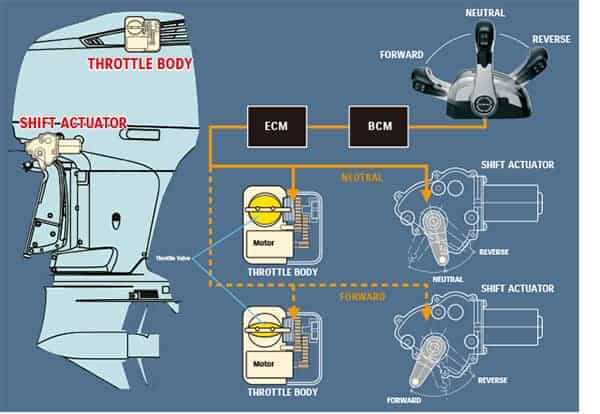
Check the visual layout before ordering or disassembling any marine motor assembly to match serial ranges, shaft length, and cooling type. A clear component map helps confirm bolt patterns, gasket shapes, and fastener sizes tied to specific production years.
Use the illustrated layout to trace fuel delivery from the intake body to the combustion chamber, then follow exhaust routing through the housing. Pay attention to water flow paths around the cylinder block and pump housing to avoid sealing errors during service.
Refer to the labeled layout while inspecting the gearcase and drive shaft stack to verify bearing placement, seal orientation, and spline count. Accurate identification reduces mismatched replacements and supports correct torque values during reassembly.
Engine and System Layout Overview for Marine Power Units
Use the component layout to confirm engine family, displacement, and mounting style before any service work. Matching the visual scheme with the serial tag helps avoid ordering mismatched assemblies and fasteners.
The powerhead section shows cylinder block geometry, crankshaft position, and intake routing. Follow the fuel path from the pump housing through the carburetion or injection body to verify hose diameter, clamp type, and connector angles.
Cooling and exhaust routing are displayed as continuous paths around the block and midsection. Trace water intake through the impeller chamber, then check outlet passages near the thermostat seat to prevent sealing errors during reassembly.
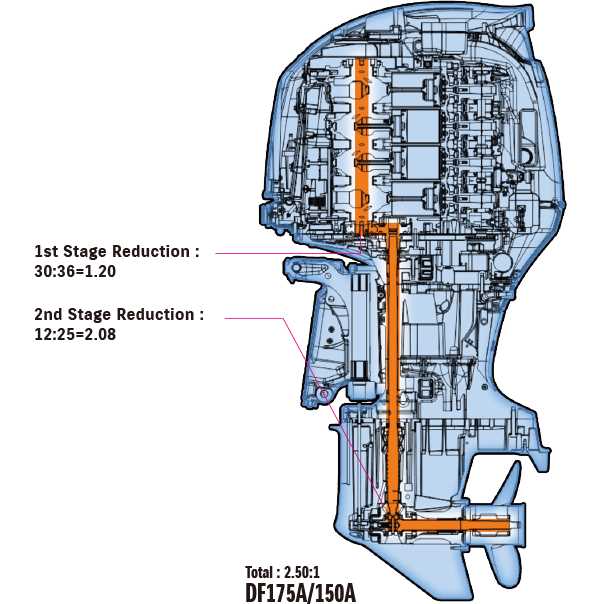
The lower drive area outlines gear stacks, bearing seats, and shaft alignment. Use the layout to confirm spline count, seal orientation, and shim placement before closing the case.
Powerhead Breakdown Showing Pistons Crankshaft and Cylinder Head Layout
Verify piston size and orientation before reinstalling the rotating group. Match crown markings with cylinder numbering to keep compression balanced and avoid skirt contact with the port edges.
- Pistons: check ring groove depth, oil drain holes, and pin offset; replace wrist pins showing bluing or scoring.
- Connecting rods: confirm big-end bearing tang position and torque values; measure side clearance with a feeler gauge.
- Crankshaft: inspect journal taper and fillet radii; confirm thrust washer placement to control axial movement.
Align the cylinder head casting with the block dowels to keep coolant passages unobstructed. Use a straightedge to confirm surface flatness before fastening.
- Head gasket: verify bore diameter and coolant cutouts match the block.
- Fasteners: tighten in a cross pattern using staged torque to prevent distortion.
- Valve train: confirm cam timing marks and lash settings after final torque.
Recheck rotation by hand after assembly to confirm smooth travel across all journals and bores.
Lower Unit Layout Covering Gearcase Driveshaft and Water Pump
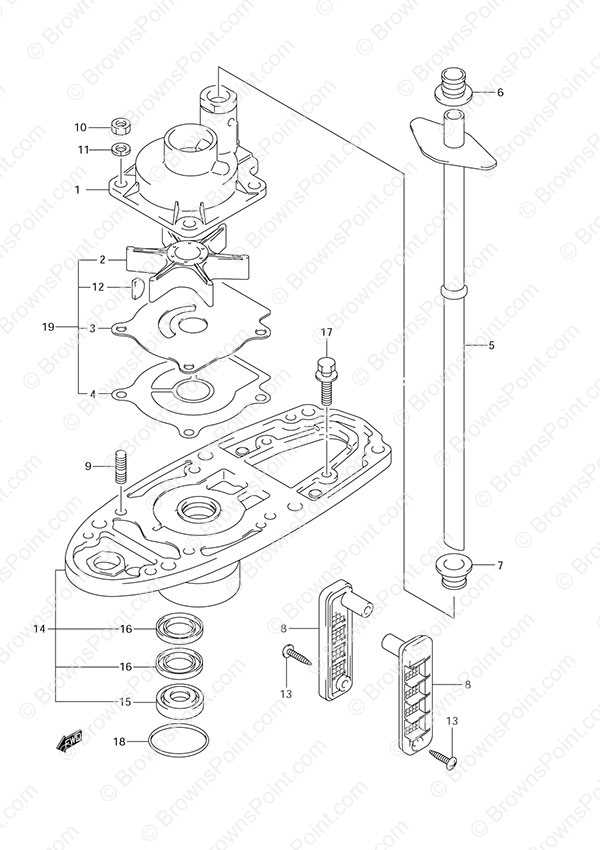
Inspect the gear housing oil for metal sheen before removing the propeller shaft assembly. Any silver residue signals bearing wear and calls for seal replacement before reseating the shafts.
Driveshaft alignment must be checked with the housing split. Measure spline wear and confirm straightness with a dial indicator; runout beyond 0.004 in leads to vibration and seal failure.
Gearcase internals require correct shim selection. Set backlash using manufacturer tolerances, typically 0.006–0.010 in, to prevent tooth chipping under load.
Service the cooling module every season. Install the impeller with vanes pre-bent in rotation direction, lubricate the cup lightly with glycerin, and torque the cover screws evenly to avoid distortion.
Replace the wear plate if scoring exceeds 0.003 in. Confirm the water tube grommet seats fully to prevent air draw that reduces flow at idle.
Pressure-test the assembled housing to 10 psi and vacuum-test to 5 inHg to verify seal integrity before refilling with marine gear oil.
Fuel and Control System Layout with Carburetor Linkages and Throttle Cables
Set the throttle cable free play to 1–2 mm at idle before adjusting any linkage rods. Excess slack delays response, while tension holds the butterfly plate slightly open.
Carburetor link geometry must keep all throttle plates synchronized. Align the cam follower marks at idle, then verify full-open travel reaches the mechanical stop without cable strain.
Fuel delivery path begins at the tank connector, passes through the primer bulb, then feeds the pump and float chambers. Inspect hoses for soft spots and replace lines older than five seasons.
Adjust the idle mixture screw in quarter-turn steps after warm-up. Stable idle speed typically falls between 700 and 900 RPM in neutral, depending on displacement.
Secure control cables with smooth bends only. Minimum bend radius below 200 mm causes internal drag and uneven throttle return.
Confirm choke or enrichment linkage returns fully after release. Partial engagement leads to rich running, plug fouling, and fuel wash on cylinder walls.