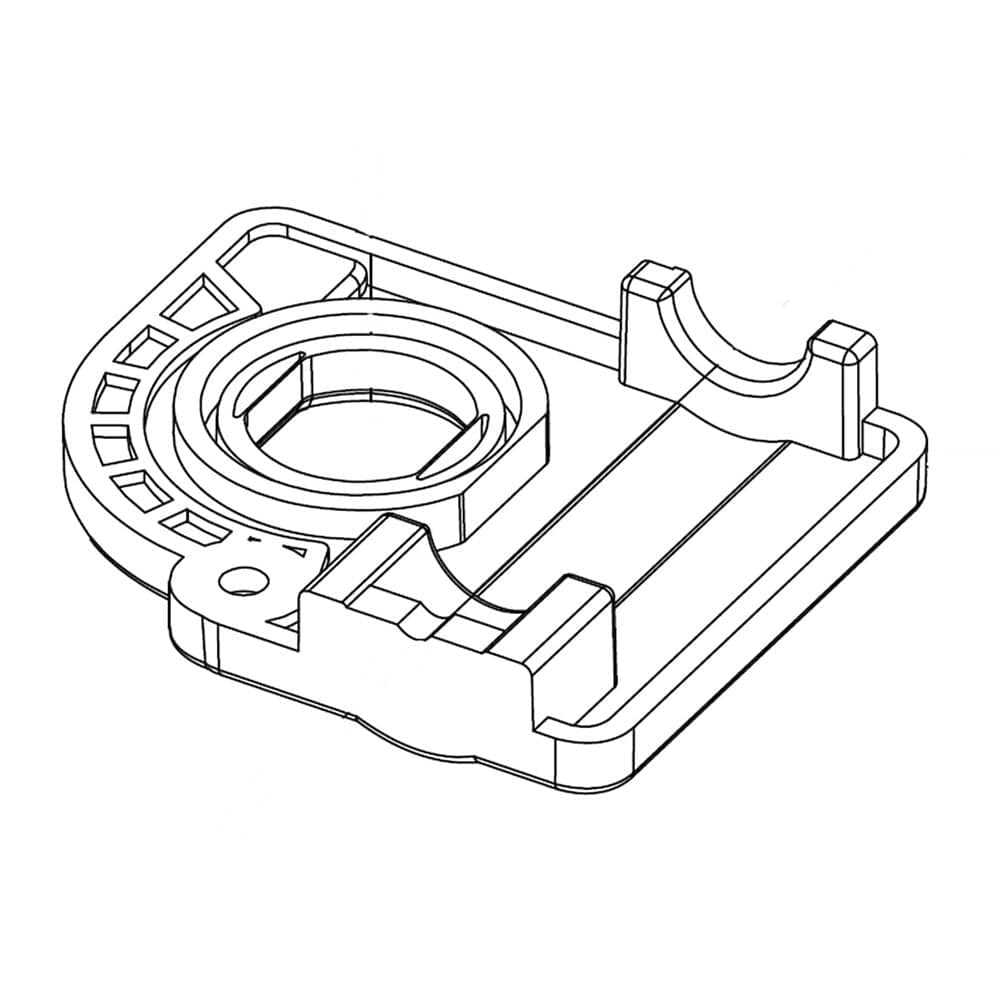
Check the component layout before ordering replacements to match connectors, fasteners, and mounting points precisely; this step reduces return rates and prevents installation delays. Focus first on the circulation pump, heater assembly, and control housing, as these units share wiring paths and bracket geometry that vary by revision.
The internal layout clarifies how the wash motor couples with the sump and how the diverter channels water to the upper and lower spray arms. Use the exploded view to verify seal positions around the filter cup and drain outlet, paying attention to gasket profiles and torque points that affect leak prevention.
Electrical routing details show where the harness clips anchor along the frame and how the control board interfaces with the door latch and user panel. This mapping helps confirm fuse ratings, connector types, and grounding locations before swapping modules.
For routine service, the assembly map highlights quick-access panels for the inlet valve, float switch, and thermal cutout. Cross-reference revision notes to confirm material updates on racks, rollers, and door springs, then source compatible replacements that match the shown geometry and finish.
Service Layout Reference for This Samsung Dishwasher
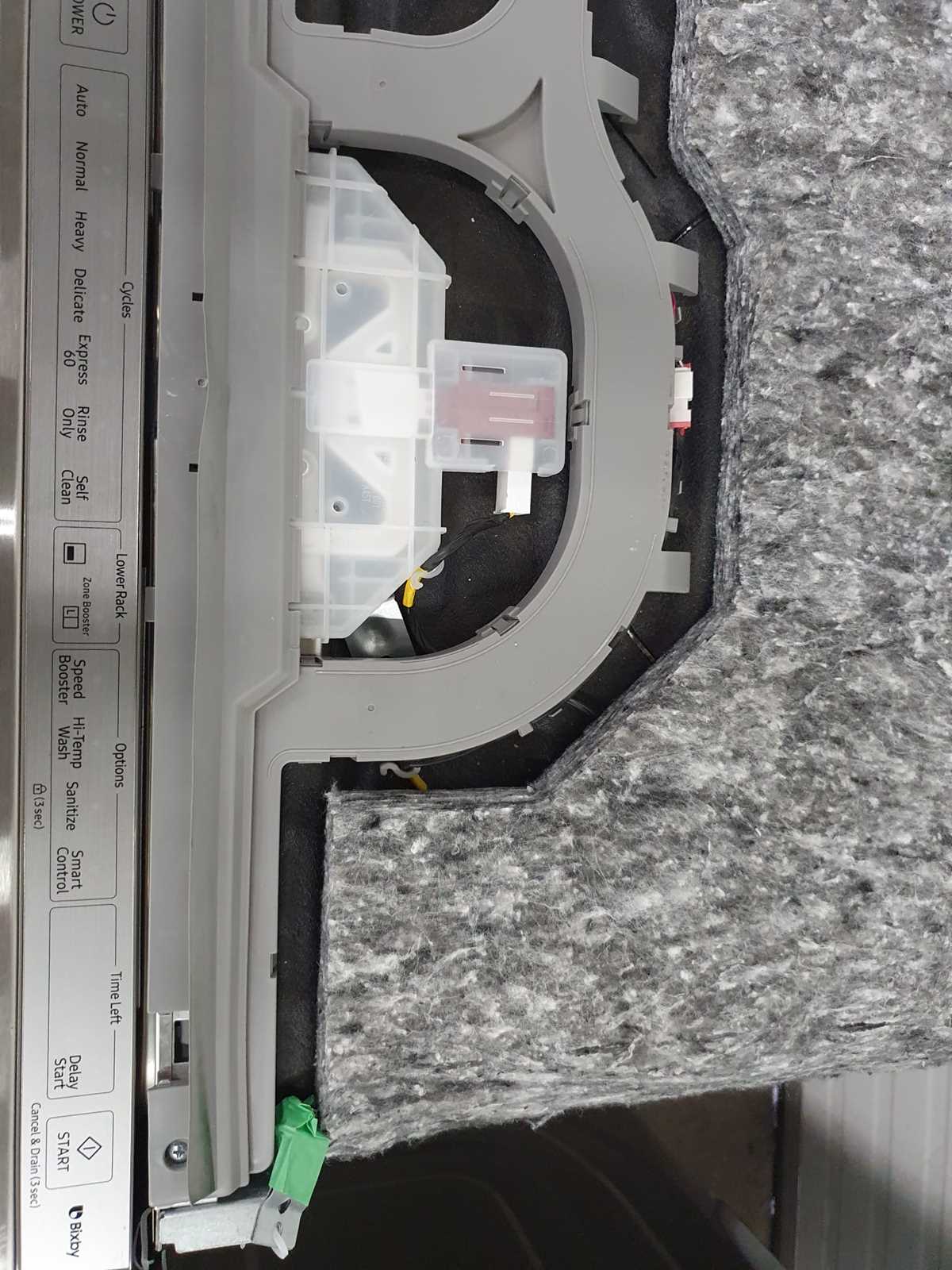
Use the exploded layout to identify the failed component before ordering a replacement, then match the location and connector count directly on the appliance to avoid returns.
The wash motor assembly sits beneath the tub centerline and connects to the sump with a quarter-turn lock; inspect the impeller for scoring and confirm the wiring harness uses a two-pin plug with a locking tab.
The drain pump mounts on the right rear of the base pan; verify the outlet elbow angle and check the anti-backflow flap orientation during installation to prevent slow drainage.
The heater circuit integrates with the circulation path; confirm resistance with a multimeter at the control interface before removal, and replace the O-ring seal whenever the heater housing is opened.
The control module is secured behind the kick plate; check board revision codes printed near the edge and compare them with the serial range label inside the door to ensure compatibility.
The inlet valve connects at the left front corner; match the solenoid voltage rating and the fill hose diameter, then test for leaks under pressure after seating the compression fitting.
Upper and lower spray arms detach with a single fastener; compare nozzle counts and rotation bushings against the reference layout to restore balanced water distribution.
The filtration stack locks into the sump with bayonet tabs; align the arrows shown in the layout and rinse the mesh before reassembly to maintain flow.
Door latch and switch assembly mounts behind the inner panel; confirm microswitch actuation by hand and align the striker depth to eliminate false open errors.
Temperature and turbidity sensors clip into molded ports; route leads along the factory channels shown in the layout to avoid chafing during pump operation.
How to Identify and Locate Internal Components Using the DW80R9950US Parts Diagram
Use the exploded view to trace each assembly from the outer panels inward, matching reference numbers to physical locations before removing any fasteners.
Locate the wash system by following the sump outline at the tub base; the circulation motor mounts directly beneath it, secured with quarter-turn clamps and a rubber isolation ring. The heater loop routes along the sump perimeter and connects via two spade terminals positioned toward the rear.
Find the drain system by tracking the outlet channel from the sump to the compact pump housing near the right rear corner. The pump face aligns with a three-screw triangle pattern, while the discharge hose exits upward toward the air gap.
Identify the filtration stack inside the tub floor by aligning the mesh cylinder, fine screen, and twist-lock cap shown in the layout; the lock tab points forward at the 12 o’clock position for release.
Access the control electronics through the inner door cavity. The control board sits behind the latch bracket, mounted on a plastic carrier with two snap tabs. Harness routes are color-coded in the schematic: blue for sensors, red for power, white for valve control.
Trace the water inlet path from the left kick area to the fill valve, then upward to the side channel. The valve body matches a rectangular profile with a single solenoid, oriented so the electrical connector faces inward.
Pinpoint spray arm drives by following the feed tubes shown along the rear wall; the upper arm connects through a telescoping conduit aligned with the rack rail, while the lower arm couples directly to the sump hub.
Confirm fastener sizes using callouts next to each assembly. Door hardware uses Torx T15, pump mounts use T20, and panel screws measure 10 mm hex, preventing mismatches during reassembly.
Verify sensor placement by matching icons in the schematic to tub cutouts: the turbidity sensor sits on the right side wall below the heater loop, and the thermistor clips into the sump pocket.
How to Match Diagram Callouts to Correct Replacement Part Numbers for DW80R9950US
Verify the callout label on the schematic against the unit’s exact revision code printed on the inner door edge before selecting any replacement item.
Use the exploded view index to locate the callout number, then cross-check that number with the manufacturer’s reference table tied to the revision suffix; identical callouts can map to different catalog numbers across production runs.
Confirm electrical ratings and material codes listed beside each callout. For example, circulation pump assemblies may share the same visual outline yet differ by voltage marking or impeller compound, which changes the catalog identifier.
Match sub-assemblies by hierarchy. If a callout points to a grouped assembly, verify whether the catalog lists the full group or separates brackets, seals, and fasteners under adjacent callouts. Select the group only when the failure affects multiple elements.
Check supersession notes in the catalog. A callout may reference an obsolete identifier replaced by a newer one; the superseding number fits the same mounting points and connectors while correcting known defects.
Validate dimensions using the measurement notes attached to the callout leader lines. Door balance cables, racks, and spray arms often vary by length or pitch; millimeter differences matter.
Confirm finish and color codes shown near cosmetic callouts. Control panels and handles may share geometry while differing by coating or sheen, each tied to a distinct catalog entry.
Record the callout number, revision suffix, and catalog identifier together before ordering. This three-point match prevents returns caused by visually similar components with incompatible connectors or firmware tags.