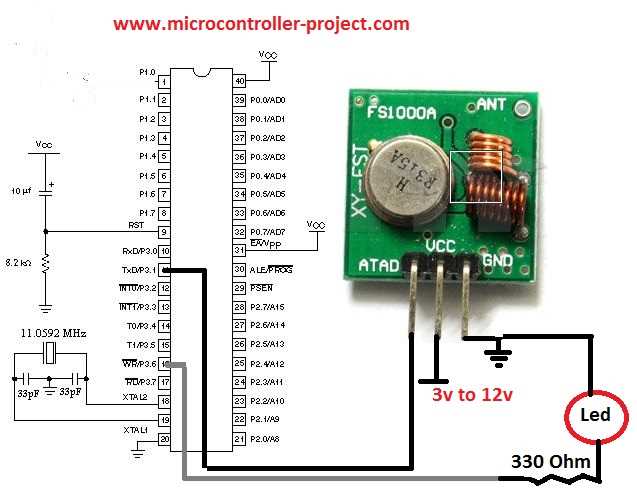
Connect the power lines first using a stable 5V source to avoid voltage drops that can distort signal integrity. Ensure ground connections are secure and free of corrosion for consistent operation.
Attach the antenna carefully at the designated input to maximize range. Positioning it vertically can improve reception by reducing interference from surrounding components.
Route the data output to a logic-level compatible input on your controller. Use short, twisted wires to minimize signal loss and avoid routing near high-current traces.
Test the module with known transmitters before integration. Observing stable signal pulses helps verify that the setup is correct and identifies any weak points in connections.
Shield sensitive components from electromagnetic interference using small grounded enclosures or ferrite beads on power lines. This reduces noise and ensures cleaner signal reception.
Verify all connections visually and electrically with a multimeter. Confirm that voltage levels are within operating ranges and that there are no intermittent contacts that could disrupt communication.
433MHz Receiver Module Setup and Signal Flow Guide
Connect the power pins directly to a regulated 5V supply and verify the ground path is continuous to avoid unstable signal reception. Use short, solid-core wires for reliable connections.
Attach the antenna securely to its designated port, keeping it vertical and away from metallic obstructions. Proper placement reduces reflections and improves the clarity of incoming transmissions.
Route the data line to a microcontroller input capable of detecting high-frequency pulses. Keep the connection insulated from high-current traces and avoid tight loops that can introduce noise into the signal path.
Test signal integrity by sending repeated pulses from a compatible transmitter. Monitor voltage levels and pulse consistency with an oscilloscope to ensure the module is responding accurately before full system integration.
Pin Identification and Power Connections for 433MHz Modules
Identify the voltage input and ground terminals before making any connections. The positive lead should connect to a stable 5V source while the ground must form a continuous path to the system’s reference point. Incorrect connections can cause erratic operation or permanent damage.
Locate the data output and control pins on the module and verify their positions using a multimeter. Keep the power lines separate from high-current traces and ensure the signal lead runs directly to the microcontroller input without unnecessary splices or loops to maintain signal clarity.