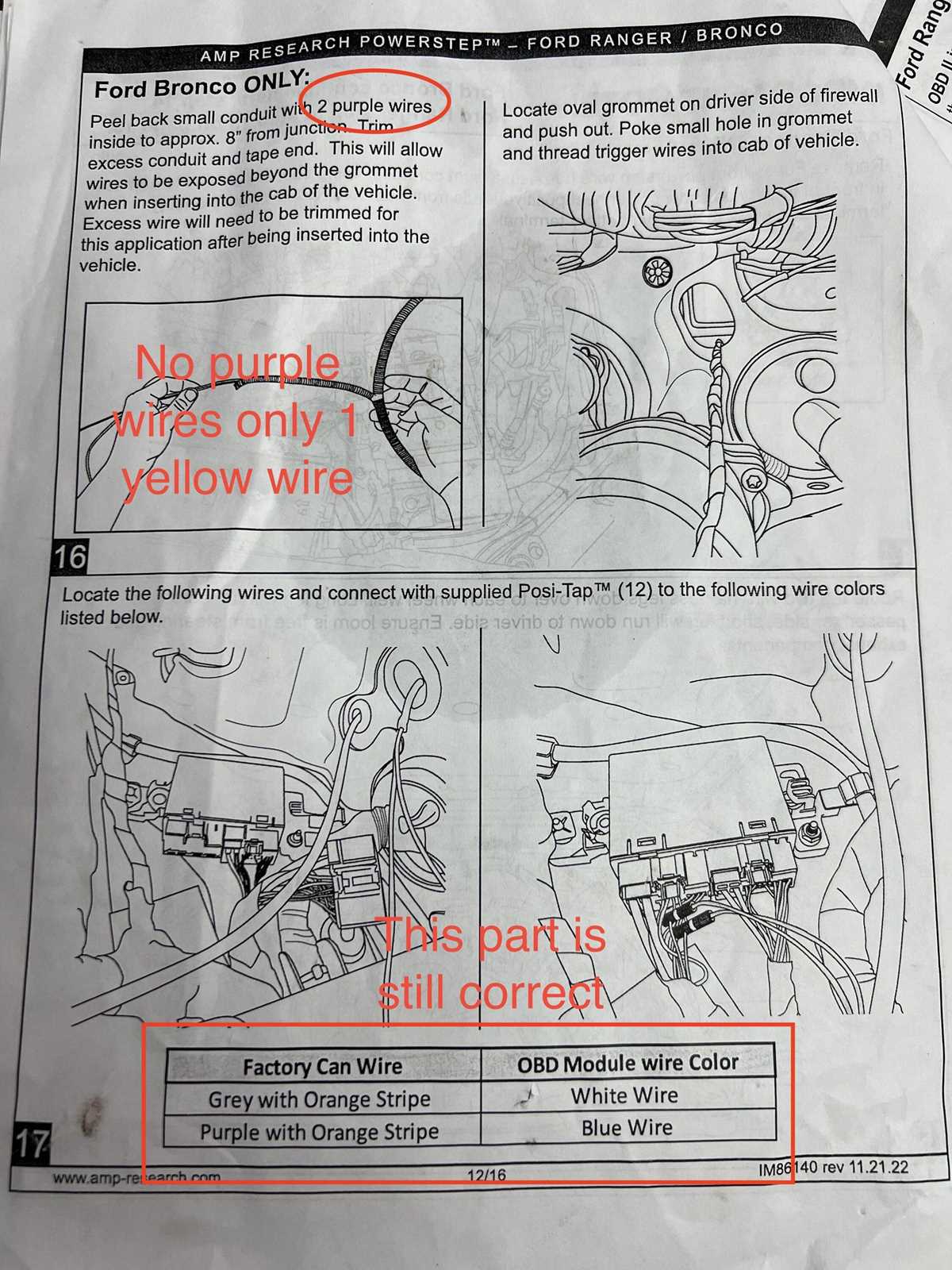
For proper installation and troubleshooting of the automatic running boards, accurate knowledge of the electrical connections is key. Begin by checking the motor connections, ensuring each wire is securely attached to the correct terminals. Misplaced wires can cause malfunctions, preventing the system from responding to door movements.
Focus on the power source to the motors. The primary power cable should be routed directly from the vehicle’s battery to the control module. Ensure proper insulation of the wires to avoid short circuits, especially in areas where moisture can accumulate. The ground wire must also be properly connected to the vehicle’s chassis to complete the circuit.
During installation, avoid over-tightening connectors, as this can damage the wire terminals. Make sure to use the correct gauge wire for each connection to prevent overheating or damage. In case of troubleshooting, check for blown fuses in the main power supply or control unit. If the running boards fail to extend or retract, a faulty relay could be the cause and should be inspected or replaced.
Key Steps for Proper Connection of the Running Board Motors
Begin by securing the motor wires correctly to the control unit. Each motor needs a specific wire to ensure synchronization with the vehicle’s door sensors. Always check for a solid connection, as even slightly loose terminals can cause intermittent issues. Use a crimping tool for secure fittings on wire ends.
Power Supply Routing and Connection
For smooth operation, make sure the power supply is routed directly to the control module from the battery, using a heavy-duty gauge wire. This ensures a steady flow of current, preventing voltage drops that could impact performance. Pay close attention to fuse ratings–if the current exceeds the fuse’s capacity, it will burn out.
Check the ground wire carefully. A poor ground connection will prevent the system from functioning properly. Attach the ground wire securely to the chassis, ensuring a metal-to-metal connection with no rust or paint obstructing the contact. A weak ground is one of the most common issues when the system malfunctions.
Control Module Wiring
The control unit is the brain of the entire mechanism. It requires precise wiring to interface with the sensors and motor. Double-check that the input and output connections on the control unit match the instructions provided for your specific vehicle model. Use the wiring schematic to ensure that no wires are misplaced or left unconnected.
If the control unit fails to respond, it might be due to faulty wiring or incorrect placement of connectors. Perform a quick voltage test with a multimeter to confirm if the control unit is receiving the necessary voltage. An unstable power supply can lead to erratic behavior or non-functioning boards.
When troubleshooting the system, verify that all wires are free from cuts or abrasions. Damaged insulation can cause short circuits or complete system failure. If any wires are found to be compromised, replace them immediately with the appropriate wire gauge for safe and reliable operation.
Lastly, inspect the relay connections. A damaged or improperly wired relay will prevent the automatic function from triggering. Swap out any malfunctioning relays with the recommended part number, ensuring all connections are correctly aligned and tightened to avoid future failures.
Understanding the Wiring Connections for Automatic Running Board Motors
Start by confirming the motor connections are secure. The positive and negative terminals on the motor must correspond to the correct power and ground wires. Incorrect wiring here can cause the system to malfunction or even damage the motor. Double-check that the motor leads are firmly inserted into the designated connectors, ensuring no loose or exposed wires.
Power Supply and Grounding Considerations
The motor relies on a stable power supply. The power wire from the vehicle’s battery must be routed directly to the motor control unit using an appropriately sized wire gauge. Inadequate wire gauge can lead to power loss or overheating. For grounding, ensure the negative terminal is connected to the vehicle’s chassis without any paint or corrosion interfering with the connection.
Use a multimeter to verify that the motor is receiving the correct voltage. This will help identify issues with power delivery if the system fails to activate or respond. Always ensure the wires are properly insulated to prevent short circuits, especially in areas exposed to weather conditions like rain or snow.
Relay and Sensor Connections
Next, check the relay connections. The relay is responsible for triggering the motor when the vehicle door opens or closes. Incorrect or damaged relay connections will prevent the system from functioning automatically. Test the relay using a multimeter to check for continuity, and replace it if necessary.
Finally, review the sensor connections that detect door movement. These sensors need to send the correct signal to the motor to initiate the board extension. Ensure these sensor wires are free from damage and securely connected to both the motor control unit and the door switch, as this completes the electrical circuit for activation.