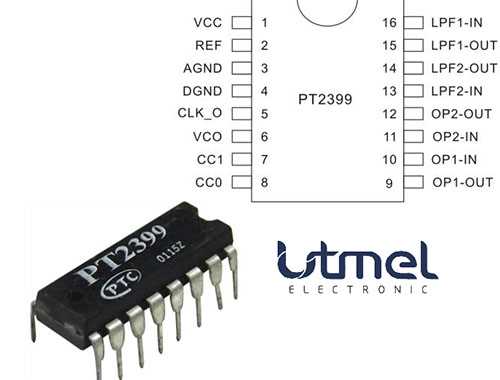
Start by familiarizing yourself with the pin configuration of the IC. The key pins to focus on are the input, output, and feedback connections. The input pin receives the signal, which is then processed and outputted through the designated pins. Feedback is critical for controlling the desired effect, such as delay or modulation, depending on your application. Identifying these pins allows you to connect them properly for optimal functionality.
Next, focus on the power supply connections. The IC requires a stable power source for proper operation. Ensure that the supply voltage matches the IC’s rated requirements to avoid damaging the component. Typically, a regulated 5V or 9V DC supply is used. Using the correct capacitors and resistors in the circuit can also help stabilize the power input and reduce noise in the output signal.
Once you understand the power and signal flow, pay attention to the surrounding components that affect performance. For example, adjusting the resistance values in the feedback loop can change the effect or output level. Use a multimeter to measure voltages and ensure that the IC is receiving the correct input levels. This will help fine-tune the system and troubleshoot any performance issues during setup.
IC Design and Application Guide
Start by selecting the correct components for your setup. Begin with a stable power supply that matches the operating voltage of the component, typically 5V or 9V DC. This ensures the proper function of the system and prevents any damage to the internal structure. It is also recommended to use a regulated power supply to avoid fluctuations that may affect performance.
Once the power is in place, focus on the signal routing. The input signal is processed by the component, and the output signal is sent to the desired destination. Ensure that the signal is clean and within the recommended voltage range to prevent distortion or loss of effect. Use appropriate filtering components, such as capacitors, to smooth any noise or ripple in the signal.
Feedback Loop and Its Role
The feedback loop is an important part of the system, as it influences the output effect. The value of the resistor connected to the feedback loop determines the level of modulation or delay in the output signal. Experiment with different resistor values to find the optimal setting for your application. This step is critical for achieving the desired sound quality or effect.
Next, connect the output to your application, whether it’s a speaker, audio device, or other equipment. Make sure the output pins are correctly linked to the load to avoid short circuits or overloading the component. Verify that the output signal maintains the expected strength and clarity after passing through the IC.
Testing and Troubleshooting
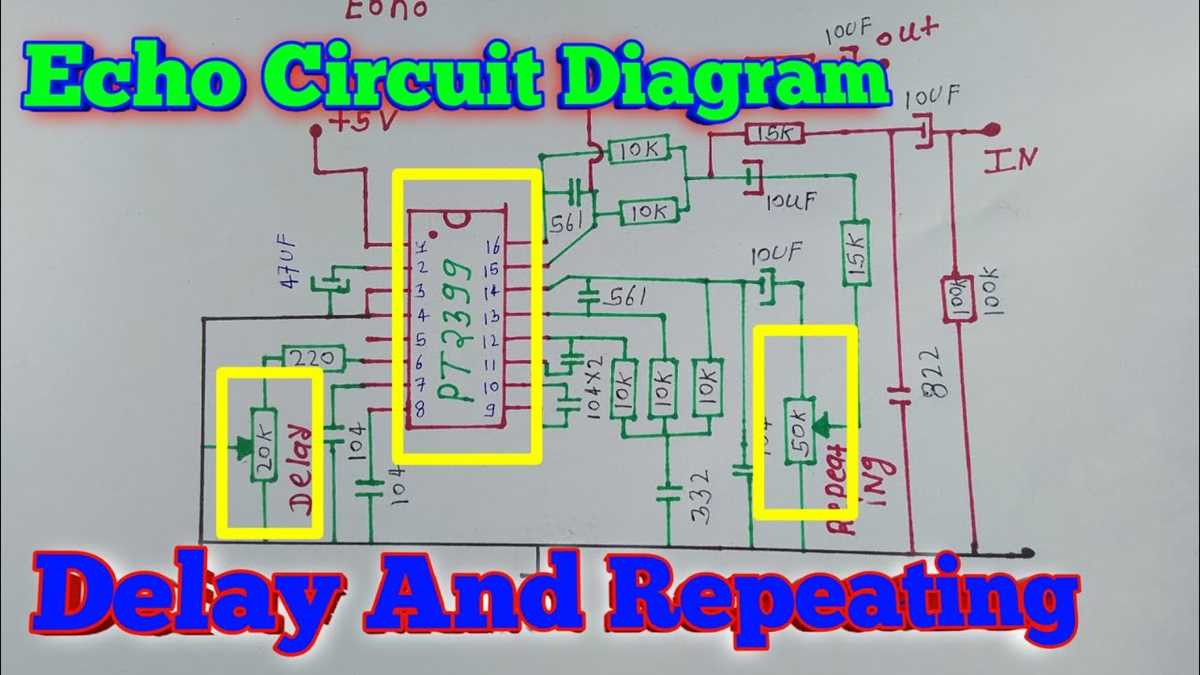
Before finalizing the setup, perform a thorough test using a multimeter to measure voltage levels at various points in the setup. Check for any inconsistencies or irregularities that could affect the performance. If you notice fluctuations, inspect the connections and components for possible damage or poor soldering.
If the system doesn’t perform as expected, revisit the feedback loop and input levels. Sometimes, adjusting the feedback resistor or replacing the input components can resolve issues. Continuously monitor the system during operation to ensure smooth and reliable performance over time.
How to Read and Understand Pt2399 IC Circuit Diagrams
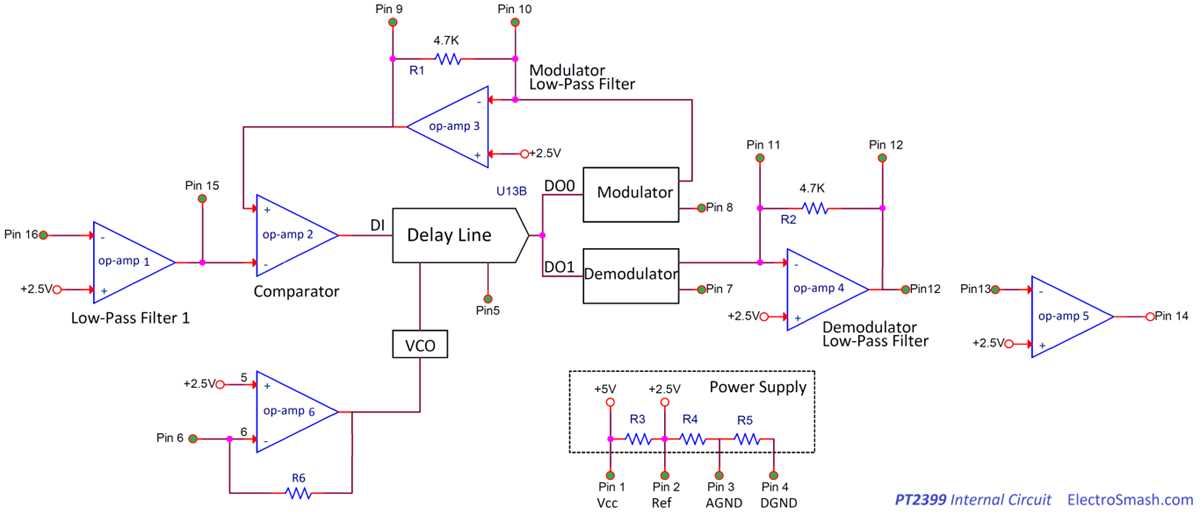
Start by identifying the main power connections in the schematic. The positive terminal usually connects to the power source, which supplies the necessary voltage for the unit to operate. Check the pin labeled for ground, as it is vital for completing the electrical path. A proper ground connection ensures stable operation.
Next, focus on the input and output paths. The input is often marked as “IN” and is where the signal enters the system. Follow the path from the input pin to the processing section, typically through resistors and capacitors, which affect the signal before it is output. The output is usually labeled “OUT,” and its signal is what is sent to the following stage in the setup.
Understanding the Feedback Loop
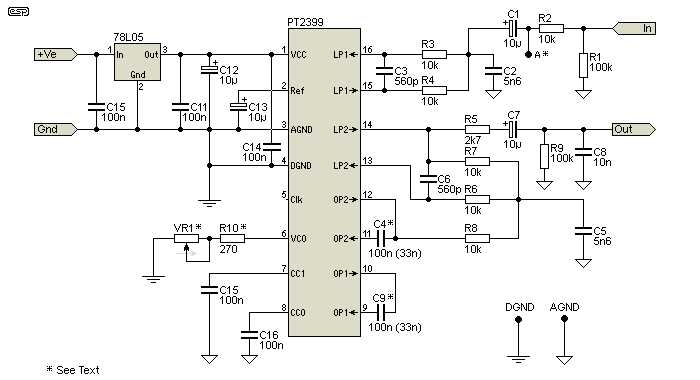
The feedback loop is a critical part of the design. It controls the modulation or delay effect and is typically represented by a loop between certain pins. In most designs, the feedback path will include resistors and capacitors that influence the overall behavior of the unit. Pay close attention to the feedback components, as they determine the sound characteristics in audio-related setups.
Look for any connections that control the volume or signal strength. These are usually marked as “Vcc” or “Gain” and control the output signal’s amplitude. Proper adjustment of these components allows for fine-tuning of the system, ensuring that the output signal is at the correct level for the next device or stage.
Identifying Timing and Control Pins
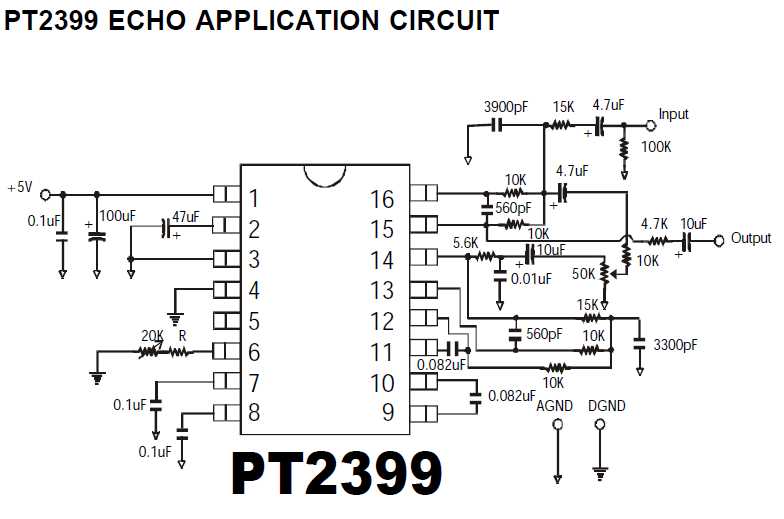
Timing components, often represented by specific pins connected to external resistors or capacitors, are crucial for setting delays or modulation periods. The timing pin’s connections dictate how quickly the effect is applied to the signal. Check the values of resistors and capacitors connected to these pins, as they directly impact the timing behavior.
In addition, ensure that the input and output signals are correctly routed through any control logic, especially if you’re using additional control elements like switches or potentiometers. These components allow manual adjustment of the effect in real-time. Adjusting these controls helps modify the output according to your needs.
Use the component values provided in the schematic to select the correct resistors, capacitors, and other components. Cross-reference the values from the schematic with the datasheet to ensure compatibility with your design. Using incorrect components can lead to malfunction or poor performance.
After assembling the design based on the schematic, perform a thorough test using a multimeter to check for continuity and verify that the power supply is correctly feeding the unit. If issues arise, retrace the signal paths and check connections for errors or potential shorts. A solid understanding of the schematic will greatly aid in troubleshooting and ensuring proper operation.