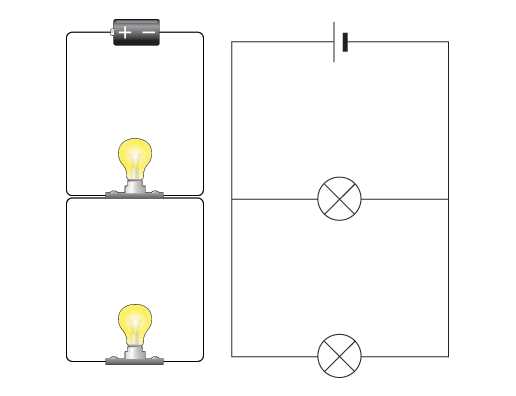
Connect all devices end-to-end to ensure that the same current flows through each element. Verify that each connection is secure and that conductor sizes match the load requirements.
Calculate total resistance by summing the resistance of each component. This allows accurate determination of voltage drops across each element and prevents overheating.
Use insulated terminals and proper fasteners to maintain stable contacts and reduce the risk of shorts. Keep leads straight and avoid sharp bends that can stress conductors.
Test the complete path with a small load first to confirm that all devices operate correctly and that measurements match calculated expectations before applying full power.
Series Circuit Layout Guide
Begin by arranging all devices end-to-end on a mounting board or panel. Ensure spacing allows for easy access to terminals and inspection of connections.
Check each component’s resistance rating and verify that the sum of resistances does not exceed the power source limits. Use a multimeter to measure individual values before installation.
Use proper connectors and insulated terminals for every joint. Tighten screws to manufacturer-recommended torque to avoid loose contacts that can cause voltage drops or sparks.
Calculating Load and Voltage Distribution
- Sum the resistances to determine total load across the path.
- Calculate voltage drop for each element using Ohm’s Law.
- Verify that each device receives sufficient voltage to operate within specifications.
Testing and Safety Practices
Test the complete chain with a low-power source initially. Monitor for heating, uneven voltage, or unexpected interruptions, and adjust connections as needed.
Label all terminals and leads to simplify future maintenance and troubleshooting. Ensure insulation is intact and conductors are supported to prevent stress and accidental shorts.
Regularly inspect the layout for loosening screws, corrosion, or insulation damage. Perform recalculations if any device is replaced or the load changes significantly.
Calculating Total Resistance and Current Flow in Series Connections
Add the resistance values of each element to determine the total load along the continuous path. Measure each device individually with a multimeter to ensure accuracy.
Determining Current Flow
Use Ohm’s Law to calculate the current by dividing the source voltage by the total resistance. Ensure that the resulting current does not exceed the ratings of any connected components.
Consider voltage drops across each device by multiplying the current by the resistance of that element. This confirms that each unit receives adequate voltage to operate correctly.
Verifying Accuracy and Safety
Cross-check calculations by measuring actual current after powering the complete path with a controlled source. Adjust connections or component placement if readings differ significantly from calculated values.
Maintain records of measurements and device ratings to simplify future maintenance. Inspect connections for loose terminals or signs of overheating before increasing load to full operation.