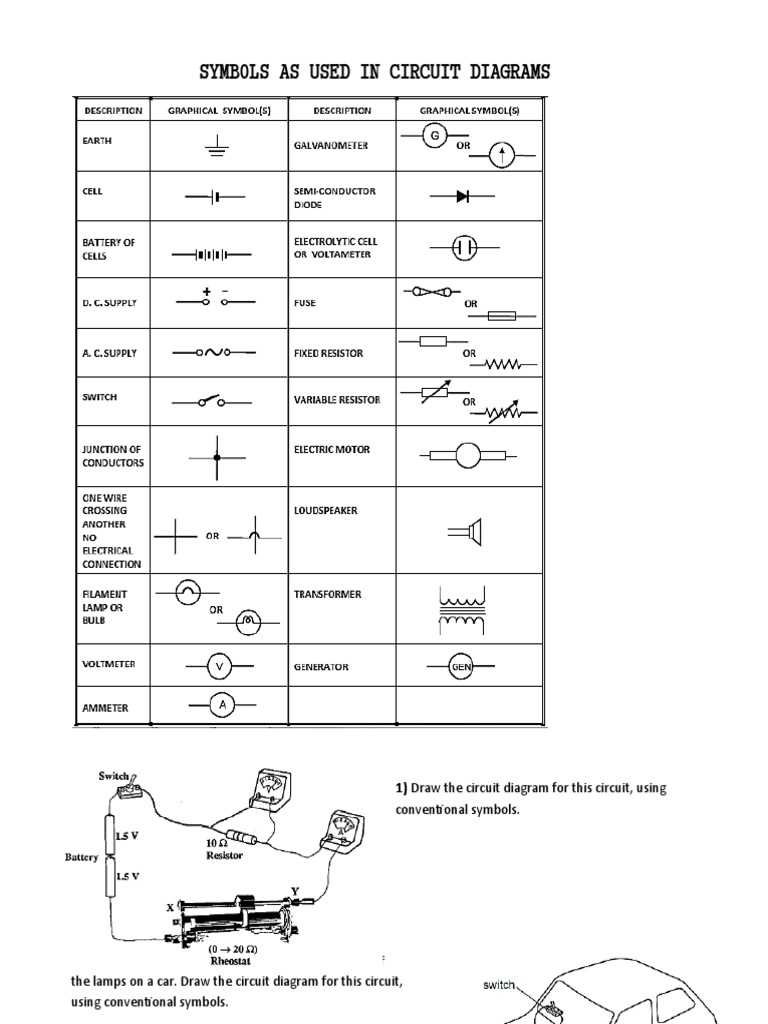
To accurately represent electrical components in a visual format, use standardized representations for each element. These drawings simplify complex designs, allowing engineers and technicians to work with ease across different projects. Whether you’re working with resistors, capacitors, or transistors, understanding how to sketch these icons correctly is fundamental for clear communication.
Each graphic serves a specific function, showing how various parts of a system are connected. For example, the icon for a battery differs from the one for a switch, making it easier to identify their roles at a glance. The line connecting components represents conductors or wires, and variations in the drawing often indicate different types of connections or voltages.
Knowing these diagrams will help you read and interpret electrical plans with confidence. From home appliances to industrial machinery, these visual representations ensure that the system functions properly. Mastering the details of each figure, such as the direction of current or the flow of power, allows for both precise construction and troubleshooting in any setting.
Circuit Symbol Diagram
Accurately interpreting visual representations is key for working with electronic designs. Each element, whether it’s a resistor or a diode, has a unique drawing to depict its function. Begin by familiarizing yourself with the most common images used in electronic schematics to enhance understanding and efficiency. Mastery of these illustrations is vital for engineers and hobbyists alike when translating ideas into physical circuits.
When creating a schematic, maintain clarity by using the correct shapes and line connections for each part. For example, a simple line indicates a wire or conductor, while a circle represents an electrical component like a lamp. Differentiating between components, such as diodes and transistors, relies on specific visual features, such as the direction of arrows or the type of line used to show electrical flow.
Standard Drawings for Key Components
Resistors are depicted as a zigzag line, while capacitors are shown as parallel lines with a gap between them. Inductors, on the other hand, appear as coiled lines. Understanding the exact representation of each piece in a schematic will save time during assembly and troubleshooting. If in doubt, refer to a standard guide to ensure you are using the correct symbols for your project.
The connection between components also matters. A short line between two elements often indicates a direct connection, while a junction, where multiple lines meet, should be marked clearly to avoid confusion. Properly illustrating these connections prevents mistakes during the building phase, leading to more reliable circuits and faster debugging.
Using Schematic for Troubleshooting
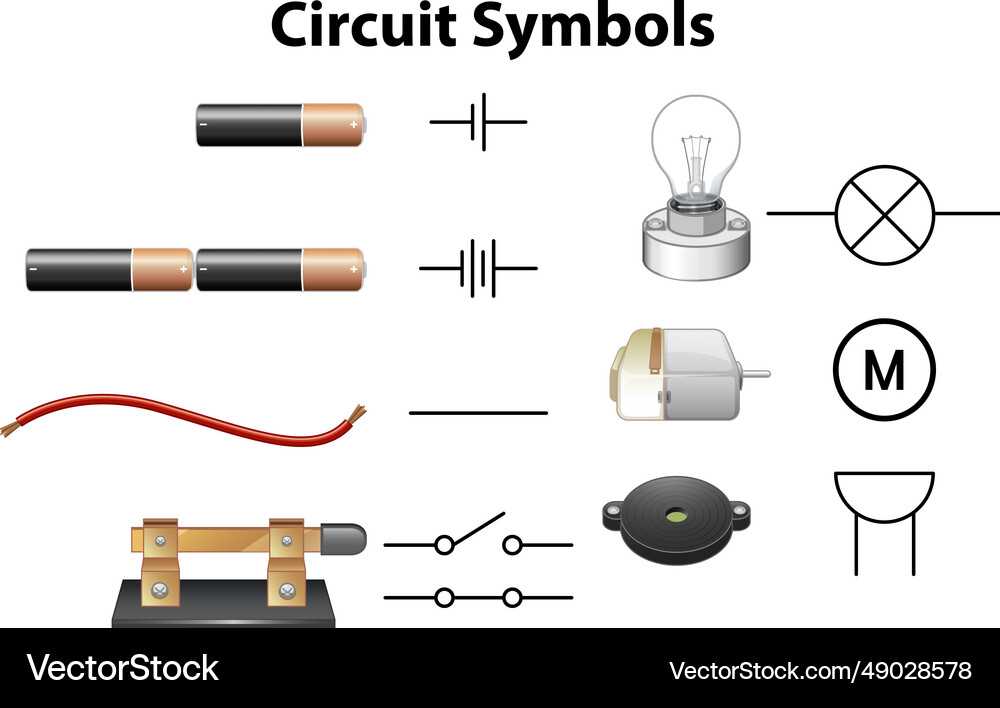
When faced with a malfunctioning circuit, reviewing the blueprint helps locate the fault. If an element is not functioning properly, check the corresponding drawing for any incorrect connections. Troubleshooting becomes more straightforward with clear and accurate schematics, as it allows for quick identification of components that may have failed or are improperly wired.
How to Identify and Draw Common Circuit Symbols
To recognize and draw the most frequently used components, start with the basics. Resistors are represented by a zigzag line, while capacitors appear as two parallel lines, often with a space in between. Diodes are marked by a triangle pointing to a line, showing the direction of current flow. When drawing these elements, be precise with your lines to avoid confusion–incorrect placement or shape can lead to misinterpretation during assembly.
For more complex components, such as transistors or inductors, ensure you’re familiar with the specific variations. A transistor is represented by a line with arrows indicating current direction, while an inductor uses several loops to indicate its coiled nature. The key to clear communication in electrical design lies in consistency–always refer to a standard guide when in doubt and practice regularly to ensure accuracy in your illustrations.