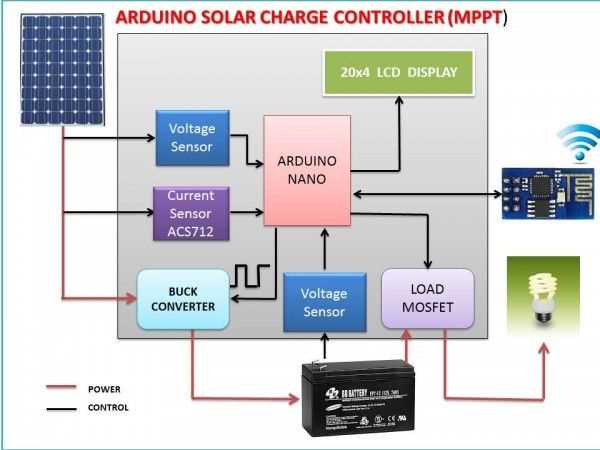
Connect the photovoltaic panel output to a step-down DC-DC conversion stage built around a high-speed MOSFET, power inductor, and Schottky diode. Panels rated near 18–22 V open-circuit often feed battery systems operating at 12 V nominal. This conversion stage reduces voltage while increasing current delivered to the storage unit.
Use a power inductor between 33 µH and 100 µH depending on switching frequency and panel current. The MOSFET rapidly toggles the input supply, while the inductor stores magnetic energy and releases it toward the battery terminals through the rectifying diode. Switching frequencies between 20 kHz and 100 kHz keep component size manageable while maintaining stable power flow.
A microcontroller or dedicated tracking chip measures panel voltage and current through a resistor divider and shunt resistor. These measurements allow the control unit to adjust MOSFET duty cycle so the photovoltaic module operates near its peak output region. Many panels rated 100 W deliver peak power around 17–18 V under standard sunlight conditions.
Battery protection uses a voltage sensing network connected across the storage terminals. For a 12 V lead-acid battery, charging typically stops near 14.4 V and resumes when voltage falls below about 13.2 V. Add a fuse and reverse-polarity diode between the battery line and the power stage so accidental connection errors do not damage semiconductor components.
MPPT Solar Charge Controller Circuit Diagram With Buck Converter and Battery Connections
Connect the photovoltaic panel output to a step-down DC-DC conversion stage built around a power MOSFET, inductor, and fast recovery diode. Solar modules rated near 18–22 V open circuit often feed battery systems rated at 12 V nominal. This arrangement reduces panel voltage while increasing current delivered to the storage unit.
Solar Panel Input and Buck Converter Stage
The conversion stage transfers power through switching pulses controlled by a microcontroller or dedicated tracking chip.
- Panel positive lead connects to the MOSFET drain terminal.
- The MOSFET source links to the power inductor.
- The inductor output connects to the battery positive terminal.
- A Schottky diode provides current flow when the MOSFET turns off.
- Panel negative lead connects directly to system ground.
Select an inductor between 47 µH and 100 µH depending on panel power and switching frequency. Many solar regulators operate between 30 kHz and 80 kHz. Lower inductance increases ripple current, while larger values smooth current delivered to the battery pack.
Battery Connections and Voltage Monitoring
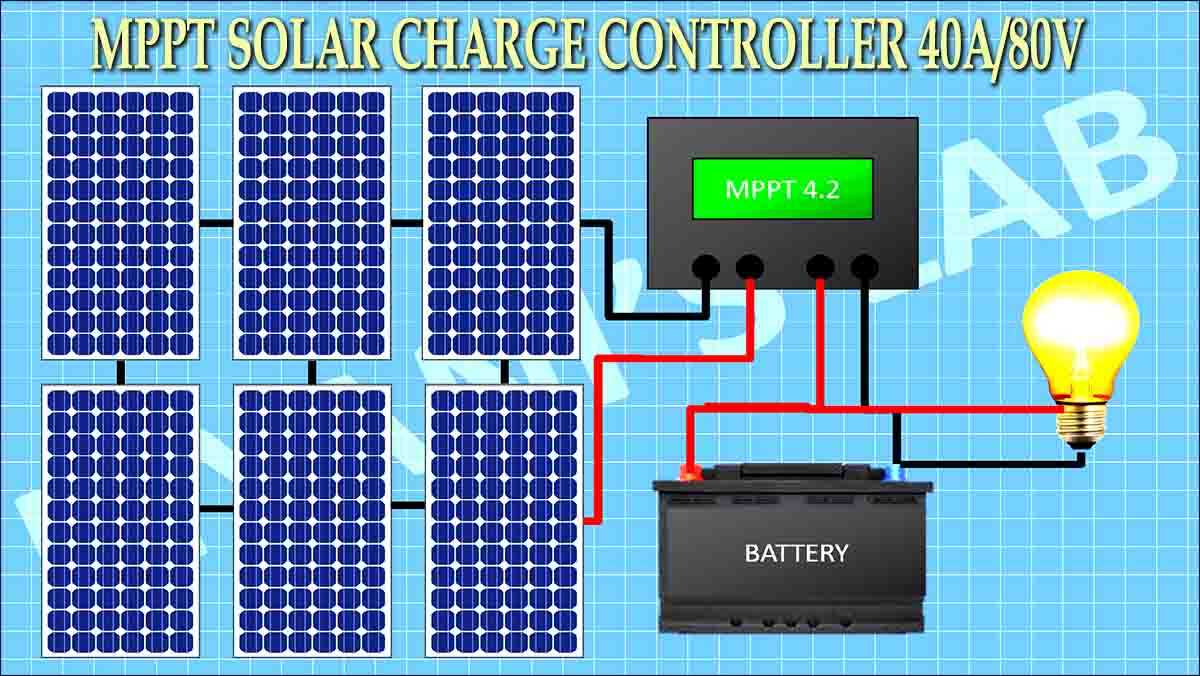
The storage unit connects after the inductor so current reaches it through the conversion stage.
- Battery positive terminal links to the inductor output.
- Battery negative terminal connects to common ground.
- A shunt resistor measures current flowing into the battery.
- A resistor divider measures battery voltage for control logic.
Voltage thresholds depend on battery chemistry. A 12 V lead-acid unit typically receives charging current until voltage reaches about 14.4 V. Charging resumes when the voltage drops near 13.2 V, preventing overcharging and plate damage.
Add protection components near the battery terminals. Install a 15–20 A fuse for small solar systems and place a reverse polarity diode across the input lines. These parts protect MOSFETs, inductors, and sensing electronics from accidental connection errors or short circuits.
How Solar Panel Input Connects to Buck Converter Stage in MPPT Controller Layout
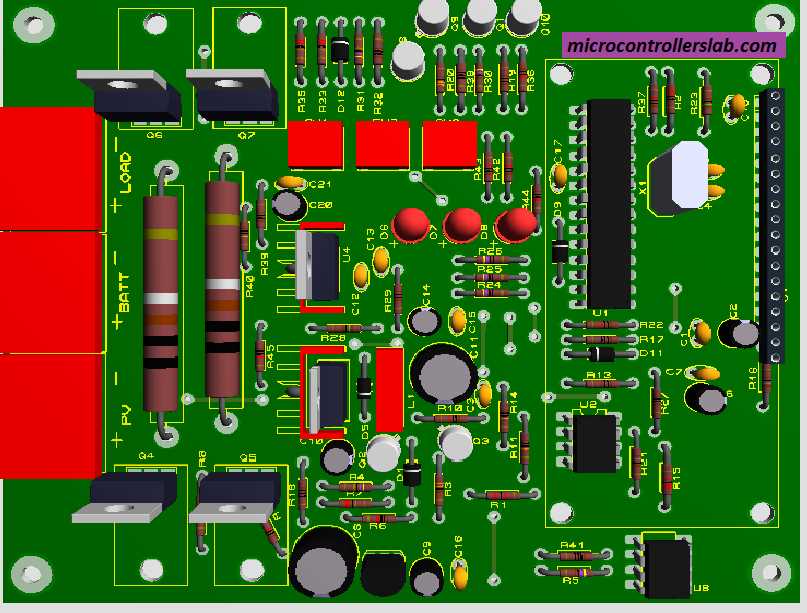
Connect the positive lead from the photovoltaic module directly to the drain terminal of the power MOSFET used in the step-down conversion stage. Panels rated around 18–22 V open-circuit typically supply 5–10 A in small residential arrays, so select a MOSFET with at least 40–60 V voltage rating and low Rds(on) below 10 mΩ.
The negative lead of the solar module links to the system ground plane shared by the switching transistor, current sensing resistor, and battery negative terminal. This shared reference stabilizes voltage measurements used by the tracking logic that adjusts duty cycle during operation.
Input Path Toward the Buck Power Stage
Energy from the panel moves through the switching transistor and then into the magnetic storage element. The path follows a simple order of components placed close together on the board.
After the MOSFET source terminal, connect a power inductor typically between 47 µH and 82 µH. Inductors rated for 15–20 A saturation current handle common solar modules around 200 W without magnetic collapse during switching pulses.
The inductor output routes toward the battery positive terminal and also toward a Schottky rectifier diode. This diode conducts current when the MOSFET turns off, maintaining continuous energy flow from the inductor toward the storage battery.
Input Filtering and Voltage Sensing
Place an electrolytic capacitor across the solar input lines close to the MOSFET drain. Values around 220 µF to 470 µF with 35–50 V rating smooth sudden voltage changes caused by switching pulses and cable resistance from the photovoltaic module.
Voltage monitoring occurs through a resistor divider connected to the panel terminals. Typical values include a pair such as 100 kΩ and 20 kΩ, which scales panel voltage to a safe range for microcontroller analog inputs.
Current measurement uses a low resistance shunt placed between the MOSFET source and ground, often around 0.01–0.02 Ω. The control logic reads this voltage drop and adjusts transistor duty cycle so the photovoltaic module operates near its peak output region while delivering stable current to the battery pack.