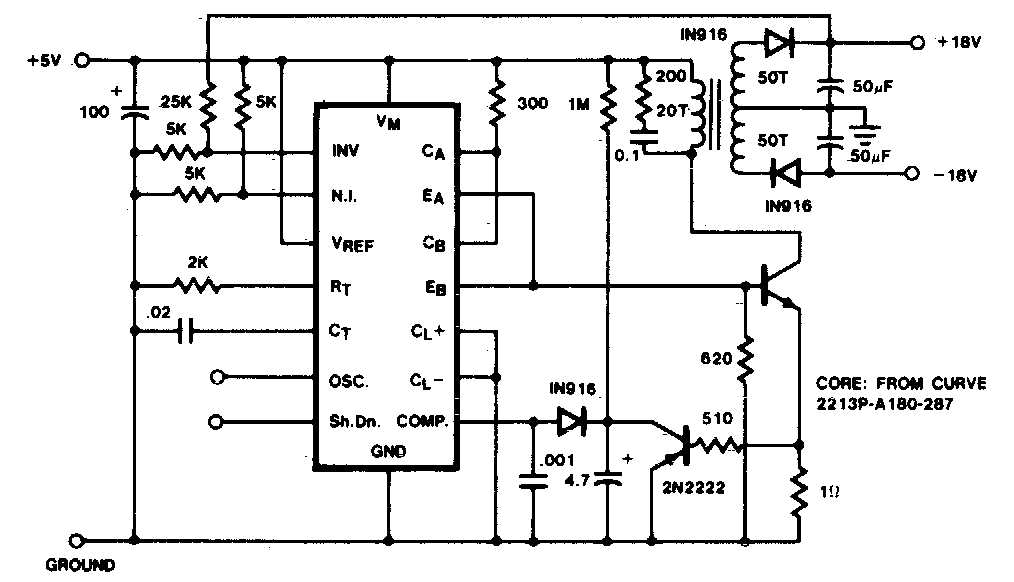
To achieve reliable power conversion, using a transformer-based step-up or step-down design is common. When designing for high-voltage, high-frequency systems, this method is key for energy transfer. It is ideal for low to medium power levels, often employed in applications such as power supplies and adapters.
The basic principle behind this type of energy conversion involves storing energy in an inductor during one part of the cycle and releasing it during the other. This allows for voltage regulation and energy transfer with high efficiency. When designing such a system, the choice of the transformer is vital, as its turns ratio directly impacts voltage conversion and the overall efficiency of the device.
To ensure proper operation, it is critical to pay attention to the timing of switching and energy storage. Understanding the behavior of components like the switch, diode, and transformer under different load conditions can help you optimize performance and avoid issues like voltage spikes or overheating.
Flyback Circuit Design and Operation
For reliable voltage conversion, choose a suitable transformer with an appropriate turns ratio. This directly affects both the output voltage and the efficiency of the power supply. It is important to match the input and output specifications precisely for optimal performance. A mismatch can lead to voltage instability, reduced efficiency, or component damage.
Transformer Selection and Functionality
The transformer plays a crucial role in voltage conversion. Select one with a high-frequency capability to handle the switching speeds commonly used in such designs. Ensure the core material is rated for the expected operating frequencies, as incorrect material choices can lead to core losses and reduced efficiency.
Also, ensure the transformer’s turns ratio is calculated correctly. The ratio defines the voltage conversion, and errors here can cause excessive voltage either at the primary or secondary side, leading to power inefficiencies or potential damage to connected loads.
Component Considerations
The switching device must be chosen based on the voltage and current requirements of the design. A fast-switching transistor or MOSFET is usually the best option due to its efficiency in handling high-frequency signals. Ensure that the transistor has a low on-resistance and is rated to handle the maximum current and voltage expected in the application.
Diodes used in the system must be fast-recovery types, as they need to turn off and on quickly to prevent energy losses. Schottky diodes are commonly preferred for their low forward voltage drop, which minimizes power loss. Also, the diode must have a high reverse voltage rating to handle the voltage spikes generated during switching.
For optimal performance, include a proper feedback loop in the design. This regulates the output voltage by adjusting the duty cycle of the switching device. Without this feedback, the output may become unstable under varying load conditions.
Lastly, a well-designed control loop ensures the system maintains steady output despite variations in input voltage or load. Implementing pulse-width modulation (PWM) allows for more precise control of the voltage output by adjusting the switching frequency in real-time.
Key Components in a Flyback Converter and Their Functions
The transformer is the heart of the design, providing voltage conversion by stepping up or stepping down the input. Its primary function is to store energy during the on-time of the switch and release it during the off-time. The turns ratio directly influences the output voltage in relation to the input voltage, so it’s critical to select the appropriate transformer based on the requirements.
Switching Device
The switching device, often a MOSFET or transistor, controls the energy transfer from the input to the transformer. It rapidly switches on and off, with the on-time determining the amount of energy stored in the transformer’s core. Fast switching is vital for efficiency, and the device should be rated for the peak voltage and current expected in the system.
Diode
After energy is transferred to the transformer, the diode ensures that the energy flows correctly into the load during the off-time of the switch. Schottky diodes are commonly used due to their low forward voltage drop, which reduces energy loss. The diode’s reverse recovery time must also be minimal to prevent unnecessary power dissipation.
The diode needs to have a high reverse voltage rating to handle the spikes generated when the switch turns off. It is also important to choose a diode with a fast recovery time to ensure that it can handle the quick changes in current and voltage without creating inefficiencies.
Capacitor
The output capacitor filters the voltage to smooth out ripple. It stores energy during the off-time and helps maintain a stable output voltage under varying loads. The capacitor should have a low ESR (Equivalent Series Resistance) to avoid excessive heating and energy loss, ensuring high efficiency in the power conversion process.
The size of the capacitor depends on the required output power and the acceptable ripple voltage. Larger capacitance values are used for high power applications, while smaller capacitors are suitable for low-power systems. Keep in mind that the capacitor’s voltage rating should exceed the peak voltage of the system to ensure reliability.
Feedback Control Circuit
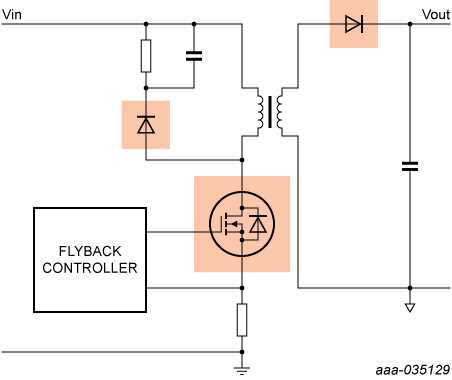
To regulate the output voltage, a feedback loop is employed. This circuit monitors the output and adjusts the switching duty cycle to maintain a constant voltage, compensating for variations in load or input voltage. The feedback is typically based on either voltage or current sensing, which adjusts the pulse width modulation (PWM) signal to stabilize the output.
Without this feedback control, the output voltage would fluctuate, especially under varying load conditions, leading to instability in the power supply. The feedback mechanism ensures that the system remains reliable and efficient over time, even as operational conditions change.