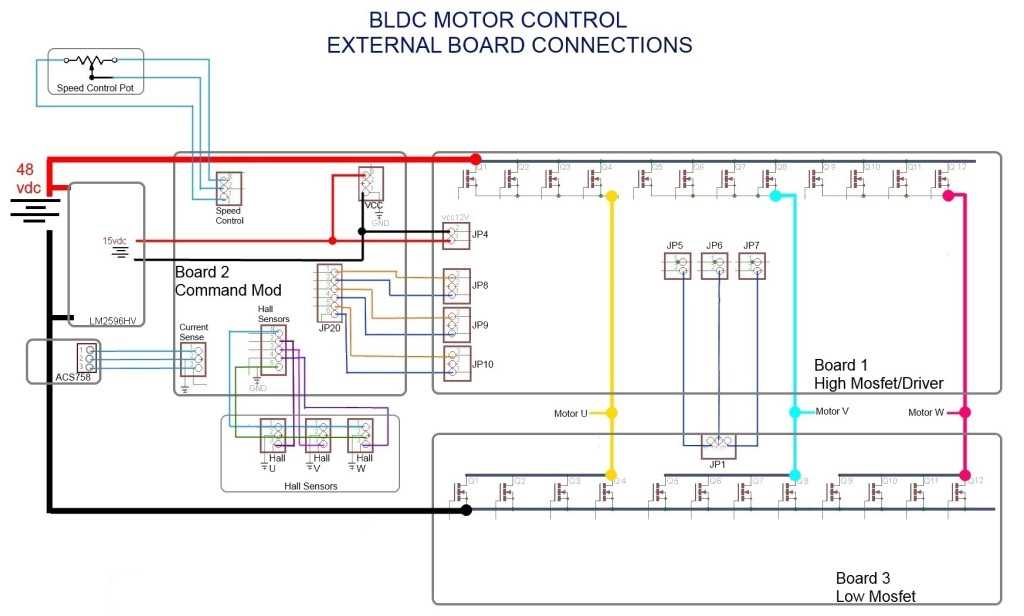
Use a precise arrangement of electronic components to achieve stable rotational management. Ensure that the transistor array matches the voltage rating of the spinning unit and that the microcontroller output aligns with the gate inputs for predictable responsiveness.
Maintain proper thermal management by installing heatsinks on power switches and monitoring temperature thresholds. High currents can lead to gate failure if dissipation is insufficient, so placing thermal sensors near critical junctions prevents sudden shutdowns.
Follow consistent connection sequences for all phase lines and signal feedback paths. Twisted pair wiring for sensors reduces interference, while keeping signal lengths uniform ensures accurate pulse detection and prevents phase misalignment.
Test the assembled system with incremental voltage ramps. Observe the feedback readings to confirm smooth acceleration and deceleration. Adjust potentiometer settings or PWM parameters to fine-tune response curves for stable rotation under varying loads.
Brushless Motor Speed Control Circuit Diagram
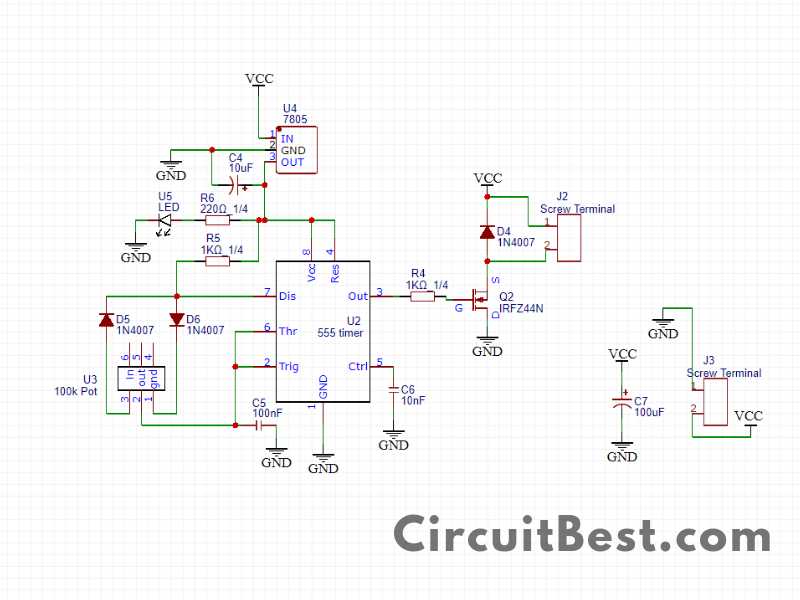
Choose the correct switching transistors based on the operating voltage and current requirements of your rotating device. Ensure each phase line is rated to handle peak currents without thermal stress, and position them to allow airflow around heat sinks.
Optimize pulse modulation settings to regulate rotational output. Use a microcontroller or dedicated driver IC to generate precise timing signals. Maintain consistent pulse widths across all channels to avoid uneven torque and vibration.
Connection Layout
Follow these steps for proper termination:
- Connect each feedback sensor wire to the corresponding input on the driver IC.
- Keep signal pairs twisted to reduce electromagnetic interference.
- Secure power supply rails with decoupling capacitors close to active components.
- Route high-current paths away from sensitive logic lines to prevent noise injection.
Testing and Adjustment
After assembly, perform a staged ramp-up test. Monitor voltage and current at each phase, check feedback pulse integrity, and adjust potentiometers or software parameters to achieve smooth operation. Document readings for future troubleshooting and verify that thermal sensors trigger correctly under high load.
Selecting Components for Stable Motor Operation
Choose power transistors with voltage and current ratings at least 25% higher than the expected peak load. MOSFETs with low on-resistance reduce heat generation and improve efficiency during high-duty operation. Position them to allow airflow or attach heatsinks for thermal stability.
Use decoupling capacitors near all active ICs to smooth voltage fluctuations. Electrolytic capacitors handle bulk energy storage, while ceramic capacitors filter high-frequency noise. Place them as close as possible to the device pins to minimize trace inductance.
Driver and Feedback Selection
Select a driver IC that supports the required phase switching and timing resolution. Combine it with hall-effect sensors or optical encoders to provide accurate rotational feedback. Ensure the sensor supply voltage matches logic levels of the driver to avoid misreads or missed pulses.
Wire gauge for phase connections must match current requirements. For currents exceeding 10 A, use 18 AWG or thicker insulated wire. Route power lines away from sensitive signal traces and twist feedback wires to reduce electromagnetic interference that can cause jitter or uneven operation.
Thermal and Safety Components
Include thermal sensors and fuses in critical positions. Place temperature monitoring near power transistors and windings, while fuses should protect each supply rail. This setup prevents overheating and protects the entire assembly from catastrophic failure during overcurrent conditions.