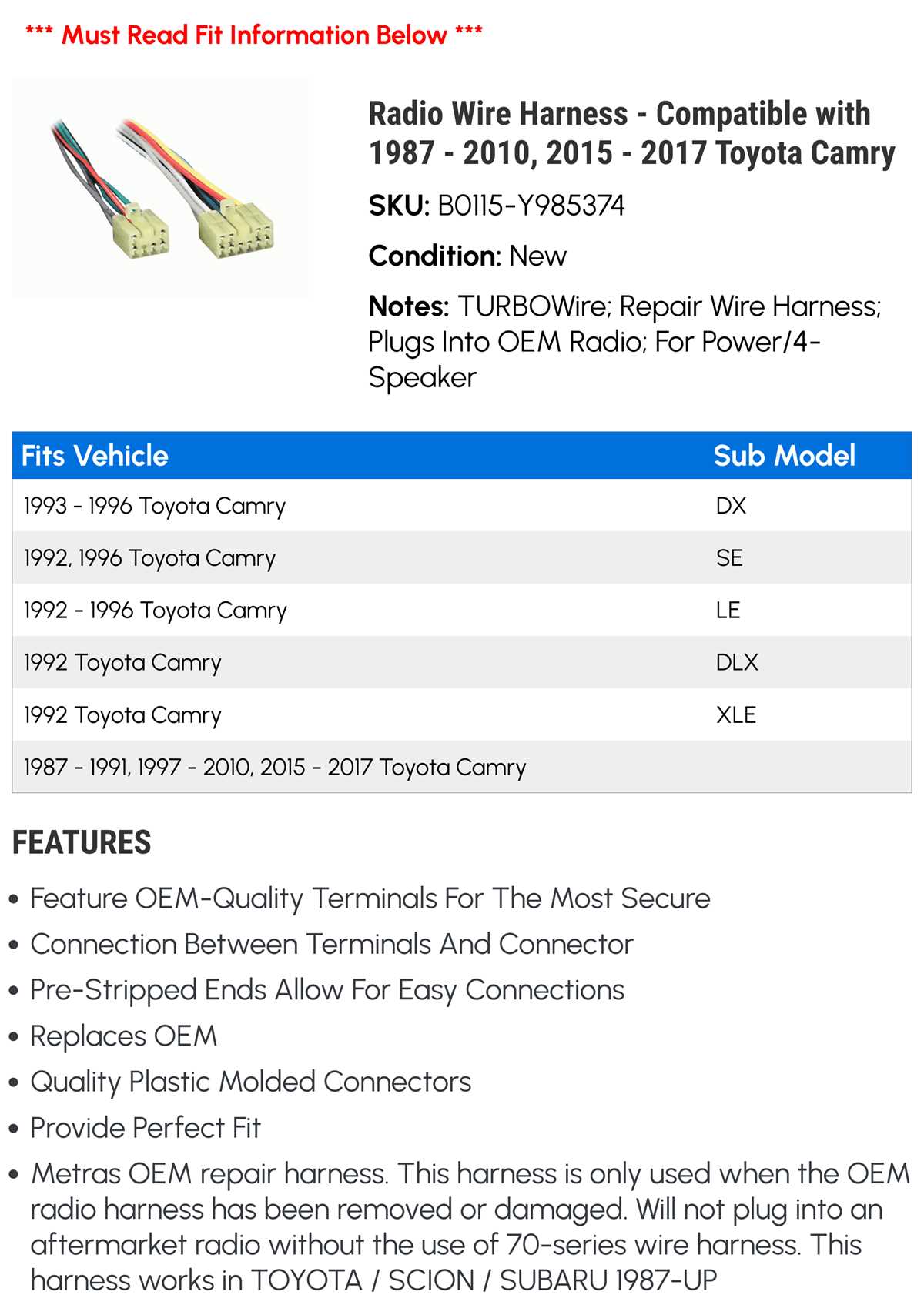
Start by identifying the power supply wire. This is typically a thick wire that connects directly to the battery. Make sure it is securely attached, with a fuse installed close to the source to prevent potential electrical issues. The fuse should match the amperage rating specified for your system to avoid overloading.
Next, connect the ground wire to a clean, unpainted metal surface on the vehicle’s frame. A proper ground connection is key to avoiding electrical interference and ensuring smooth operation of the entire system. Double-check that this connection is solid and free of rust or paint.
After securing the power and ground connections, move on to the speaker terminals. Match the wire colors to the corresponding connections on the audio system. Pay careful attention to the polarity, as incorrect wiring can cause poor sound quality or no sound at all. If you’re uncertain about any connections, consult the manual for specific details on each wire.
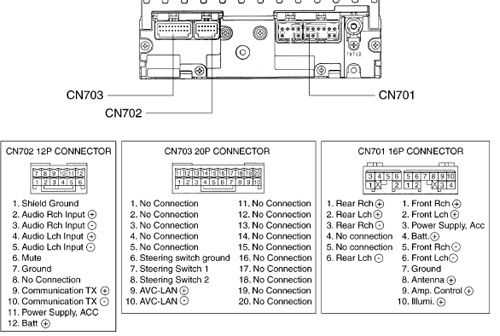
Wiring Guide for Vehicle Audio System

First, connect the power wire to the positive terminal of the vehicle’s battery. This wire typically needs a fuse installed within 18 inches of the battery to prevent electrical overloads. Ensure the fuse amperage matches the power requirements of your system.
The ground connection is equally important. Attach the ground wire to a clean, unpainted metal surface on the vehicle’s frame. This provides a stable reference and helps avoid signal interference, which can affect sound quality. Ensure this connection is tight and free of corrosion.
Next, you need to route the speaker wires to the correct terminals. Speaker wires usually have markings for positive and negative connections. Match the wire color to the corresponding terminal on the audio unit and the speakers. Incorrect polarity can lead to poor sound performance or no sound at all.
- For example, the left-front speaker may be connected to the white wire for the positive terminal and the white with black stripe for the negative terminal.
- The right-front speaker typically uses the gray wire for positive and gray with black for negative.
- Ensure these connections are secure and that no exposed wire is touching any metal parts.
Some systems include additional wires for features like illumination and dimming. Make sure these wires are correctly connected to the corresponding circuits in the vehicle. Typically, these are linked to the vehicle’s lighting system to control brightness when the headlights are on.
After all connections are made, double-check that no wires are exposed, and all terminals are securely fastened. Using zip ties to keep the wires organized and prevent them from being pinched can improve the overall installation. A clean, organized setup ensures both safety and longevity.
Finally, test the system by turning on the vehicle and checking the functionality of each speaker. If any issues arise, verify each connection again, particularly for loose or reversed wires. Troubleshooting involves ensuring all connections are solid and properly matched to their corresponding terminals.
Understanding the Vehicle Audio System Wiring
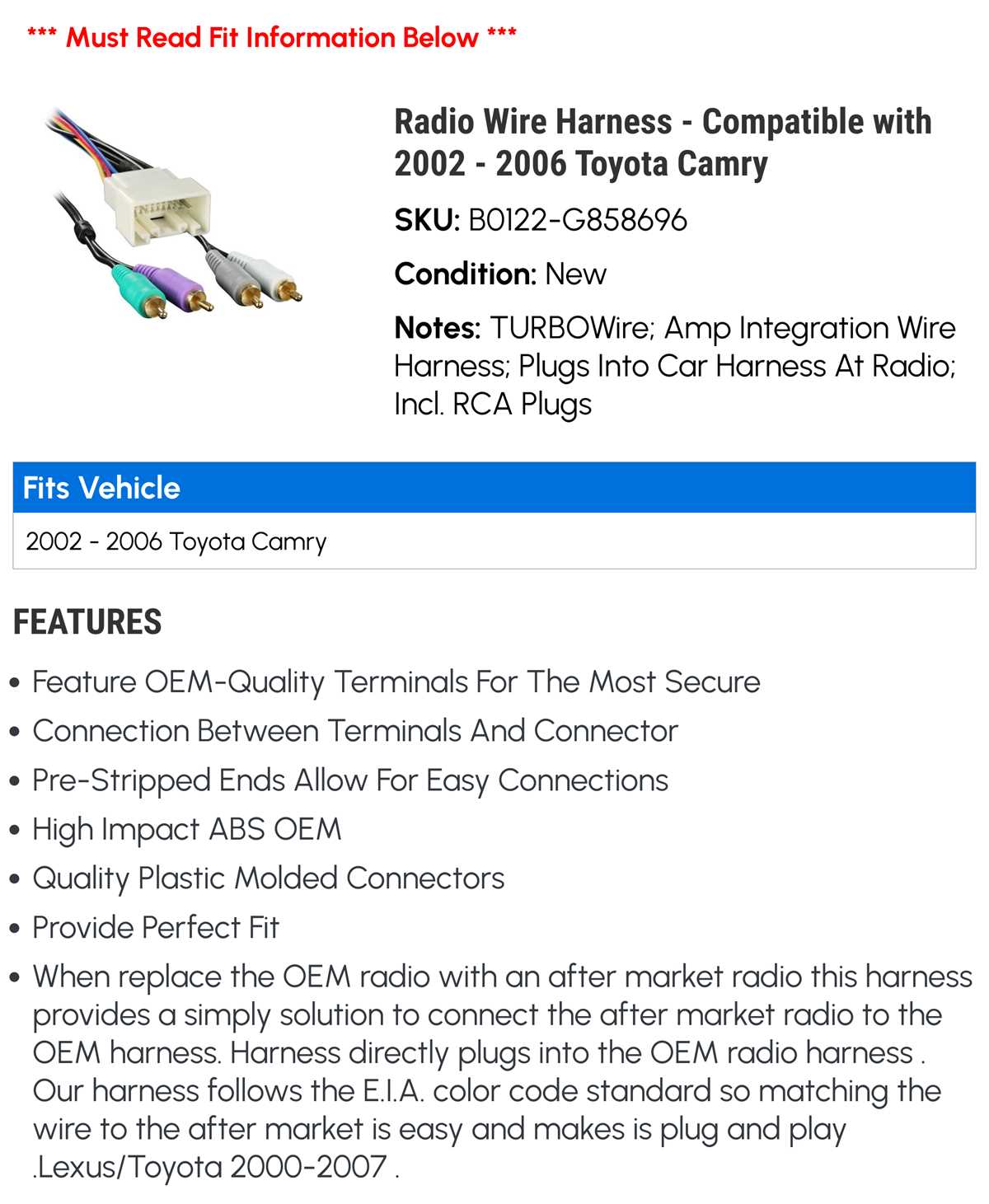
Begin by identifying the power wire, typically a solid color like red. This wire provides the constant power to the unit and needs to be connected to the battery’s positive terminal. Ensure that you place a fuse near the source to prevent overcurrent damage.
Next, the ground wire is crucial for the system’s stability. It is usually black and should be connected to an unpainted metal part of the vehicle’s frame. A solid ground connection prevents interference and ensures that the audio system functions correctly.
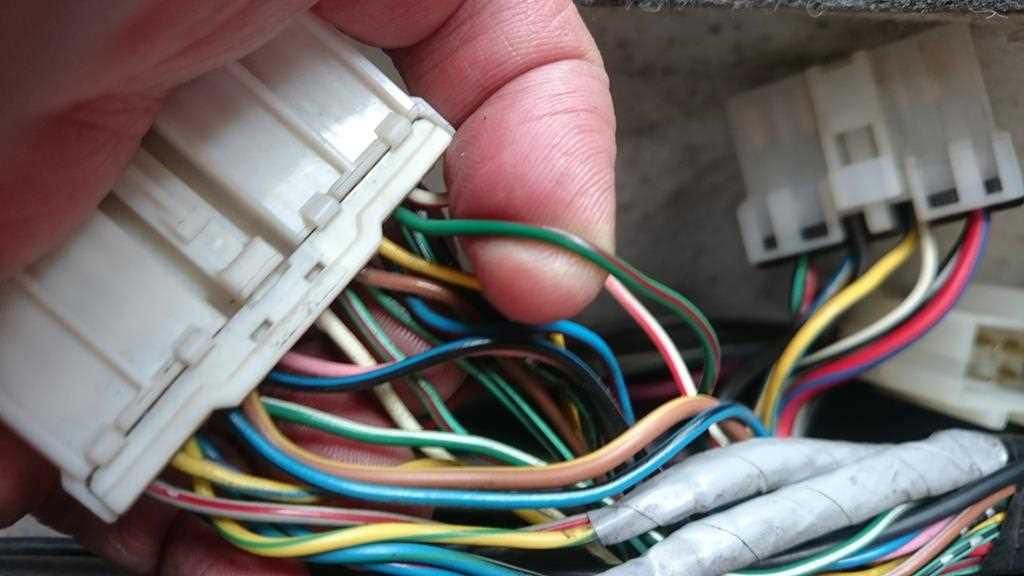
Speaker wires are commonly color-coded, where each color corresponds to a specific speaker. For example, the white wire usually connects to the left-front speaker, and gray connects to the right-front speaker. The black or gray with a stripe typically indicates the negative terminal, and you must ensure the positive and negative connections are correctly matched.
Additional wires like the illumination or dimming circuit may be present, typically colored orange or orange with a white stripe. These wires connect to the vehicle’s lighting system and adjust the brightness of the display when the headlights are turned on.
Finally, double-check all the connections, especially the power and speaker terminals, before powering up the system. Incorrect connections can lead to malfunctioning or damage, so take time to verify that all wires are securely attached and well-insulated.