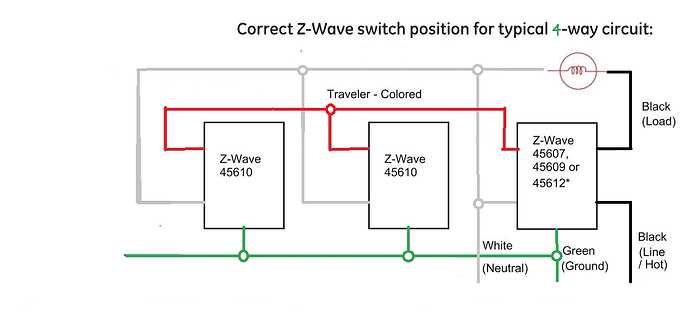
Connect the incoming line directly to the first terminal of the device using a 14 AWG copper conductor for standard 120V circuits. Ensure all neutral connections are secured to maintain continuous current flow and prevent overheating.
Identify traveler conductors clearly by marking them with colored tape at both ends. This simplifies routing between multiple control points and prevents accidental cross-connections.
Secure the device in a non-conductive box and attach the metal frame to the building ground. Use a multimeter to verify correct line and load orientation before restoring energy to the circuit to avoid electrical faults.
Separate conductors using cable clamps or conduit to protect against abrasion and maintain organized routing. Check for loose terminals or exposed strands that could create shorts or interfere with reliable operation.
4 Position Control Device Connection Guide with Line at the Panel
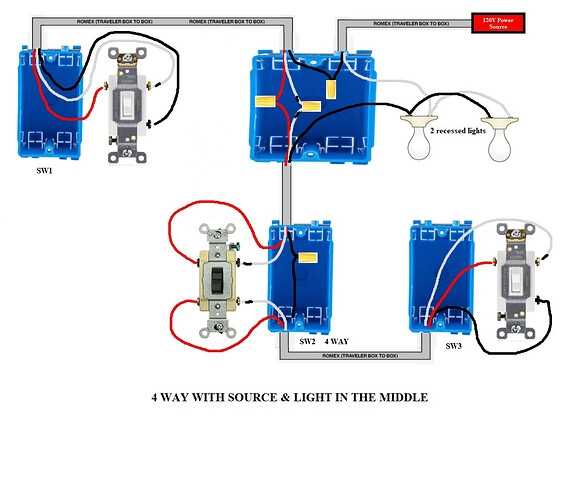
Attach the incoming line to the first terminal using 14 AWG copper for standard 120V circuits. Confirm that the neutral is connected to the corresponding terminal to ensure continuous flow and avoid overheating.
Identify traveler conductors with colored tape at both ends. This helps distinguish connections between multiple control points and prevents incorrect routing.
Route conductors through non-conductive boxes and use cable clamps or flexible conduit to protect insulation from abrasion or contact with sharp edges.
Verify continuity of each conductor with a multimeter before final assembly. This ensures no breaks or loose strands are present that could compromise the circuit.
Connect intermediate travelers to corresponding terminals on the second device using the same gauge conductor. Tighten all screws according to manufacturer torque recommendations to prevent loosening over time.
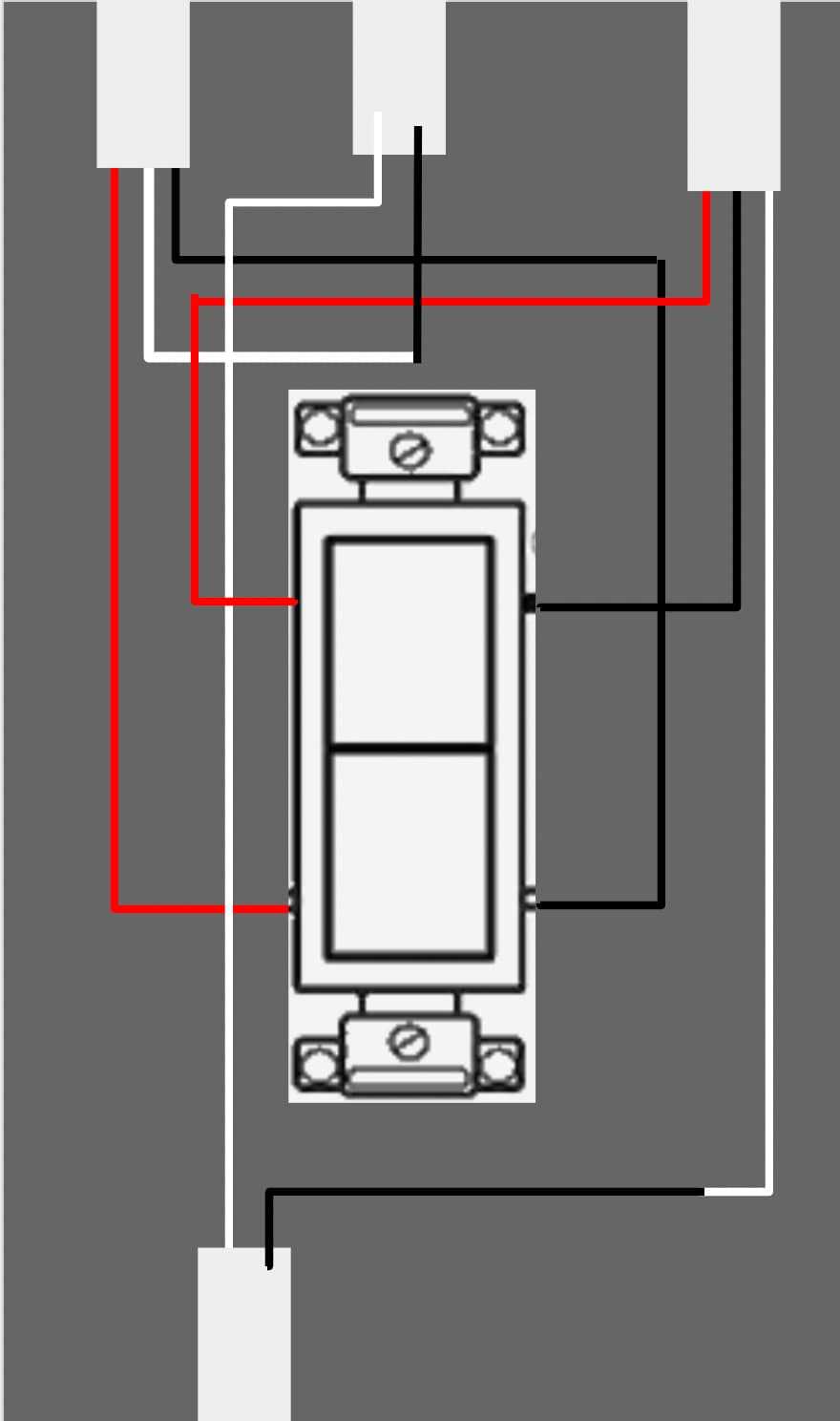
- Separate line and neutral conductors to prevent accidental contact.
- Secure all devices to non-conductive backplates.
- Label all terminals for easier future maintenance or troubleshooting.
Ground metal frames of all control devices to the building grounding system. Ensure connections are clean, corrosion-free, and tightly secured to maintain safety under fault conditions.
Test the entire circuit by activating each control point in sequence. Verify that all lights or loads operate correctly from every location and that no terminals overheat or produce unexpected results during operation.
Identifying Line and Load Conductors for the Circuit
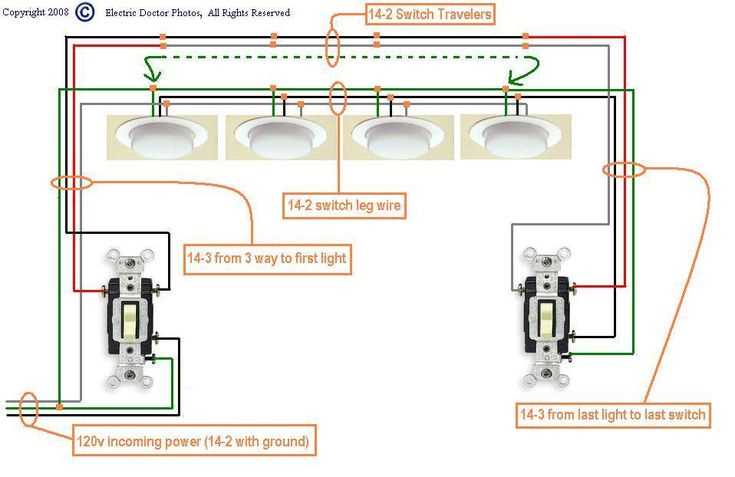
Test each conductor with a non-contact voltage tester to determine which carries current from the panel. Mark this line with colored tape to distinguish it from return paths and avoid accidental reversal during installation.
Trace the return conductor to the load using a multimeter for continuity verification. Ensure the line and return are not touching each other or any metal surfaces to prevent short circuits and maintain stable current flow.
Label all terminals clearly at both ends of the conductors and secure them with proper screws. Keep cables separated in the junction box to reduce interference, prevent insulation damage, and simplify future maintenance or troubleshooting tasks.