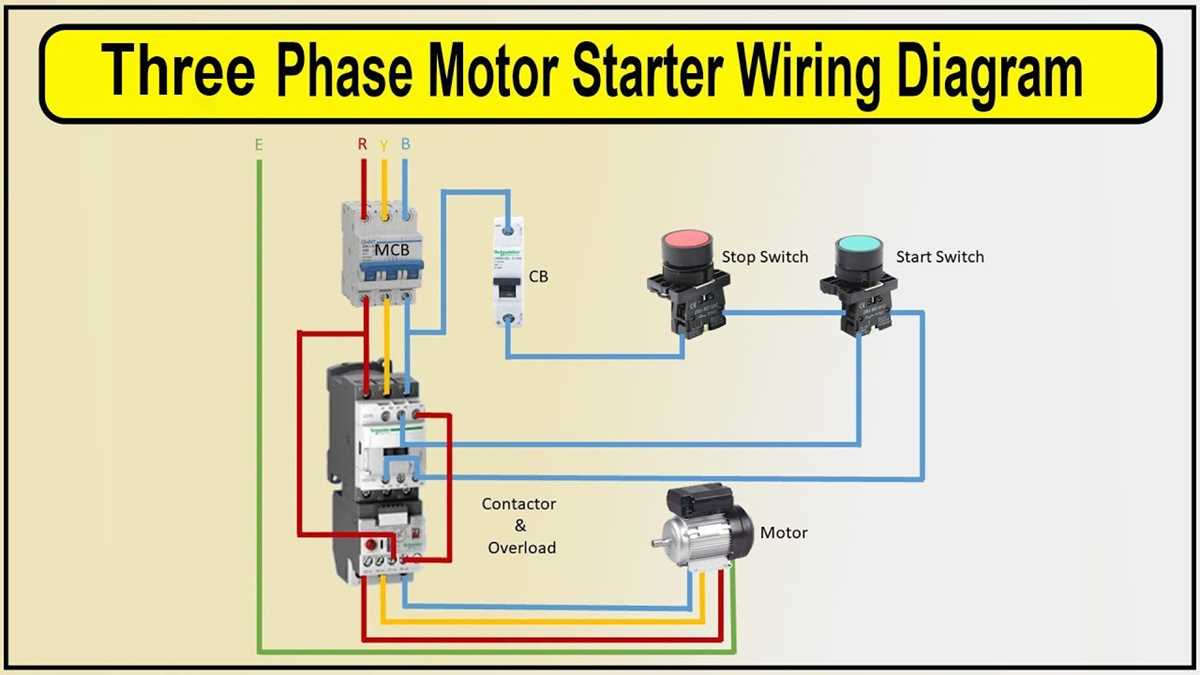
Connect the three incoming power lines to the contactor terminals labeled L1, L2, and L3, then route the outputs T1, T2, and T3 through an overload relay before reaching the electric drive. This arrangement allows the contactor to control power delivery while the overload relay interrupts current if load exceeds the rated limit.
Most industrial drive units operate on 380–480 V AC supplied through three alternating lines. The contactor coil receives a lower control voltage, commonly 24 V, 120 V, or 230 V depending on the control circuit design. Pressing the start push button energizes the coil, closing the main contacts and supplying current to the drive.
The stop push button sits in series with the coil circuit. Pressing it breaks the control path, de-energizes the coil, and opens the contactor contacts. This removes power from the drive immediately and protects equipment from unintended operation.
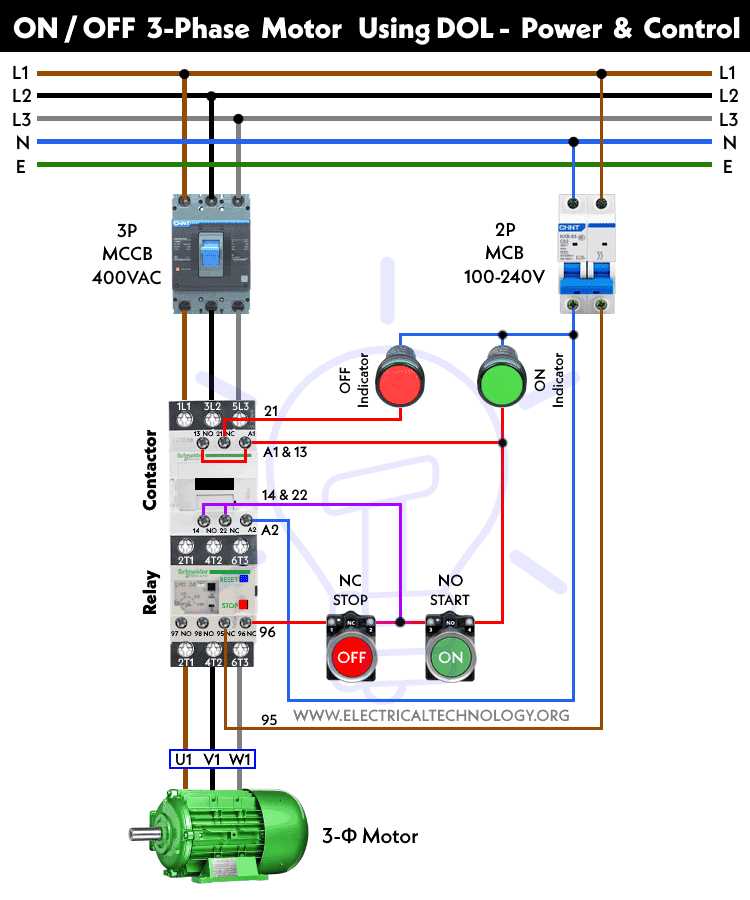
Thermal overload protection monitors current through each line conductor. If load rises above the set value for several seconds, the relay trips and opens an auxiliary contact in the control circuit. This action disconnects the drive before winding insulation overheats.
3 Phase Motor Starter Wiring Diagram With Contactor Overload and Control Circuit
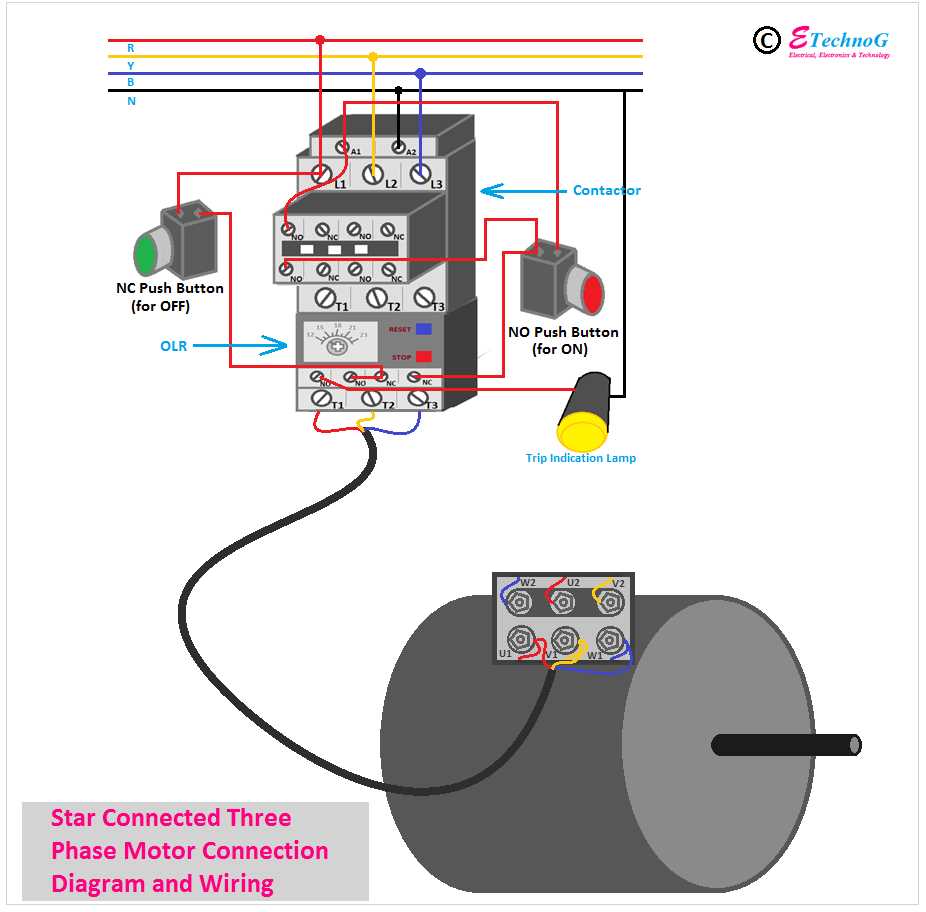
Connect the three incoming power lines to contactor terminals L1, L2, and L3. Route the outgoing terminals T1, T2, and T3 through a thermal overload relay before they reach the electric drive. This arrangement allows the contactor to switch high current while the protection relay monitors load on each line.
Select a contactor rated above the full-load current of the drive unit. For example, a 7.5 kW industrial drive drawing about 15 A at 400 V should use a contactor rated at 25–32 A. Oversized contacts reduce heat buildup during frequent switching cycles.
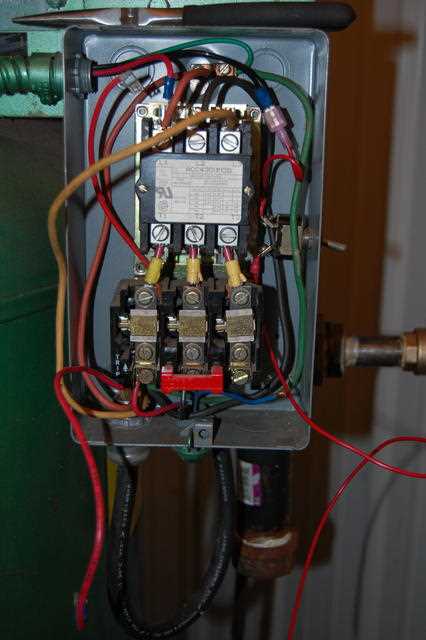
The control circuit energizes the electromagnetic coil inside the contactor. A normally open start push button sends control voltage to the coil, closing the main contacts and allowing power from all three supply lines to reach the rotating machine.
A normally closed stop push button sits in series with the coil circuit. Pressing this switch breaks the control path and de-energizes the contactor, instantly opening the power contacts. This action removes current from the drive and halts rotation.
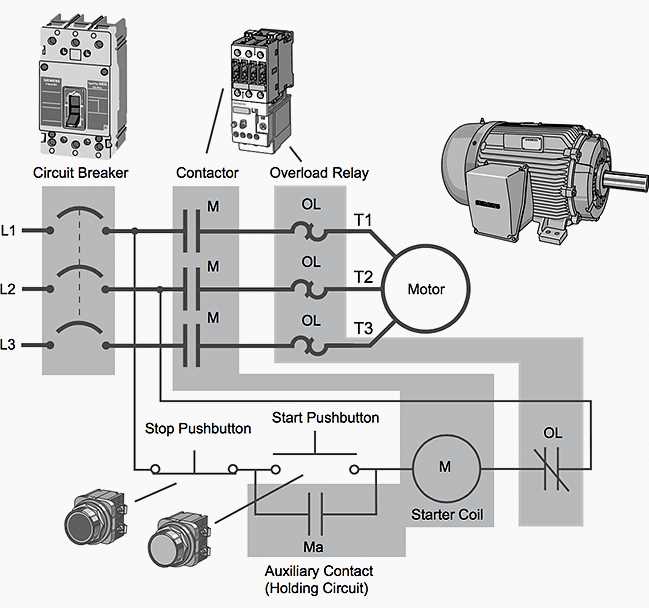
The overload relay includes auxiliary contacts connected to the control path. If current exceeds the relay setting for several seconds, the internal mechanism trips and opens this auxiliary contact. The contactor coil then loses voltage, disconnecting the drive before winding insulation overheats.
Connecting Three Phase Power Lines to Contactor and Overload Relay Terminals
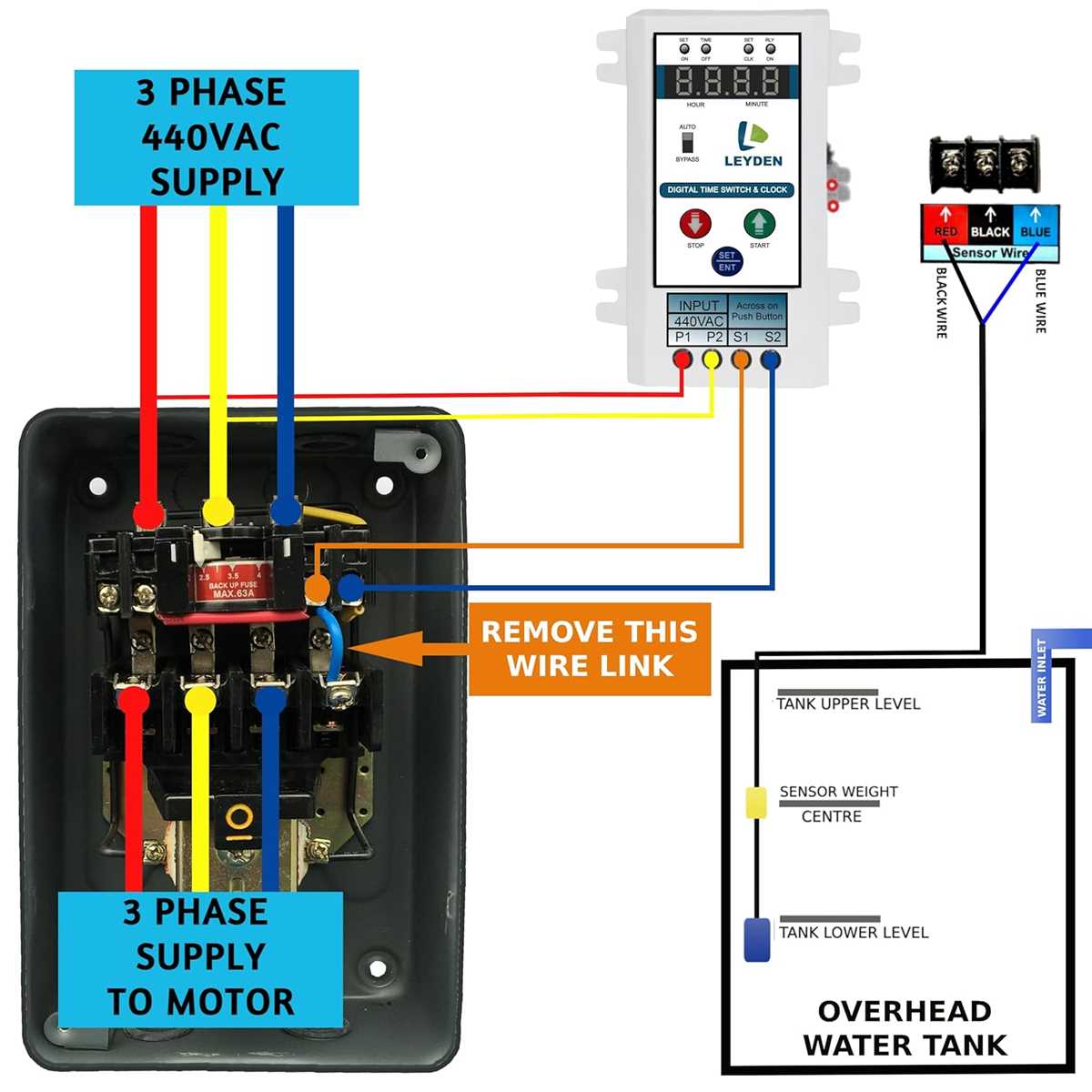
Attach the three incoming supply conductors to the contactor input terminals labeled L1, L2, and L3. Tighten each terminal using the torque value listed on the contactor housing, usually between 2.5 and 3.5 Nm for terminals handling currents up to 32 A. Route the outgoing terminals T1, T2, and T3 from the contactor directly into the overload relay inputs so that all current feeding the rotating machine passes through the protection device.
Follow this connection order during installation:
- Incoming supply lines → contactor inputs L1, L2, L3
- Contactor outputs T1, T2, T3 → overload relay inputs
- Overload relay outputs → terminals of the rotating drive
- Ground conductor → equipment grounding terminal on the frame
This layout allows the electromagnetic switch to control power delivery while the overload device monitors current on each supply conductor and disconnects the circuit if load rises above the set value.