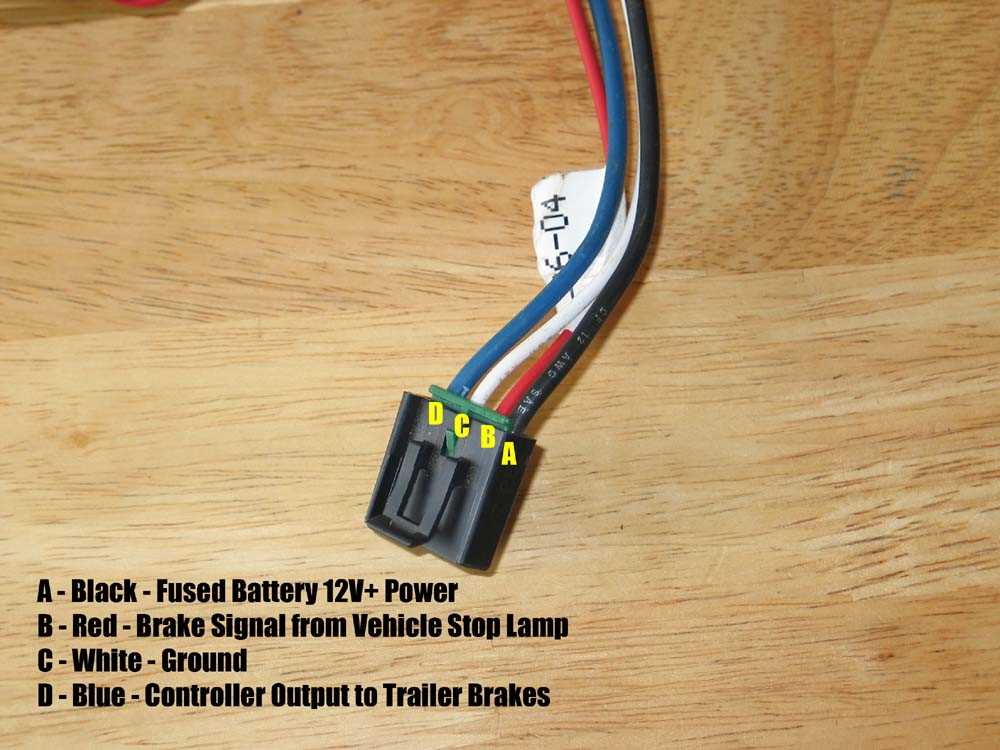
Use color-coded leads to match the towing vehicle’s control output with the trailer’s actuators. Red wires typically carry the main power feed, while blue or green signals trigger the actuating units. Securing each terminal with corrosion-resistant connectors prevents voltage loss and overheating.
Ensure the control module is grounded directly to the vehicle frame. A poor chassis connection can create delayed response or intermittent operation. Use a multimeter to verify resistance below 0.2 ohms between the ground point and battery negative post.
Route all cables along factory harness channels whenever possible. Avoid sharp bends or areas prone to heat, such as exhaust pipes. Protective split tubing and zip ties minimize abrasion and maintain consistent signal flow.
Test each line individually before full deployment. Apply a handheld controller to trigger the trailer’s actuators while monitoring current draw. Values outside the recommended 4–6 amps per unit indicate a loose connection or shorted coil that must be addressed before towing.
Trailer Stop Control Connections
Match each actuator lead to its corresponding control output. Red usually supplies continuous power, blue or green triggers the actuator magnets, and white connects to the chassis ground. Confirm tight crimps or soldered joints to avoid voltage drops under load.
Run signal cables separately from high-current circuits. Crossing with starter or alternator lines can induce interference, causing delayed engagement. Maintain at least a 2-inch separation when routing along the frame.
Secure each cable with clamps or zip ties at regular intervals. Loose lines vibrate against metal surfaces, leading to insulation wear or shorts. Check points near suspension mounts carefully.
Test actuator function with a handheld controller before connecting the full trailer.
- Trigger each unit independently.
- Measure current draw; typical range: 4–6 amps per actuator.
- Inspect for coil heating or irregular motion.
Ground connections must contact bare metal only. Paint, rust, or corrosion increases resistance, reducing responsiveness. Scrape or sand surfaces to ensure continuity below 0.2 ohms.
When integrating with the towing vehicle’s power supply, use inline fuses rated 20–30% above the combined actuator draw. This protects against short circuits while avoiding nuisance trips during normal operation.
Inspect plug terminals for oxidation regularly.
- Clean with contact cleaner.
- Apply dielectric grease to prevent moisture intrusion.
- Re-torque screws to manufacturer specifications.
Label each lead clearly using heat-shrink tags. Future maintenance or trailer swaps become faster and safer, reducing the risk of reversing polarity or misconnecting triggers.
Step-by-Step Vehicle to Trailer Wire Connections
Connect the control output lead directly to the trailer actuator input. Use ring terminals and secure them under lock washers to maintain consistent contact. Match color codes: red for main power, blue for activation signal, and white for chassis return. Check each connection with a multimeter to confirm continuity before finalizing the harness.
Route all lines along existing frame channels to prevent abrasion and heat exposure. Avoid proximity to exhaust pipes and moving suspension parts. Fasten with non-conductive clips every 12–18 inches and protect exposed sections with split tubing. Test the full system by applying the controller at low speed and monitoring each actuator’s response, ensuring current draw stays within 4–6 amps per unit.