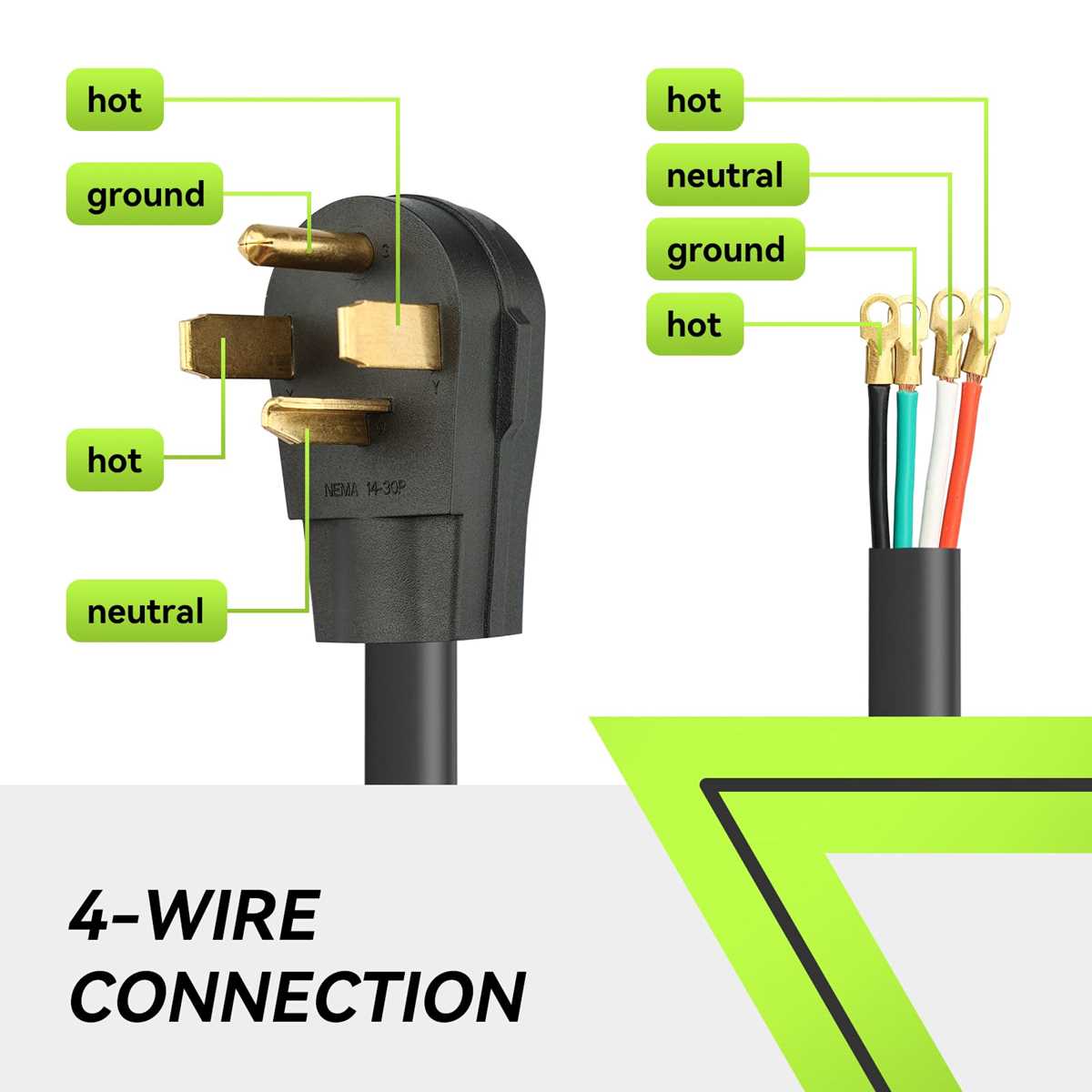
Connect the appliance cord using two hot conductors, one neutral conductor, and one equipment grounding conductor at the rear terminal block of the laundry appliance. The two hot conductors deliver 240 V across the heating element, while the neutral conductor provides 120 V for internal components such as the motor, timer, and control electronics.
Most modern laundry units require a NEMA 14-30 plug connected to a matching receptacle supplied by a 30 amp double pole breaker. The red and black conductors attach to the outer terminals of the terminal block, the white conductor connects to the center neutral terminal, and the green or bare conductor attaches to the chassis grounding screw.
Use cable rated 10 AWG copper for the branch supply feeding the receptacle. This conductor size handles the current drawn by heating elements that commonly range between 4500 and 5600 watts. Loose terminal screws may produce overheating at the connection points, so tighten terminal nuts firmly using manufacturer torque recommendations.
Verify voltage at the receptacle before connecting the appliance. A multimeter should read approximately 240 V between the two hot slots and about 120 V between each hot slot and the neutral slot. A proper ground connection reduces shock risk and allows protective devices to trip if a fault occurs inside the appliance housing.
4 Wire Dryer Wiring Diagram with 240V Plug Outlet and Terminal Connections
Attach the appliance cord to the rear terminal block using two hot conductors, one neutral conductor, and one equipment grounding conductor. The red and black conductors connect to the outer terminals, the white conductor attaches to the center neutral terminal, and the green or bare conductor fastens to the metal chassis ground screw.
The heating element inside most laundry units operates on 240 volts, which is supplied by the two hot conductors. Internal components such as the drum motor, timer, and control board run on 120 volts, which is created by combining one hot conductor with the neutral conductor. This arrangement allows a single appliance to operate both high-power heating elements and lower-voltage control components.
Plug and Receptacle Configuration
Use a NEMA 14-30 plug connected to a matching wall receptacle. The branch supply normally comes from a 30 amp double pole breaker in the service panel. The receptacle includes four slots:
• Two angled slots for the hot conductors
• One straight slot for the neutral conductor
• One round slot for the grounding conductor
Terminal Block Connections
Remove the rear access cover on the appliance and locate the three main terminals. Connect conductors as follows:
• Left terminal → hot conductor (often red)
• Center terminal → neutral conductor (white)
• Right terminal → second hot conductor (black)
Secure the grounding conductor to the chassis grounding screw just below the terminal block. Many appliances include a metal bonding strap that must be removed or repositioned when using a four-conductor cord. Tighten terminal nuts firmly so the ring connectors remain fixed and cannot rotate under load.
Verify voltage at the wall receptacle before connecting the appliance. A multimeter should measure about 240 V between the two hot slots and about 120 V between each hot slot and the neutral slot. A reading near zero between neutral and ground confirms proper connection of the grounding conductor.
4 Wire Dryer Wiring Diagram with Hot Neutral and Ground Terminal Layout
Connect the two hot conductors to the outer terminals of the appliance terminal block, attach the neutral conductor to the center terminal, and fasten the equipment grounding conductor to the metal chassis ground screw. This configuration supplies 240 V across the heating element through the two hot conductors while providing 120 V for internal components such as the drum motor and control electronics through one hot conductor and the neutral path.
Typical terminal layout inside the appliance connection panel:
- Left terminal – hot conductor from the branch supply
- Center terminal – neutral conductor returning current for 120 V components
- Right terminal – second hot conductor completing the 240 V supply
- Ground screw on chassis – equipment grounding conductor connected to the metal cabinet