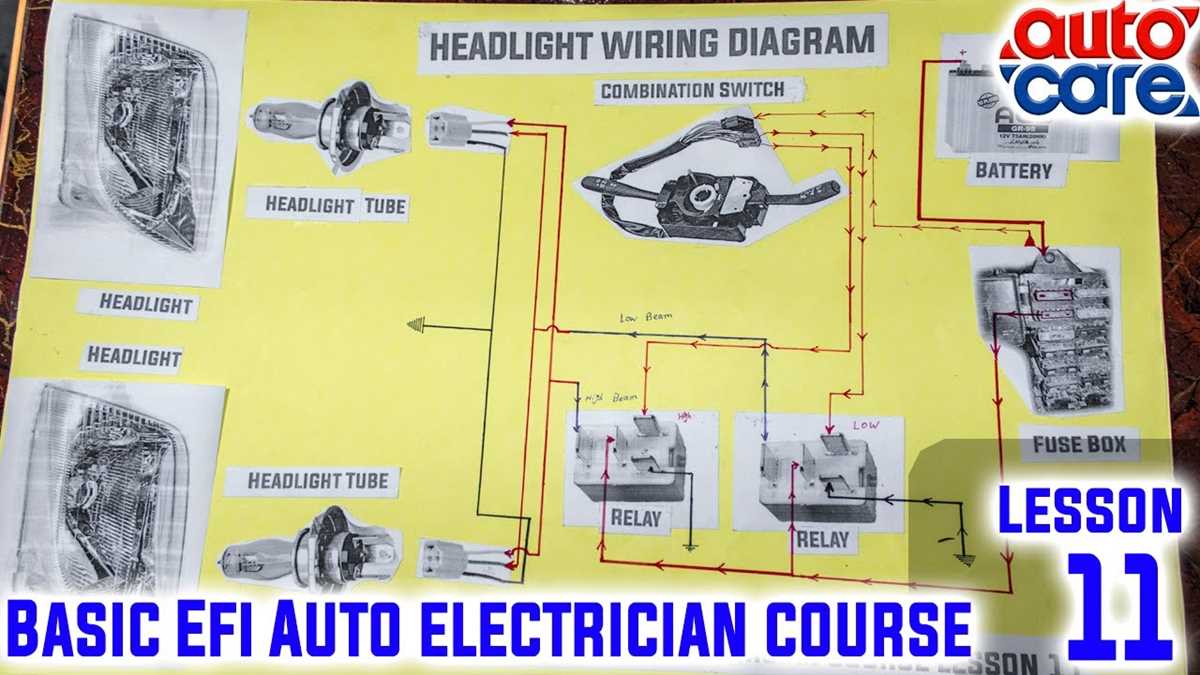
Start by identifying each power source and ground point in the front and rear assemblies. Use color-coded wires to distinguish signal pathways for indicators, brake modules, and marker bulbs. Confirm voltage levels with a multimeter before connecting any terminals.
Follow the specified pinout for headlamps and auxiliary lamps to prevent shorts or blown fuses. Maintain consistent wire gauge throughout the harness; typically, 14–16 AWG works for main beams, while 18–20 AWG is sufficient for indicators and side markers. Secure all splices with heat-shrink tubing to avoid corrosion and signal loss.
Check continuity after each connection using a test light or continuity tester. Sequentially activate each function–high beam, low beam, brake, and turn signals–to verify proper operation. Document the routing paths to simplify future maintenance or component replacement.
Use relays for high-draw elements such as fog lamps and daytime running lamps to protect switches and wiring from overload. Ensure relay grounds are attached to the chassis near the fixture for minimal voltage drop.
Label each harness section clearly to match connectors with their respective sockets in the instrument cluster and exterior modules. Double-check polarity before installing bulbs to avoid premature burnout or flickering.
Connections and Layouts for Vehicle Illumination Systems
Begin by tracing each feed line from the battery to front and rear modules. Use separate fuses for high and low beams to prevent overload. Color-coded insulation helps identify circuits during inspection and reduces misconnection risks.
Integrate relays for auxiliary modules like fog and daytime running units to maintain stable voltage at the bulb terminals. Mount relays close to the power source and ensure chassis grounding is secure to prevent flickering or voltage drop. Short circuits can be avoided by routing harnesses away from moving suspension parts.
Check all connectors with a multimeter to verify continuity and voltage at each terminal. Document routing paths and mark terminal assignments with tape or labels to simplify future replacements. Using heat-shrink sleeves on splices improves corrosion resistance and extends service life.
Headlight and Taillight Connections
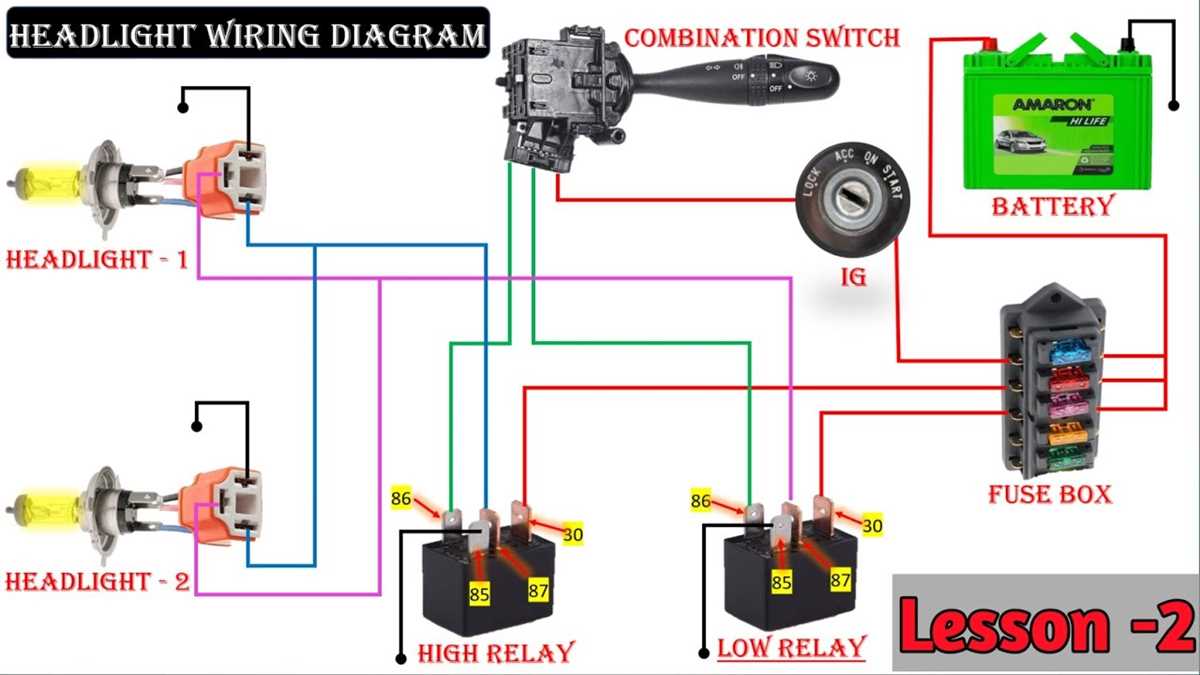
Start by isolating each terminal on front and rear modules and labeling them according to function: high beam, low beam, brake, and turn indicators. Use a multimeter to confirm voltage presence before making connections.
Maintain proper fuse allocation for each segment. Suggested configuration: 10A for low beams, 15A for high beams, 7.5A for rear indicators, and 10A for brake modules. Separate fuses prevent cascading failures in case of short circuits.
Follow these steps for connecting head units:
- Identify positive and negative terminals on the bulb socket.
- Attach supply wires with crimped connectors rated for 12–14 AWG.
- Secure all joints with heat-shrink sleeves to resist corrosion.
- Route harness along existing brackets, avoiding sharp edges and hot surfaces.
Rear modules require careful attention to signal differentiation. Use distinct color codes such as green for brake, brown for ground, and yellow for indicators. Ensure connectors click into place fully to prevent intermittent operation.
Check continuity and resistance across each circuit. Low resistance readings confirm solid contacts and prevent flickering. Include a step to test illumination under full load conditions.
Relays should be installed for high-demand elements like xenon or LED beams.
- Mount relay near battery terminals to reduce voltage drop.
- Use short, thick wires to handle current spikes.
- Ground the relay body directly to chassis for stability.
Finalize connections by labeling each harness segment with permanent markers or heat-resistant tape. Documenting routing and terminal assignments simplifies future maintenance and ensures safe replacements of bulbs or sockets.