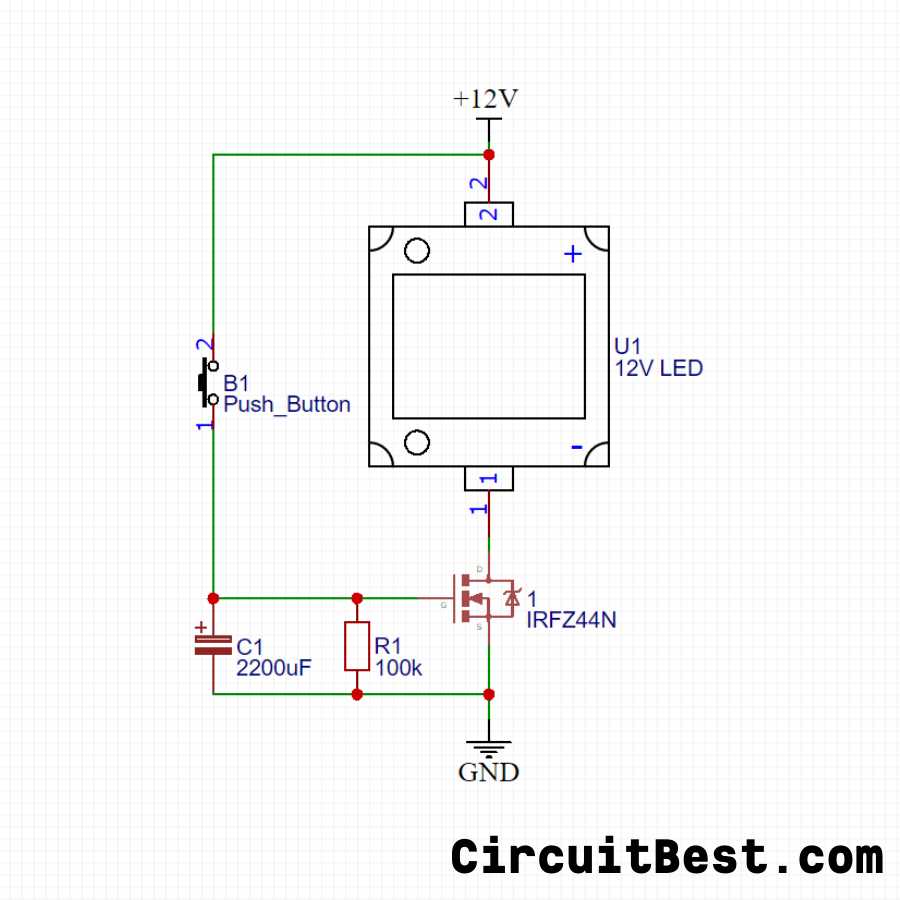
To implement an automatic power cycle with a set delay, connect the right components to control the time intervals precisely. Start by using a resistor and capacitor combination that defines the delay duration. The capacitor charges over time, and when it reaches a specific threshold, it triggers the switching mechanism. This method is commonly used in various applications such as controlling lights, appliances, or other devices that need to be powered on or off after a set time.
Accurate timing can be achieved by adjusting the resistor and capacitor values. The longer the capacitor takes to charge, the greater the delay before activation. By selecting the appropriate component ratings, you can easily control the timing for various devices. For example, a 10kΩ resistor and a 100µF capacitor could provide a delay of several seconds, while smaller values would create faster switching.
Once the initial delay is configured, it’s crucial to ensure that the switching mechanism can handle the load of the connected device. Using a relay or transistor switch helps protect the circuit from overcurrent, ensuring that the system remains stable during activation and deactivation cycles. Proper component selection and correct connections will guarantee reliable performance and prevent damage to your setup.
Building a Circuit for Controlled Power Switching
To design a system that switches devices after a set period, you’ll need to select a timing mechanism. The simplest method is using a combination of a capacitor and resistor to control the charging time. The longer it takes for the capacitor to reach a charge, the longer the delay before activation. This approach is effective in controlling low-power devices like lights or small motors that need to be powered after a predefined time interval.
Key Components for Constructing the System
The primary components in this setup include a capacitor, resistor, and a switching element such as a transistor or relay. The resistor and capacitor together define the time delay, while the relay or transistor is used to switch the load. To adjust the delay, you can change the resistor’s value or the capacitor’s capacitance. For a typical delay of a few seconds, values like 10kΩ for the resistor and 100µF for the capacitor are commonly used.
Ensuring Reliable Performance
After assembling the circuit, ensure that the switching element can handle the current and voltage of the device you’re controlling. If the relay or transistor is too small, it may overheat or fail. Also, verify the connections are correct to avoid short circuits or faulty operation. For more precise control, you can integrate a potentiometer to adjust the timing dynamically, giving flexibility to the circuit depending on the application.
How to Design a Basic Delay On Off System
To create a simple power control system with a timed activation, start by selecting the key components. You’ll need a capacitor and a resistor to form the timing component. The capacitor charges over time, and once it reaches the necessary voltage, it activates the switch. This can be done by connecting the capacitor to a transistor or relay that controls the load.
First, choose a resistor value that will control the charging time of the capacitor. A higher resistor value will increase the charging time, resulting in a longer delay. A 10kΩ resistor, combined with a 100µF capacitor, can give you a delay of a few seconds. This basic setup will control the amount of time the system waits before switching on or off.
The next step is connecting the resistor and capacitor to a transistor or relay. The transistor will act as a switch that is triggered once the capacitor reaches its threshold voltage. You can use an NPN transistor for this purpose. The emitter connects to ground, the collector to the negative terminal of the load, and the positive terminal of the load connects to the power source.
Now, focus on the switch’s behavior. Once the capacitor charges, it will provide the necessary voltage to trigger the transistor, which will then close the circuit and activate the load. The transistor can be replaced with a relay if you’re dealing with higher power devices that require more current. The relay can switch on and off without affecting the control circuit’s low power components.
To adjust the delay time, simply modify the resistor or capacitor values. For longer delays, increase the capacitor’s capacitance or the resistor’s resistance. For shorter delays, decrease these values. This simple method of using passive components offers flexibility in adjusting the timing for various applications.
Finally, test the circuit to ensure it works as expected. Use a multimeter to check for proper voltage across the components and verify that the load is being switched at the correct time. If there are any issues with timing or power delivery, double-check the component values and connections. Once the system is configured correctly, it can be used to control lights, motors, or other appliances with a delay in switching.