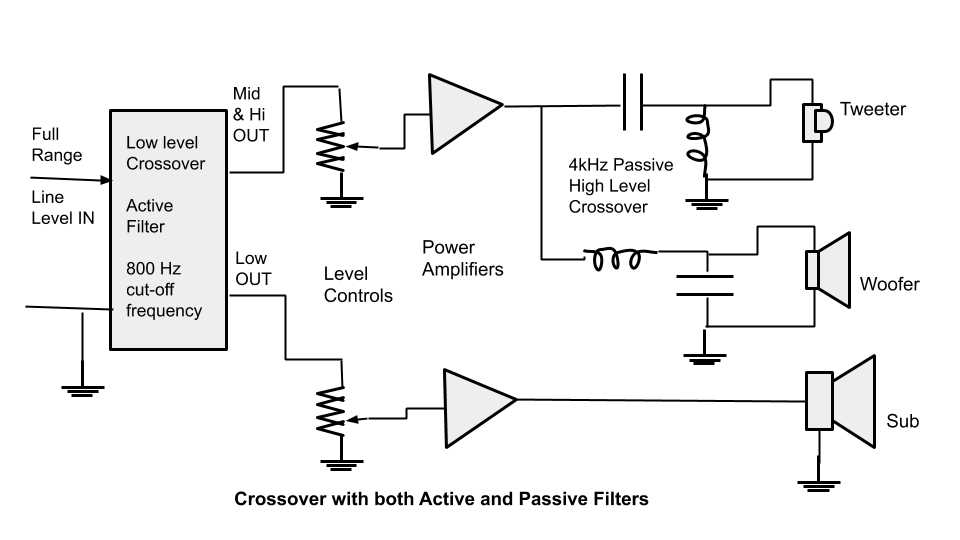
Connect high-quality capacitors and inductors in series and parallel to isolate low-frequency signals from mid and high tones, preventing overlap and distortion in your speaker setup.
Check resistance values carefully before installation. A mismatch in ohms can reduce signal strength or introduce unwanted resonances, compromising clarity in deep bass response.
Arrange components on a solid base to minimize vibration and maintain stable connections. Solder points should be clean and insulated to avoid shorting and preserve signal integrity over time.
Adjust the cutoff frequency by swapping or combining coils and capacitors to match the power handling of your speaker. For most systems, values between 80Hz and 120Hz deliver balanced low-end performance without muddying midrange tones.
Test the network incrementally using a tone generator or frequency sweeps to identify peaks, dips, or phase shifts. Fine-tuning at this stage prevents long-term distortion and ensures consistent bass delivery.
Filter Construction and Setup for Low-Frequency Audio
Use high-grade inductors and capacitors to create a network that separates deep tones from midrange signals. Arrange components on a rigid board to prevent movement and interference. Label each connection clearly to match input and output paths, avoiding reversed connections that can reduce performance.
Step-by-Step Assembly
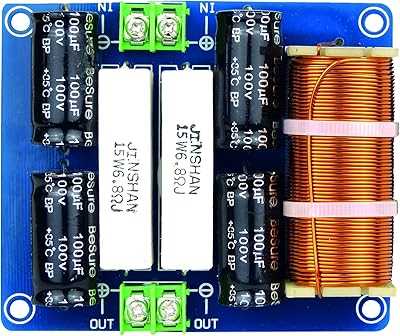
- Select inductors rated for the system’s current load.
- Choose capacitors with voltage ratings above the amplifier output.
- Mount components with firm mechanical support to minimize vibration.
- Solder connections carefully, ensuring no bridges or cold joints.
- Test each segment with a frequency generator before final enclosure installation.
Adjust the network by swapping values or adding small resistors to control damping. Measure output with a spectrum analyzer to verify that low tones pass cleanly while higher frequencies are attenuated, producing precise and controlled bass performance.
Selecting Components for Frequency Separation
Use high-quality inductors with minimal series resistance to maintain low-frequency clarity. Air-core types provide linear response at higher currents, while laminated iron cores allow compact designs for stronger load handling.
Capacitors should feature low loss and stable dielectric properties to prevent distortion at crossover points. Film or polypropylene options maintain performance under varying temperatures and voltage levels.
Incorporate precision resistors to adjust tonal balance and control damping between frequency ranges. Metal-film or non-inductive wire-wound resistors ensure consistent resistance without introducing audible artifacts during extended playback.
Test each component combination with a signal source and measurement equipment. Adjust values iteratively to achieve smooth frequency separation, ensuring deep tones pass cleanly while higher frequencies are properly attenuated.