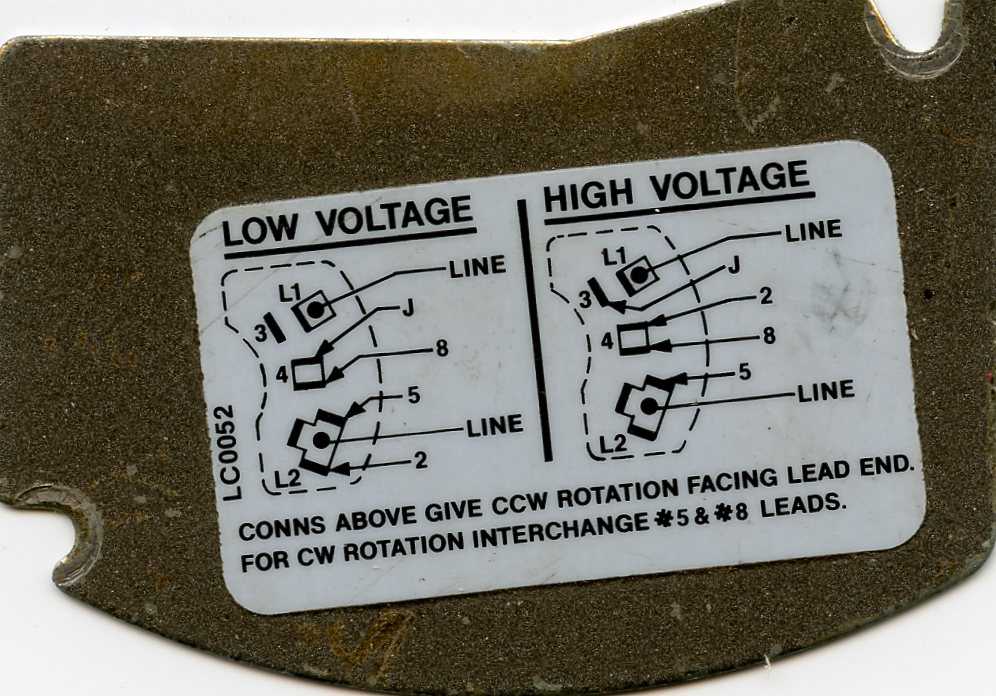
Check the label on the device to identify terminal markings before any connection. U, V, and W points usually indicate line inputs, while numbers like 1, 2, 3 may correspond to internal coil ends. Matching these accurately prevents overheating or tripping protective devices.
Use insulated cables rated for industrial loads and ensure each conductor is secured with appropriate lugs or connectors. Avoid twisting multiple strands together without a proper ferrule, as this can lead to loose contact and sparking.
Test continuity between leads with a multimeter before energizing the system. Measure resistance across each coil to detect shorts or open circuits. This step avoids damage to the device and connected circuitry.
Mark each conductor after connection to simplify future maintenance. Color-coding or numbered tags reduce the risk of incorrect reconnection during troubleshooting or relocation.
Install a protective switch or circuit breaker rated slightly above the full-load current of the device. This ensures that sudden load spikes do not damage internal components while maintaining safe operation.
Connecting a 3-Line 220V Industrial Rotating Device
Identify the three input terminals on the nameplate before attaching conductors. Labels such as L1, L2, L3 or A, B, C indicate the supply points, while numeric tags often show internal coil ends. Misalignment can cause overheating or immediate trip of protection systems.
Choose cables rated for at least 10% above the full-load current of the device. Use crimped lugs to secure each conductor. Avoid bare strand connections; loose contact leads to sparks and contactor damage.
Configure connections according to the selected pattern:
- Star setup: Join one end of each coil together and connect the remaining ends to supply lines. Ideal for lower start-up current.
- Delta setup: Connect coils end-to-end forming a closed loop, then attach each junction to a line. Provides higher torque at full speed.
Measure coil resistance before energizing to detect shorts or broken windings. Even minor deviations from the specified ohm range indicate potential faults. Use a calibrated ohmmeter for accurate readings.
Install a circuit breaker or fused disconnect with a rating slightly above the calculated load. Label each switch clearly, so operators can isolate the system safely during service.
Mark all connections with colored tape or numeric tags. Maintain a reference sheet for future maintenance, simplifying reconnections and reducing the risk of reversed input lines.
Identifying Terminals for Correct 3-Line 220V Connection
Locate the terminal block on the equipment and check for engraved or printed labels. Common markings such as U1, V1, W1 indicate line inputs, while U2, V2, W2 represent coil ends. Cross-referencing these with the nameplate values prevents reverse rotation or overheating.
Use a continuity tester to confirm which terminals are internally linked. Measure resistance between each pair; low resistance indicates a direct coil connection. Document every reading to avoid errors during star or delta configurations.
Secure each conductor with appropriately sized connectors and maintain consistent order. Apply color-coded sleeves or numeric tags for quick identification. This practice simplifies future service and reduces the risk of misconnection during maintenance or relocation.