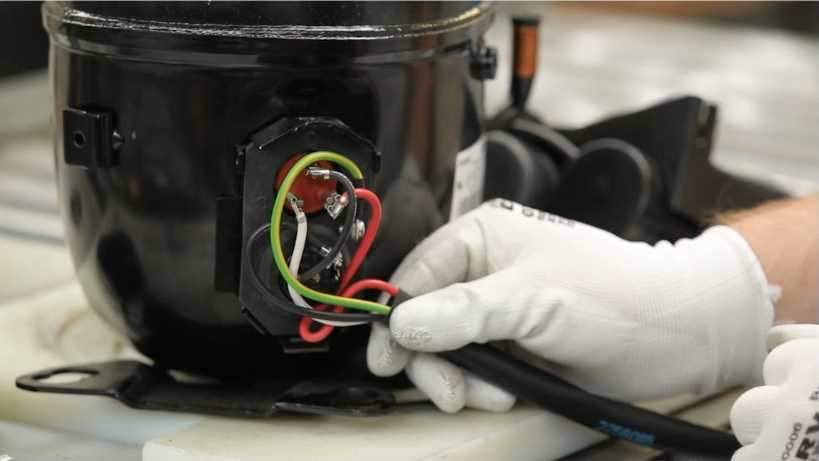
Switch off the main power before touching any terminals. Use a voltage tester to confirm the absence of current to prevent accidents during inspection and connection.
Identify the live, neutral, and ground leads at the terminal block. Black or red conductors typically carry line voltage, white is neutral, and green or bare copper is the grounding path. Label each for accurate assembly.
Examine the terminals for corrosion, oxidation, or loose screws. Clean contacts with a non-abrasive solution and tighten fasteners to maintain a stable electrical connection and prevent overheating.
Route the load conductor from the control board to the motor terminals without sharp bends. Ensure insulation is intact and wires do not touch metal surfaces that could create shorts.
Check auxiliary or sensor leads if present. Properly distinguish these from main power leads to avoid misconnection that could impair operation or damage the module.
Verify grounding continuity at each connection point. A solid ground path minimizes risk of electric shock and stabilizes control signals for consistent performance.
Test each connection before closing the panel. Apply power carefully and monitor motor startup, sensor responses, and indicator lights to confirm correct functionality.
Embraco Compressor Electrical Connection Guide
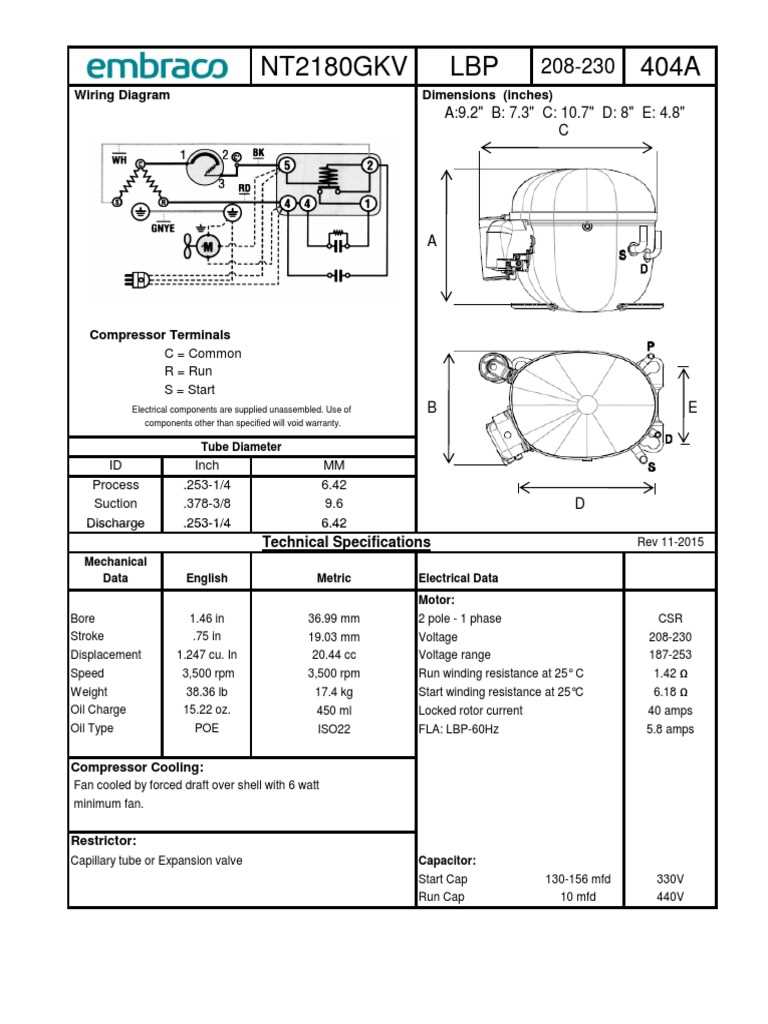
Turn off all power sources before starting any connections. Identify the main line, neutral, and ground leads using a voltage tester and label each wire. Confirm that the terminal screws are free of corrosion and fully tightened to prevent loose contacts that could cause overheating or erratic operation.
Follow these steps for secure assembly:
- Connect the line conductor to the terminal marked L or line input.
- Attach the neutral conductor to the designated N terminal, ensuring solid contact.
- Secure the ground wire to the green screw or metal chassis point.
- Verify auxiliary or sensor leads are properly routed and isolated from high-voltage conductors.
- After all leads are in place, apply power briefly and monitor motor rotation and indicator response to confirm correct connections before closing the panel.
Identifying Terminals and Power Leads
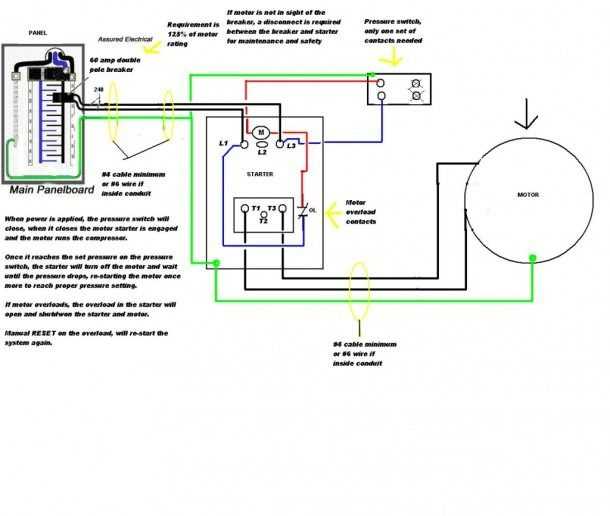
Begin by locating the input terminals marked for line, neutral, and ground connections. Use a multimeter to confirm which leads carry voltage and label them clearly to avoid misconnection. Ensure that insulation is intact and that no bare copper is exposed beyond the terminal points.
Check auxiliary terminals for sensors or control circuits. These are typically smaller and may be color-coded differently. Make sure each lead is routed away from moving parts and high-temperature surfaces to prevent shorts or damage during operation.
After all conductors are identified, secure them with the correct torque on the terminal screws. Test the assembly with a low-power trial to confirm correct polarity and continuity. Only once all readings are stable should full voltage be applied for standard operation.