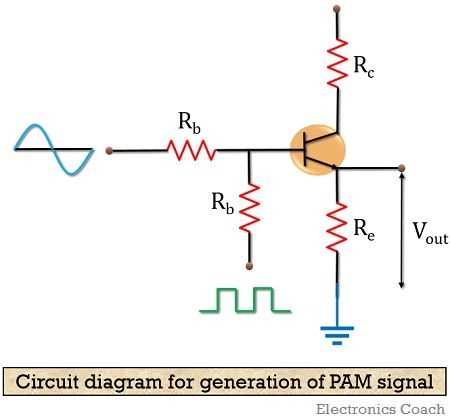
Begin by gathering the necessary components: an oscillator to generate the carrier wave, a modulator to vary its amplitude, and a power supply capable of handling the required voltage. The modulator is the heart of the system, varying the signal’s strength in response to an audio or data input.
Ensure that the frequency of the carrier wave matches the desired transmission frequency. For most applications, the carrier frequency should be significantly higher than the input signal, often in the kilohertz range. Use a frequency generator to achieve a stable carrier wave.
Next, connect the modulator to the carrier generator and input signal. This is typically done using a transformer or an operational amplifier configured to adjust the carrier wave’s amplitude based on the input. Proper grounding and shielding are important to prevent interference and ensure signal clarity.
Once the system is set up, use an oscilloscope to monitor the output. Verify that the carrier wave’s strength varies with the input signal. If the output is not as expected, check the connections and ensure the modulator circuit is receiving the correct voltage and signal.
Building a Signal Modulator for Transmission
Start by selecting the right oscillator to generate the carrier wave. Typically, you’ll want a stable high-frequency signal, often in the 1-10 MHz range, to ensure your modulated signal can be transmitted effectively. Ensure that the oscillator’s output is consistent and suitable for the frequency required by the communication system.
Once the carrier wave is generated, you need a method to vary its strength based on the input signal. This is often done with an amplifier circuit that uses the input audio or data signal to control the amplitude of the carrier. Use an operational amplifier (op-amp) for this function, ensuring it can handle the power required for the signal strength.
To complete the system, connect the output from the amplifier to the transmitting antenna. Proper grounding and signal isolation will help avoid unwanted interference and ensure your system operates efficiently. Monitor the output with an oscilloscope to ensure the signal’s strength varies in response to the input, confirming that the system is functioning as intended.
Understanding the Components of an AM Circuit
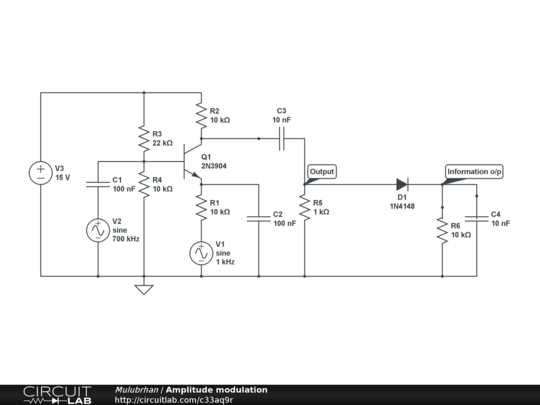
The primary components in a system that modifies signal strength are the oscillator, the modulator, and the amplifier. The oscillator is responsible for generating the high-frequency carrier wave that will be varied in strength. It’s important to select an oscillator with a stable output and suitable frequency for the desired transmission range.
The modulator controls the amplitude of the carrier wave based on the input signal. Typically, this is achieved using an operational amplifier (op-amp), which takes the input signal and adjusts the output wave’s strength. The modulator needs to be carefully calibrated to match the input signal’s characteristics, ensuring accurate variation in the carrier’s amplitude.
The amplifier boosts the signal to the necessary power levels for transmission. A well-designed amplifier ensures that the modulated signal is strong enough to travel the required distance without distortion. Proper grounding and shielding are key to preventing interference and ensuring signal clarity. Finally, a suitable antenna is required to transmit the modulated signal to the receiving system.