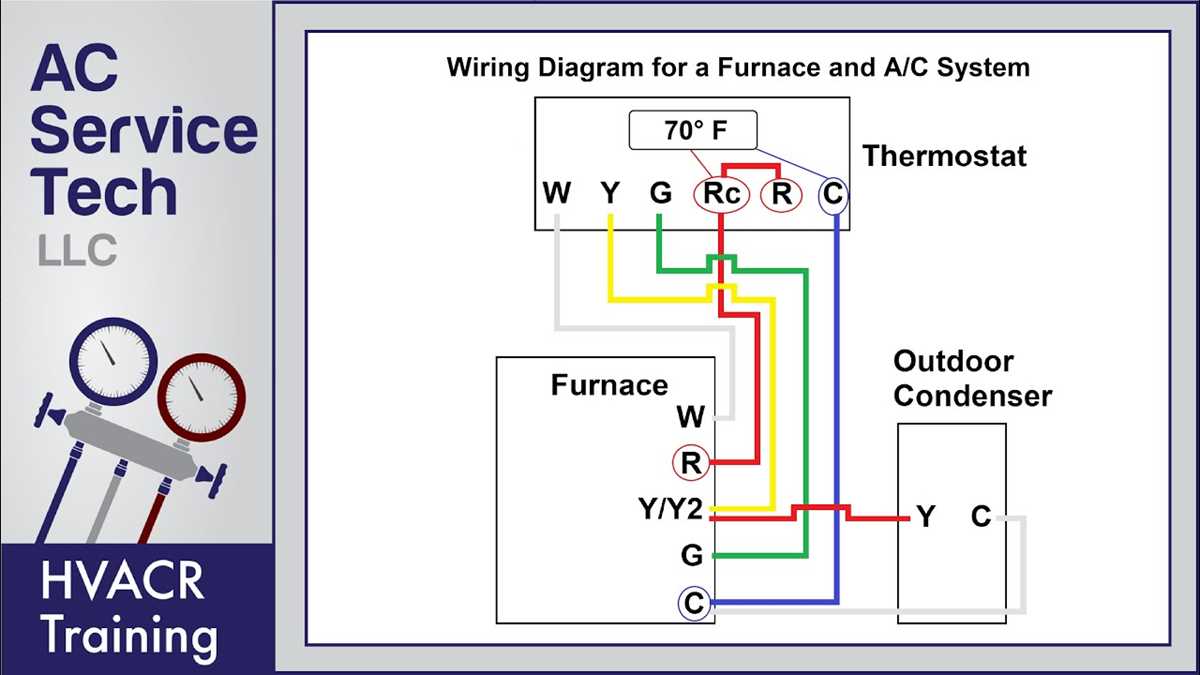
Check the terminal letters on the wall climate controller and match each conductor by function before attaching anything. Most residential heating and cooling setups run on a 24-volt control circuit, where each lead connects a specific component such as the furnace relay, cooling contactor, or fan control. Correct placement prevents short circuits and avoids damage to control boards.
In typical installations, R carries 24-volt power from the transformer, while W activates heating equipment. The Y lead signals the outdoor compressor contactor, and G switches the blower fan. Many homes also include a C conductor that returns current to the transformer and supplies continuous power for programmable wall controllers and smart climate panels.
Color coding helps identify conductors quickly during installation or repair. Red commonly connects to the power terminal, white runs heating control, yellow operates the cooling circuit, and green handles the indoor fan relay. Blue or black often serves as the common return path. Older cable sets may not follow these colors exactly, so always verify the terminal letters at the furnace control board before reconnecting any lead.
A clear connection chart showing terminal letters and component paths allows quick troubleshooting. For example, if cooling fails but the blower runs, tracing the path from the Y terminal to the outdoor contactor often reveals a loose conductor or broken splice. Careful identification of each terminal path reduces guesswork and speeds up repairs.
Thermostat Wiring Diagram With Terminal Labels and Color Codes for HVAC Systems
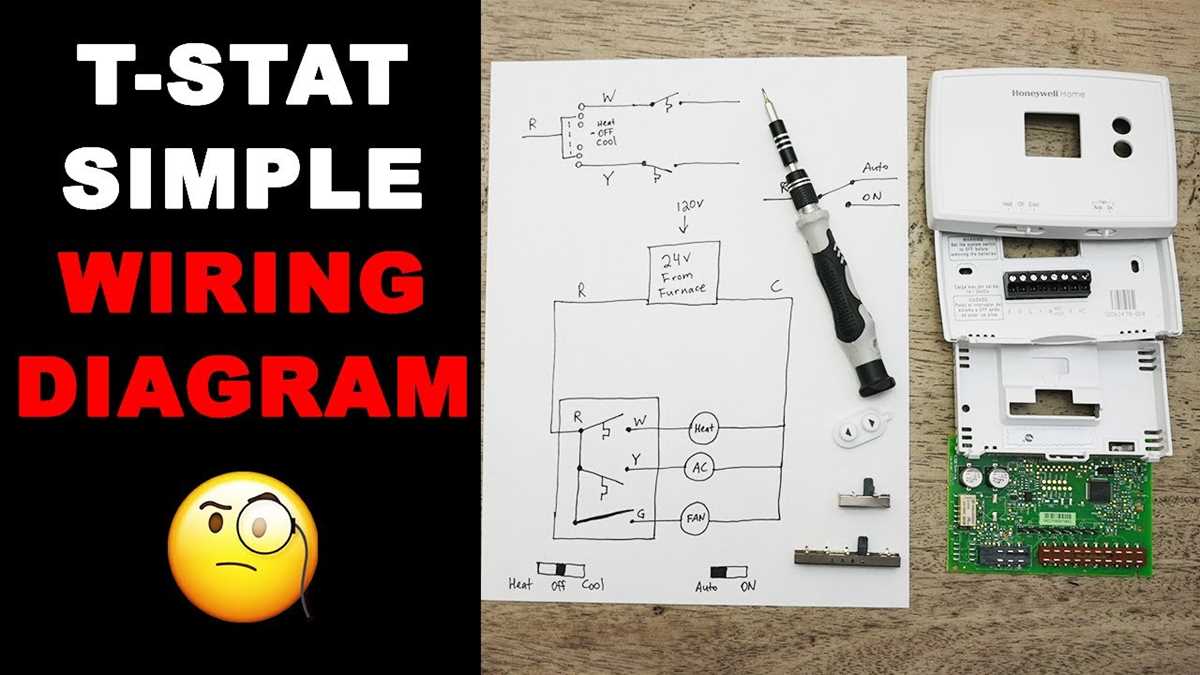
Match each terminal letter on the wall climate controller with the corresponding conductor before connecting the control cable. Most residential HVAC equipment uses a 24-volt control circuit. The power lead from the transformer usually attaches to terminal R, while terminal C serves as the return path that powers digital control panels and smart wall units.
Heating equipment activates through terminal W. When the controller calls for heat, the circuit between R and W closes, sending low-voltage current to the furnace control board or boiler relay. In single-stage gas furnaces this line triggers the ignition sequence and blower delay timer.
Cooling equipment uses terminal Y. This connection sends a 24-volt signal to the outdoor condensing unit contactor. Once the contactor coil energizes, line voltage powers the compressor and condenser fan. If the outdoor unit does not run, tracing the Y conductor from the wall controller to the contactor coil often reveals a break or loose screw terminal.
Indoor air circulation relies on terminal G. Closing the circuit between R and G energizes the blower relay inside the air handler or furnace. Many installations allow manual fan operation through this path, which helps confirm whether the blower motor and relay remain functional.
Conductor colors follow common HVAC conventions. Red normally carries transformer power, white connects heating control, yellow runs the compressor signal, and green links the fan relay. Blue or black often connects to the common terminal. Older cable bundles may use different colors, so verify each lead at the furnace control board rather than trusting insulation color alone.
Thermostat terminal letters and wire color codes used in HVAC systems
Identify each terminal letter on the wall climate controller and confirm the same marking on the furnace control board before connecting any conductor. Standard low-voltage HVAC control circuits rely on several labeled terminals. R carries 24-volt power from the transformer, C returns current to the transformer, W sends a heating call to the furnace relay, Y activates the outdoor compressor contactor, and G switches the indoor blower relay. Heat pump systems may add O or B for the reversing valve and AUX or E for auxiliary heat strips. Each letter represents a direct electrical path between the wall control unit and the HVAC control board.
Typical conductor colors used in residential HVAC control cables
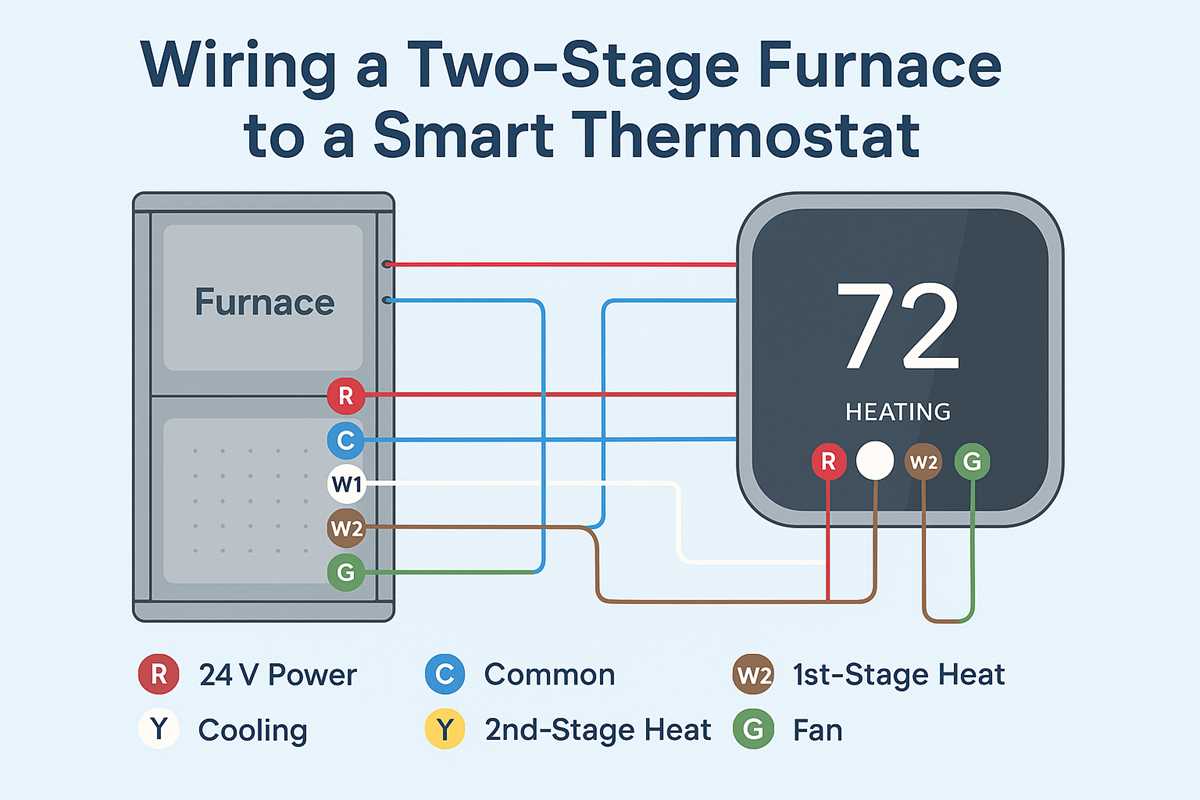
Follow standard insulation colors as a reference, then verify each conductor at the equipment terminal strip. Red usually connects to the 24-volt power terminal, white links the heating call circuit, yellow carries the compressor signal, and green controls the blower relay. Blue or black commonly serves as the common return path for powered control panels. Brown or orange may appear in heat pump installations for the reversing valve line. Cable bundles installed decades ago sometimes ignore these conventions, so confirmation at the furnace or air handler board prevents incorrect connections.