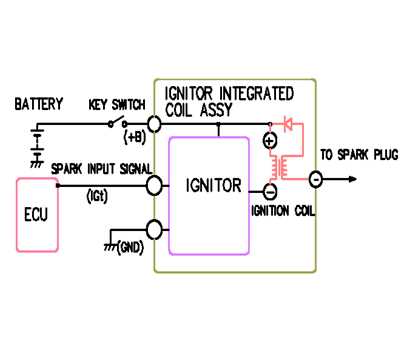
Ensure each terminal is matched with the correct lead to prevent misfires and maintain steady combustion cycles. Use color-coded markers or labels to verify connections before energizing the circuit.
Check resistance values across the primary and secondary paths using a multimeter. Consistent readings indicate proper conductivity, while deviations may signal damaged insulation or loose connectors.
Follow the specified routing for high-voltage paths to avoid interference with nearby sensors or moving engine parts. Secure each line with clips or heat-resistant ties to prevent chafing and shorts.
Regular inspection of contact points and connectors helps maintain ignition reliability. Corrosion or carbon buildup can disrupt current flow, leading to performance drops or engine hesitation.
Test the full circuit under controlled conditions before operating at full load. Observing spark timing and strength ensures that all leads transmit power accurately and the combustion sequence remains synchronized.
Ignition Component Connections Guide for Accurate Engine Performance
Align each terminal with its corresponding lead to prevent spark timing issues. Use numbered tags or colored sleeves to ensure each conductor follows the correct path.
Measure resistance across primary and secondary circuits before powering the system. A steady reading between 0.5 and 1.5 ohms for primary and 5,000–15,000 ohms for secondary indicates proper continuity.
Route high-voltage lines away from heat sources and moving parts. Keep a minimum gap of 2 centimeters from exhaust manifolds and fan belts to avoid insulation breakdown and short circuits.
Secure connections with spring clips or insulated terminals to reduce vibration-related loosening. Loose contacts can produce weak sparks or intermittent misfires under load.
Inspect terminals for corrosion and carbon deposits regularly. Cleaning with a fine abrasive cloth and dielectric grease improves contact and prevents voltage drop.
Sequential Connection Checks
Verify the firing order of each conductor against the engine’s rotation. Misrouted leads can cause reverse firing, leading to engine hesitation or backfiring.
Test the circuit under low RPM conditions first to observe spark stability. Gradually increase speed while monitoring current flow to ensure consistent performance across all cylinders.
Maintenance Tips
Replace aged leads showing cracks or brittleness to prevent sudden failure. Maintaining uniform conductor length helps preserve timing accuracy and engine balance.
Identifying Terminals and Lead Functions for Accurate Connections
Label each terminal before detaching any leads to avoid misplacement. Use numbered or colored tags to track which conductor corresponds to the primary or secondary circuit.
Check voltage ratings printed on each terminal. Leads carrying high current typically have thicker insulation, while low-current paths show smaller gauge wires.
Use a multimeter to confirm continuity between the control module and the spark path. Consistent readings indicate correct identification of terminals and reduce the risk of misfiring.
Inspect connectors for physical differences. Some terminals include built-in resistors or unique shapes to prevent incorrect installation. Matching these features ensures leads are connected to the intended points.
Test each conductor under low power to verify its function. Observe spark strength or signal response to distinguish primary excitation lines from secondary high-voltage paths.
Document each lead position with a quick sketch or photo before final assembly. This record simplifies future maintenance and prevents accidental swapping that could disrupt engine timing.