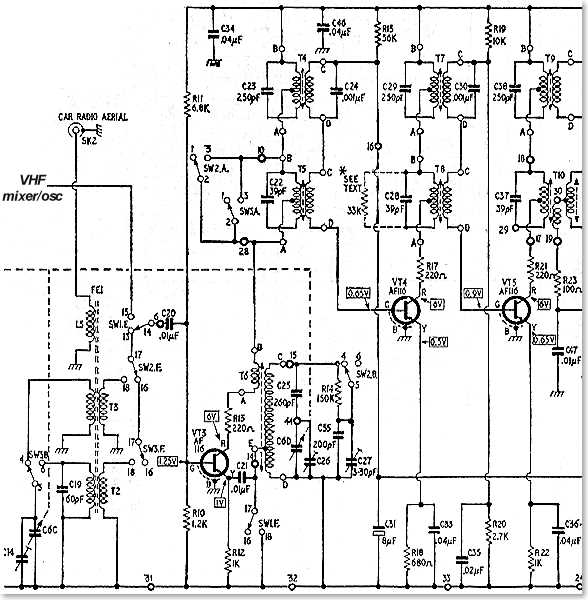
To build an AM/FM receiver, start by gathering key components like the tuning coil, oscillator, and demodulator. Each plays a vital role in receiving and converting signals. Begin with creating a stable frequency generator using an oscillator, which will help tune to the desired stations.
The next step involves creating the correct filtering system. Utilize a combination of capacitors and inductors to filter out unwanted frequencies. This step is critical to isolate the station you want to listen to, allowing you to tune into clear sound without interference.
Once the filtering is set up, the next key task is signal amplification. Using an amplifier circuit, enhance the weak signals captured by the antenna. Amplification ensures the audio output is strong enough for clear listening, even when the signals are weak.
For reliable performance, make sure all connections are solid and components like resistors and capacitors are properly placed according to the frequency range you’re targeting. This ensures proper functionality and reduces the likelihood of distortion or signal loss.
AM FM Radio Circuit Design Guide
To start building a functional AM/FM receiver, the first step is to understand the key components involved. Begin with the antenna, which captures incoming signals. Make sure it’s properly matched to the frequency range you’re targeting for optimal reception. An external antenna is recommended for better signal strength, especially for long-range transmission.
The next component to focus on is the oscillator. This is used to convert the incoming signals into a usable frequency. It’s crucial to select the right type of oscillator for AM or FM transmission. A simple LC oscillator can work well for most applications, as it helps modulate the carrier wave at the correct frequency.
After generating the signal, the next step is the demodulator, which extracts the actual audio from the modulated signals. The demodulator can be a diode detector for AM signals or a more complex FM demodulator circuit for FM signals. Ensure that the demodulator is capable of handling both modulation types if you intend to receive both AM and FM stations.
Signal filtering is a critical part of the process. Use low-pass filters to remove unwanted noise and high-frequency components that may interfere with the desired signal. Capacitors and inductors are commonly used in the filter design. This ensures only the relevant frequency range passes through, resulting in clearer sound output.
Next, the amplifier stage is necessary to strengthen the weak audio signals for output. Use a transistor amplifier or an integrated amplifier depending on the complexity of your design. Ensure the amplifier is compatible with the impedance of the speaker or output device you’re using.
Finally, it’s important to test the circuit and adjust components as needed. Fine-tuning the oscillator and adjusting the tuning capacitor can improve performance. If the sound quality is distorted or there’s interference, recheck the connections and ensure the signal path is free of unnecessary components that could degrade the signal.
How to Build a Basic AM FM Receiver
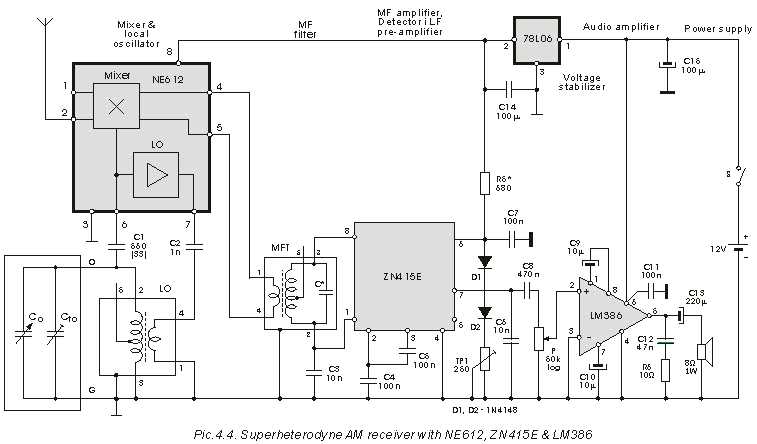
To begin constructing a basic AM FM receiver, the first thing to consider is the antenna. A long wire antenna is ideal for capturing both AM and FM signals. The longer the antenna, the better the signal reception, so place it as high as possible and ensure it is well-aligned with the receiving frequencies.
The next component is the oscillator, which plays a critical role in converting the incoming signals into a frequency that can be processed. For AM, use a simple LC circuit oscillator. For FM, a more complex oscillator may be necessary to handle the higher frequency range. Choose components based on the frequency bands you intend to receive.
Once the signal has been captured and converted by the oscillator, the next step is the detection stage. For AM reception, a simple diode detector works well. For FM, you will need a more advanced demodulator. These components extract the audio from the modulated carrier wave, making it audible to the listener.
After demodulation, you will need a filter to clean up the signal. Use a low-pass filter to remove unwanted high frequencies that could interfere with the desired audio signal. Capacitors and inductors are commonly used to construct filters for this purpose, ensuring that only the required frequency passes through to the next stage.
The audio signal, now cleaned and processed, is still too weak for the speakers. An amplifier circuit is necessary to boost the signal. Choose a transistor amplifier or an integrated amplifier depending on the design. Be sure that the amplifier is rated to drive the speakers or audio output devices you are using.
Lastly, make adjustments to fine-tune the device. Test the reception by adjusting the tuning capacitor, ensuring that both AM and FM bands are accessible. If there is static or interference, consider relocating the antenna or tweaking the filter to clean up the signal further. This stage may require trial and error to achieve optimal performance.