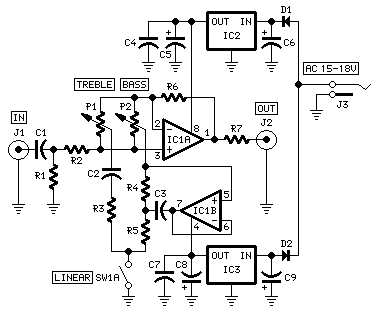
Use high-quality transistors and resistors to maintain clean signal amplification. Select capacitors with voltage ratings above the supply level to prevent breakdown and minimize distortion.
Arrange components on a stable board to reduce interference and signal loss. Place input stages close to the source and keep power paths short to maintain voltage stability and frequency response.
Ensure proper heat dissipation for transistors and output devices by attaching them to heatsinks or thermal pads. Overheating can degrade performance and shorten the lifespan of active components.
Test connections incrementally using a signal generator and multimeter. Verify that each stage amplifies correctly and that the output maintains a smooth waveform before connecting to speakers or load devices.
Low Frequency Signal Booster Layout
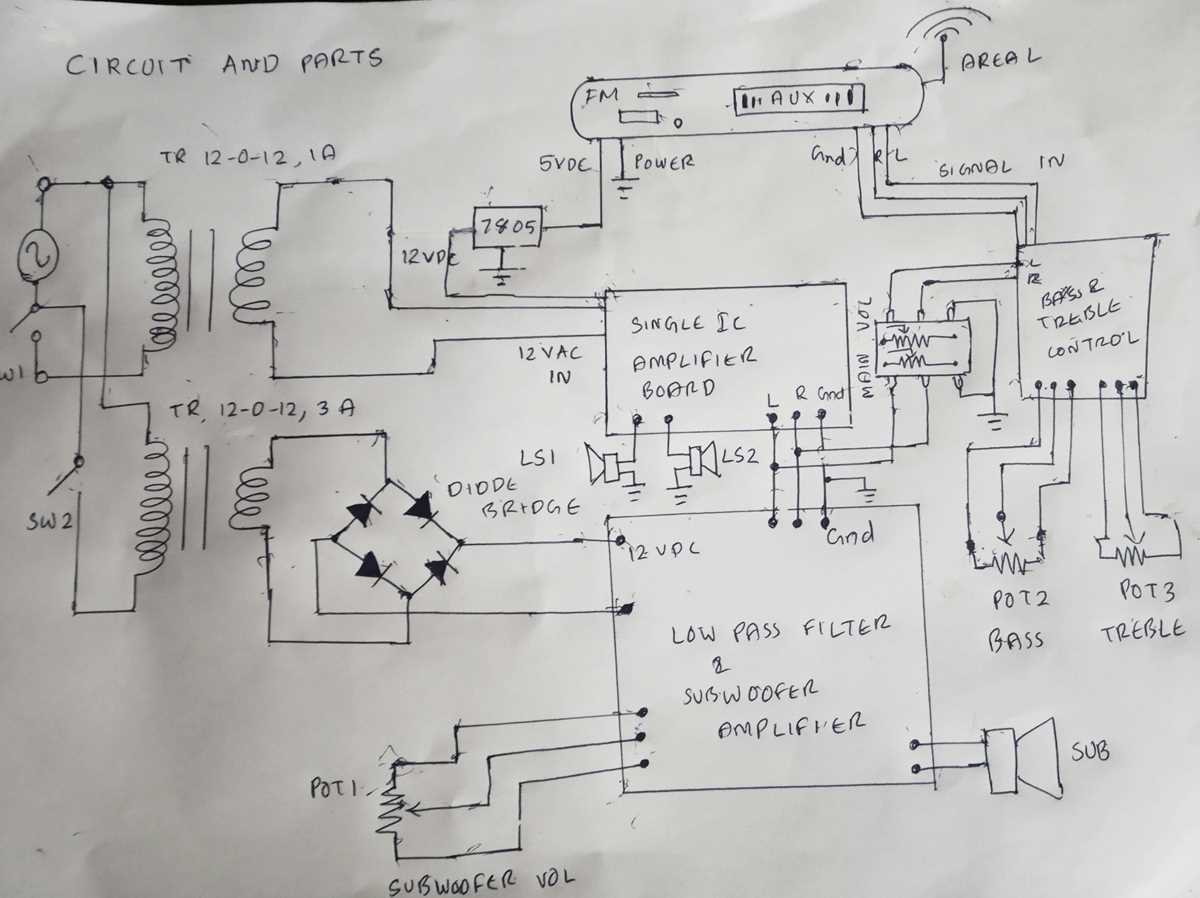
Assign each component to the correct position on the board to maintain signal integrity. Use high-capacitance electrolytic capacitors at the input and output stages to filter low-end frequencies effectively. Resistors should match calculated values to ensure stable gain without overloading transistors.
- Transistor placement: Position output devices near heatsinks and away from input stages to reduce interference.
- Power routing: Keep supply traces short and thick to maintain voltage stability.
- Signal path: Minimize crossover between stages and use bypass capacitors to prevent oscillation.
- Testing: Verify each stage with a signal generator before full operation to detect distortion early.
Selecting Components and Their Specifications
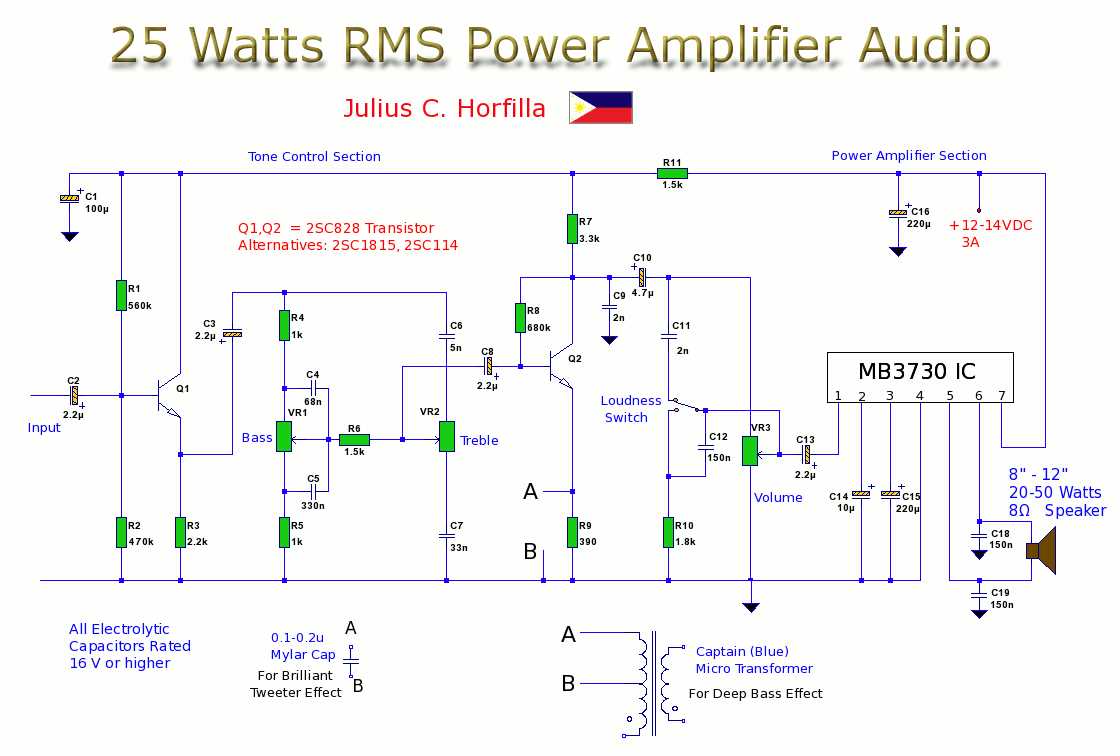
Choose transistors with adequate current and voltage ratings to handle the power requirements of the low-frequency signal booster. For a 50-watt output stage, select devices rated at least 100 volts and 5 amps to maintain reliability under continuous operation.
Capacitor selection impacts tonal response. Use electrolytic capacitors with voltage ratings 25-30% higher than the supply. Film capacitors at the signal path reduce distortion and maintain clarity, particularly in mid and low frequencies.
Resistor and Potentiometer Choices
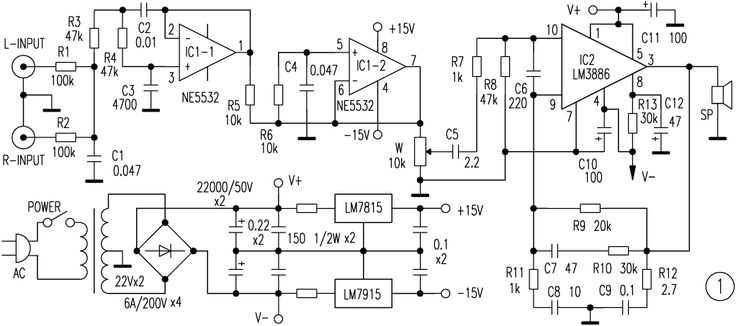
Precision resistors stabilize gain across temperature variations. Opt for 1% tolerance metal film types in critical feedback loops. For user controls, use logarithmic potentiometers to match human perception of volume changes smoothly.
Power Supply Components
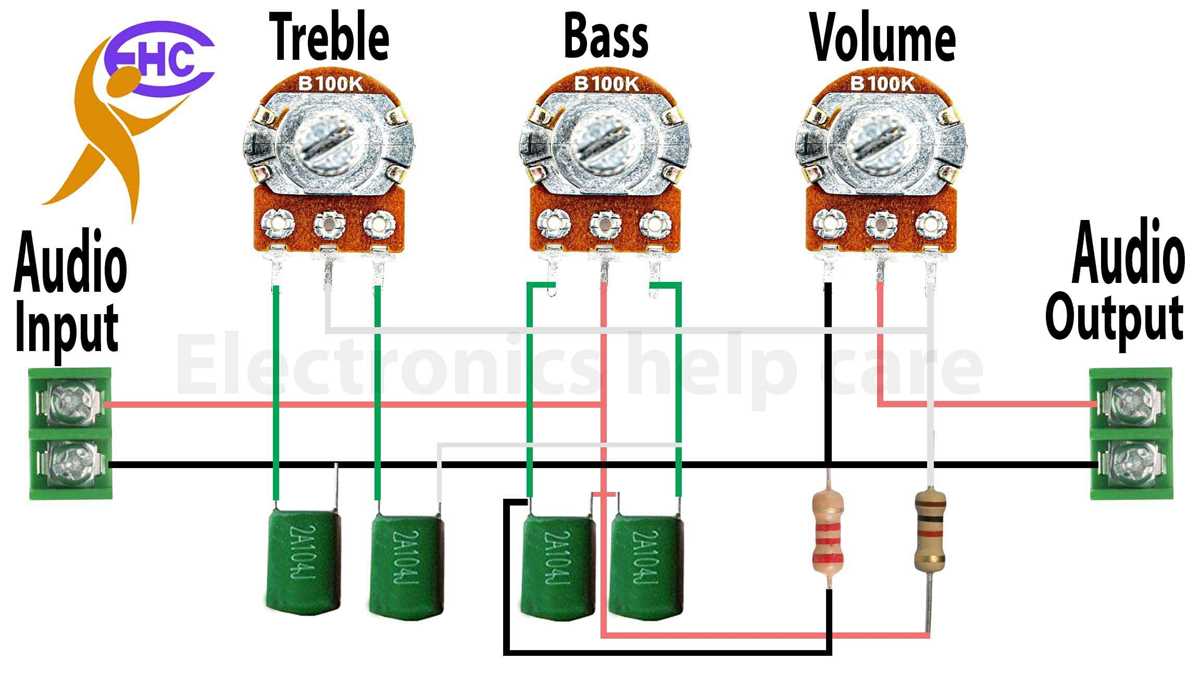
Ensure transformer and rectifier ratings exceed peak demands. A toroidal transformer with at least 20% higher VA rating than calculated load prevents voltage sag, while high-current diodes and capacitors maintain clean DC voltage to the output stage.