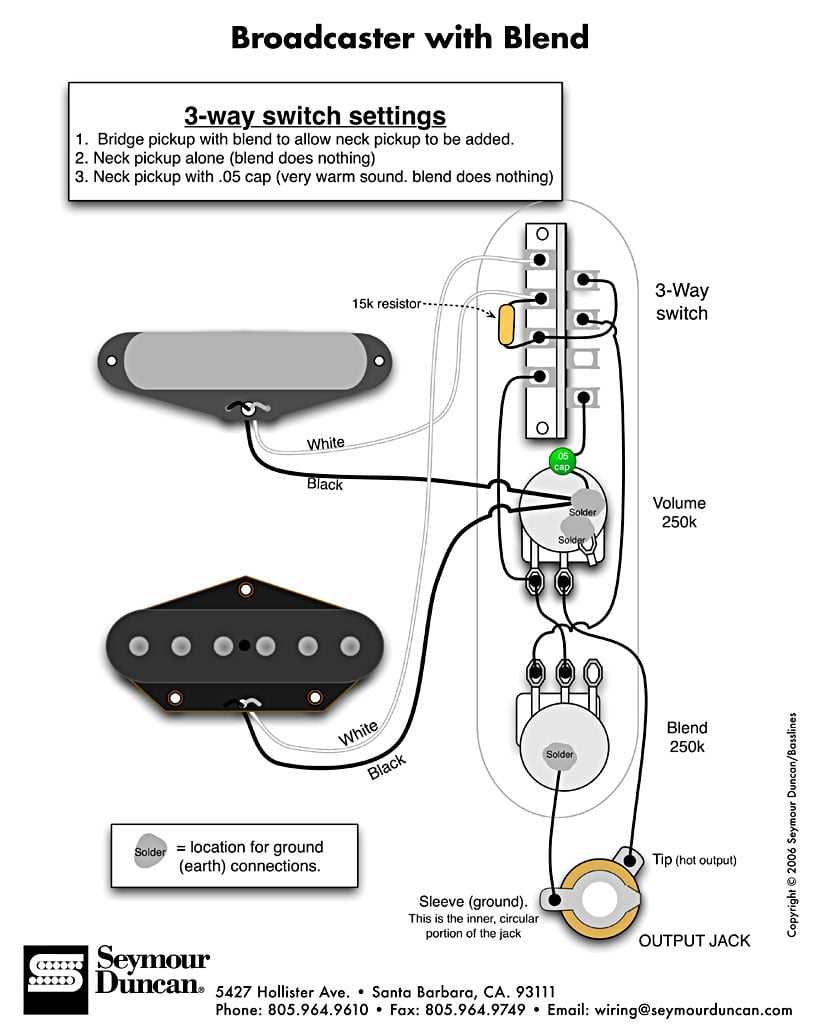
Connect the bridge and neck pickups directly to their respective volume controls to preserve tonal clarity and minimize signal loss. Use a reliable ground path from all metallic components to prevent hum and unwanted noise.
Install the tone potentiometers with consistent capacitor values to achieve balanced treble roll-off across positions. Standard values of 0.022µF for bridge and 0.047µF for neck produce a smooth tonal response without muddying the midrange frequencies.
Ensure all solder joints are solid and clean, avoiding cold connections. Heat each joint adequately and use rosin-core solder to maintain consistent conductivity and mechanical stability.
Arrange pickup selector switches for clear position feedback to prevent misrouting of signals. Standard three-way switches allow bridge, bridge-and-neck, and neck positions to maintain familiar tonal options while keeping the circuit compact.
Telecaster Pickup and Control Layout Guide
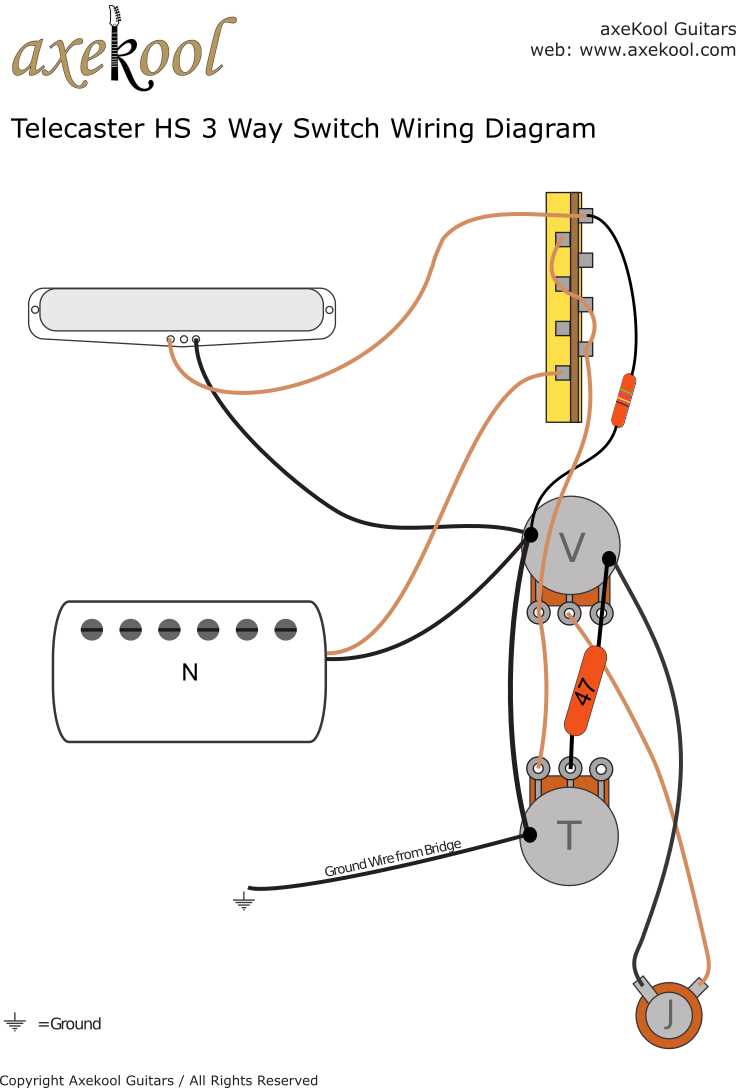
Mount the bridge pickup at a slight angle with the treble side closer to the bridge and the bass side slightly raised. This configuration balances string output and ensures bright, snappy tones without losing warmth.
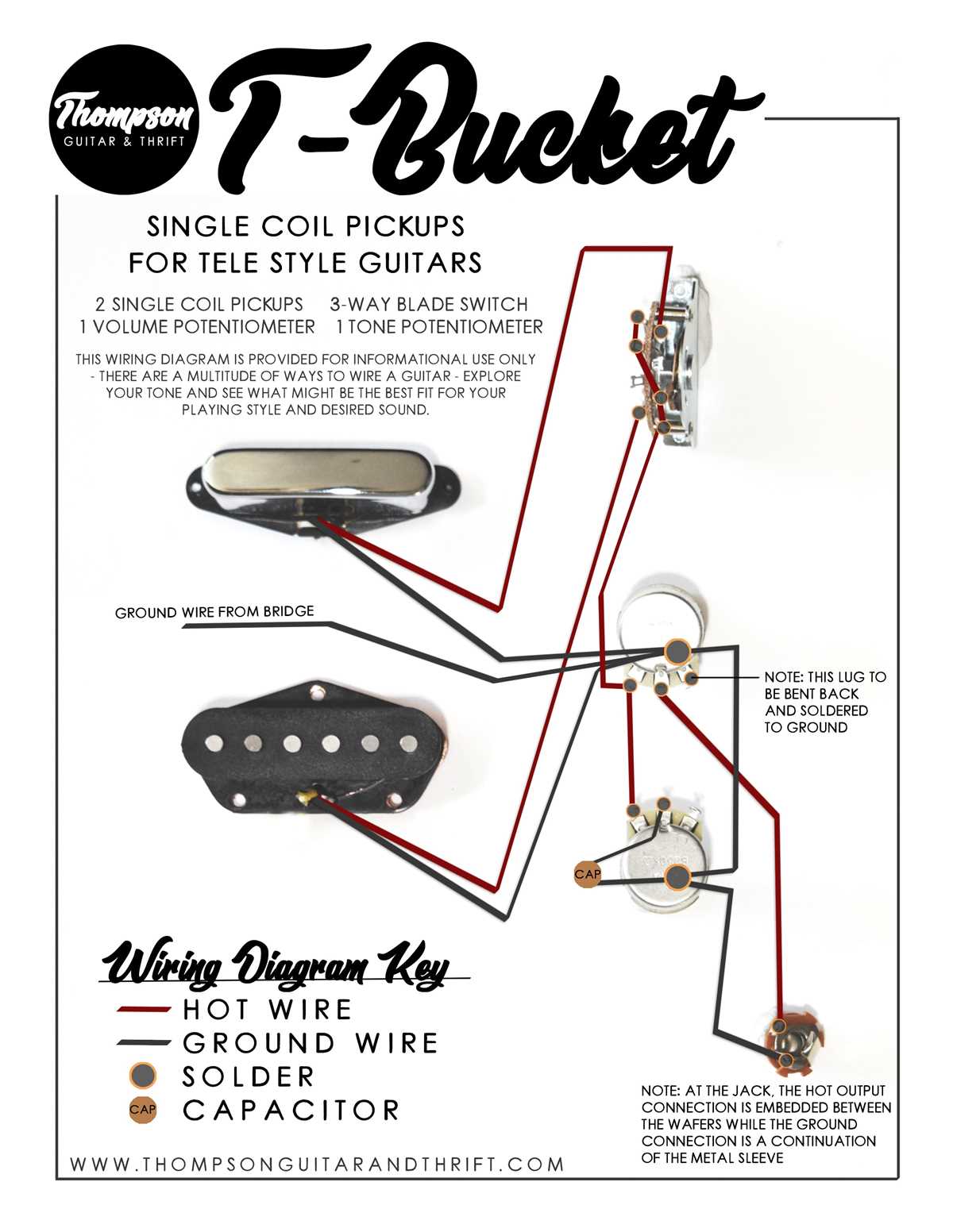
Position the neck pickup parallel to the strings and slightly closer to the fretboard than the bridge. This placement delivers smooth, rounded tones while maintaining string-to-string clarity.
Connect each pickup to its dedicated volume control to preserve individual signal integrity. Use 250k potentiometers for both volume and tone circuits to maintain the classic tonal range without introducing excessive brightness.
Install tone capacitors specific to pickup position with 0.047µF for the neck and 0.022µF for the bridge. This combination keeps highs clear while providing effective treble roll-off when adjusting the tone knobs.
Arrange the three-way selector switch so that each position has distinct tactile feedback. The bridge position should be first, middle combines bridge and neck, and the neck position last. This sequence avoids accidental mispositioning during performance.
Ensure all grounds converge to a common point behind the control plate to minimize hum. Solder the bridge ground directly to the back of a volume pot and connect all shielded cable ends securely.
Use shielded wires for pickup leads to reduce interference from stage lighting and other electronic devices. Route wires neatly under the pickguard and avoid sharp bends or tension points that can damage insulation.
Test each control individually before final assembly. Rotate volume and tone knobs fully at each pickup position to confirm smooth operation, absence of scratchy noise, and consistent tonal response across all strings.
Identifying Each Pickup and Its Tone Role
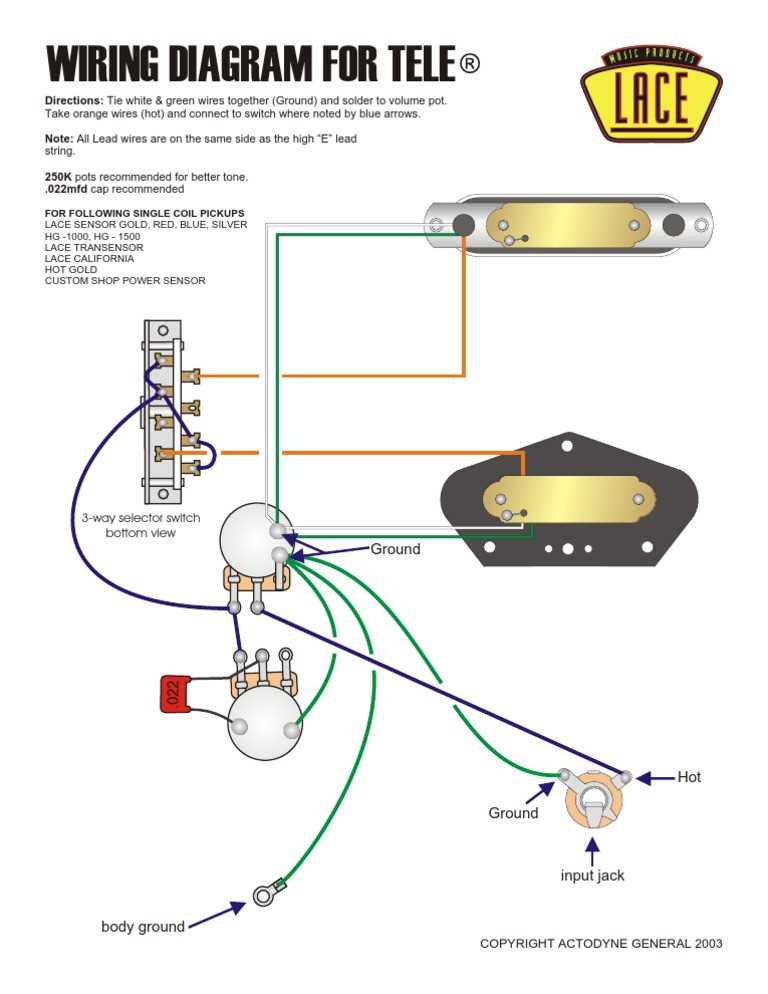
Recognize the bridge pickup by its position near the bridge saddle and note that it delivers sharper, more defined treble frequencies. Ideal for twangy leads and percussive strumming, this pickup emphasizes attack and clarity.
Locate the neck pickup closest to the fretboard where string vibration amplitude is highest. This placement produces warmer, fuller tones with rounded mids, making it suitable for smooth chord work and mellow solos.
Use the middle selector position to blend signals from both pickups. This combination provides a balanced frequency response with slightly scooped mids, often preferred for rhythm parts and expressive, glassy lead lines.
Adjust individual volume controls to fine-tune the tonal character of each pickup. Lowering the neck volume slightly when both pickups are active reduces muddiness while retaining warmth, while the bridge volume can be set higher for punchy articulation.
Pay attention to tonal roll-off using the tone potentiometers for each pickup. A small adjustment on the neck tone can remove excessive brightness, while bridge tone control softens harsh overtones without dulling the attack.
Test all pickup combinations across different playing dynamics. Strum lightly and aggressively to hear how each pickup responds, ensuring that lead and rhythm parts retain clarity, balance, and the intended harmonic content.