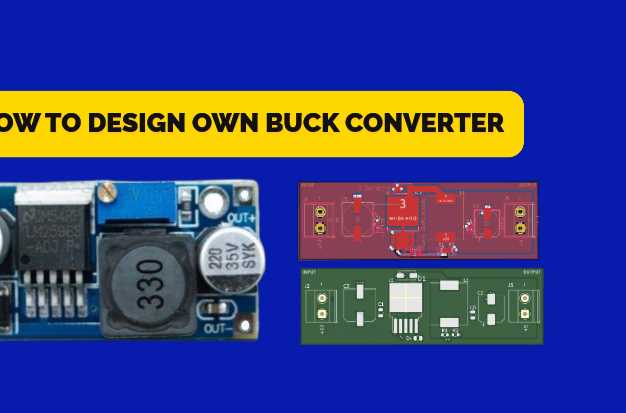
Use a switching module with a built-in regulator to drop power from a car battery or solar panel to a stable 5 volts for USB devices or microcontrollers. Ensure the module can handle at least 2 amps to maintain stable output under load.
Select appropriate capacitors and diodes to smooth input fluctuations and protect sensitive electronics from voltage spikes. Electrolytic capacitors around 470µF on the input and 220µF on the output improve stability, while a Schottky diode prevents backflow of current.
Follow a clear wiring layout connecting input terminals to the power source and output terminals to the target devices. Keep traces short and avoid loose connections to reduce heat buildup and voltage drops during operation.
Verify voltage levels with a multimeter before connecting critical electronics. Adjust potentiometers on adjustable modules to fine-tune output to exactly 5 volts and monitor for consistent performance under different loads.
Reducing High Voltage to 5 Volts for Electronics
Start with a switching regulator module rated for at least 2 amps output to maintain stable power for USB-powered devices and microcontrollers. This prevents overheating and voltage drops under load.
Use a large electrolytic capacitor on the input side, around 470µF, to smooth fluctuations from the power source. This minimizes ripple and protects sensitive components from sudden spikes.
Place a smaller capacitor on the output, about 220µF, to stabilize the voltage delivered to devices. Ceramic capacitors of 0.1µF in parallel can further reduce high-frequency noise.
Include a Schottky diode between the power source and module to prevent backflow that could damage the electronics or battery during shutdown.
Keep wiring short and thick to reduce resistance and heat buildup. Thin or long wires can cause voltage drops, especially under higher currents, leading to unstable operation.
Adjust the onboard potentiometer on the module carefully while measuring output with a digital multimeter. Fine-tuning ensures the output remains exactly at 5 volts without overshooting.
Test under real load conditions by connecting the devices you intend to power. Observe voltage stability and temperature of the module; a slight warmth is normal, excessive heat indicates overloading.
Secure the assembly in a small enclosure with ventilation holes to prevent accidental short circuits and allow heat to dissipate. Ensure terminals are insulated and accessible for maintenance or adjustments.
Selecting Components for a 12v to 5v Converter
Choose a switching module capable of handling at least 2 amps continuously. Modules with adjustable output allow precise voltage control for different devices and reduce the risk of overvoltage.
Select input and output capacitors to stabilize voltage levels. For input, use an electrolytic capacitor of 470µF or higher. On the output, a 220µF electrolytic in parallel with a 0.1µF ceramic capacitor helps filter high-frequency noise.
Pick a diode with a low forward voltage drop, such as a Schottky type, to prevent reverse current from damaging the source or other connected electronics.
- Resistors: Use precise 1% tolerance resistors for voltage setting or current limiting.
- Potentiometers: Include an adjustable trimmer to fine-tune output voltage.
- Inductor: A 33µH to 100µH inductor rated for at least 3 amps ensures smooth power delivery without excessive heat.
Check thermal ratings of all components. Switching modules, diodes, and inductors can generate heat; select parts that can operate at temperatures above 85°C to maintain reliability.
Ensure physical layout compatibility by choosing components with standard pin spacing and compact sizes. This reduces assembly errors and allows mounting in small enclosures for portable applications.
Verify datasheets before purchase to confirm voltage range, current capacity, and tolerances. Matching specifications prevents instability and ensures long-term performance under varying loads.