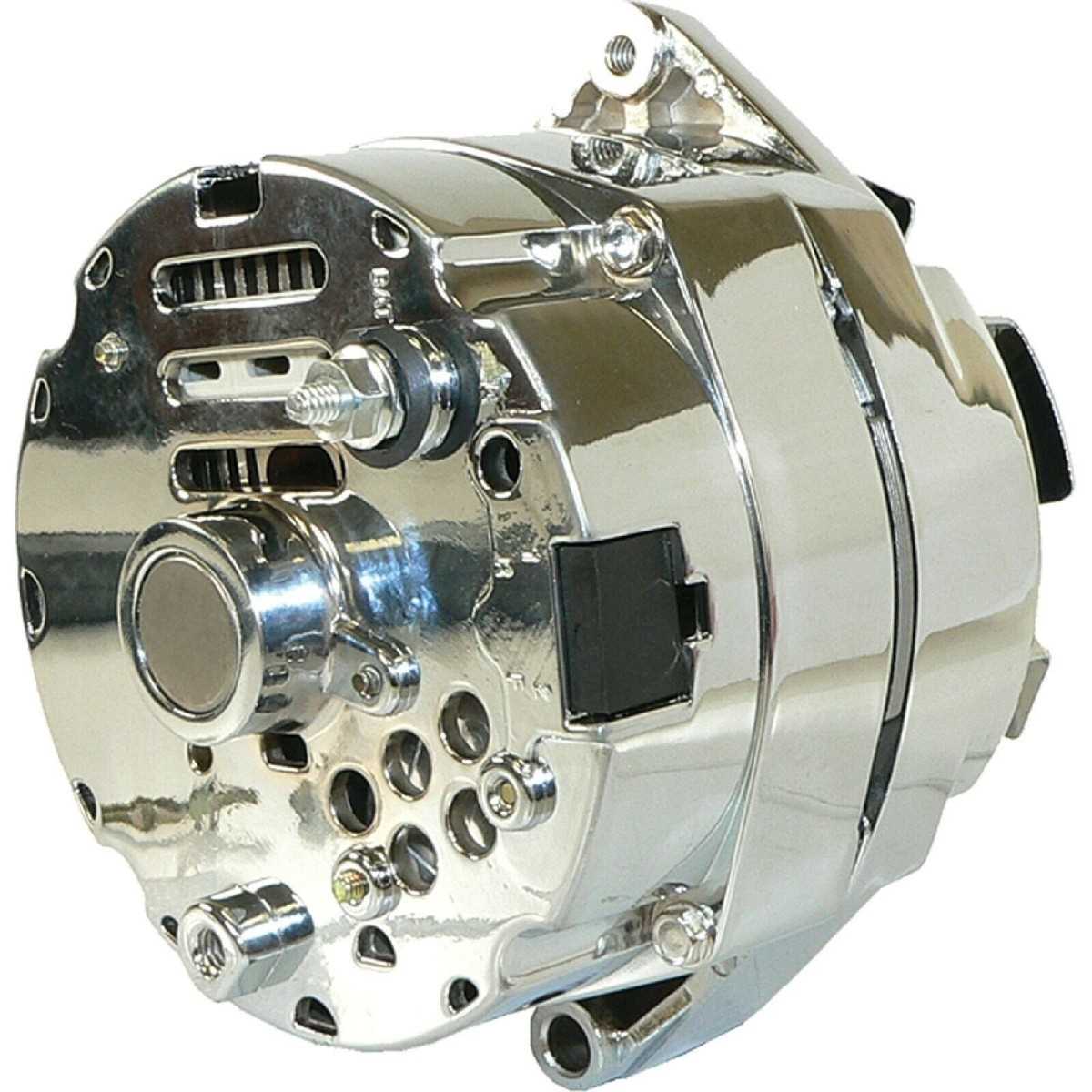
Connect the main positive terminal directly to the battery with a 10-gauge conductor to maintain stable current flow. Ensure all connections are tight and corrosion-free to prevent voltage drops during engine operation.
Identify the sensing lead and attach it to the ignition switch output or battery side of the fuse block. This allows accurate voltage regulation under varying engine loads and avoids overcharging the battery.
Locate the ground post on the unit and secure it to the engine block using a clean, bare metal contact point. Verify continuity with a multimeter to prevent erratic charging behavior caused by poor grounding.
Route all conductors away from high-heat zones and moving components. Use insulated clamps or protective sleeving to reduce the risk of shorts or insulation damage during long-term use.
GM Three Wire Alternator Connection and Setup Guide
Attach the main output terminal directly to the positive battery post using a secure lug and 10-gauge conductor. Ensure the connection is free of corrosion to maintain consistent voltage delivery.
Connect the sensing lead to a switched ignition source or directly to the battery side of the fuse panel. This ensures proper voltage regulation under varying electrical loads and prevents overcharging or undercharging.
Locate the grounding stud on the unit and fasten it to the engine block with a clean, bare metal surface. Test continuity with a multimeter to avoid erratic performance caused by poor ground contact.
Route all conductors away from high-heat areas, exhaust components, and moving belts. Use insulated clamps or protective tubing to minimize abrasion and reduce the risk of short circuits over time.
Verify the polarity of all leads before applying battery power. Incorrect connections can cause internal damage or failure of the charging assembly.
Once all terminals are secured, perform a charging test at idle and under load. Check voltage output across the battery terminals to confirm the unit reaches the rated output without fluctuations.
Inspect connections periodically, especially after extended use or vibration-heavy operation. Tighten fasteners and clean contact points to maintain consistent charging performance and prevent premature component wear.
Locating Key Terminals and Understanding Their Functions

Identify the main output post and ensure it is directly linked to the battery’s positive terminal. This terminal carries full current for charging and powering electrical systems, so secure connections are critical for reliable performance.
Locate the control and sensing posts, often smaller in gauge, and connect them according to voltage requirements. These terminals regulate the charging rate and signal dashboard indicators, so correct placement and secure attachment prevent overvoltage and system errors.