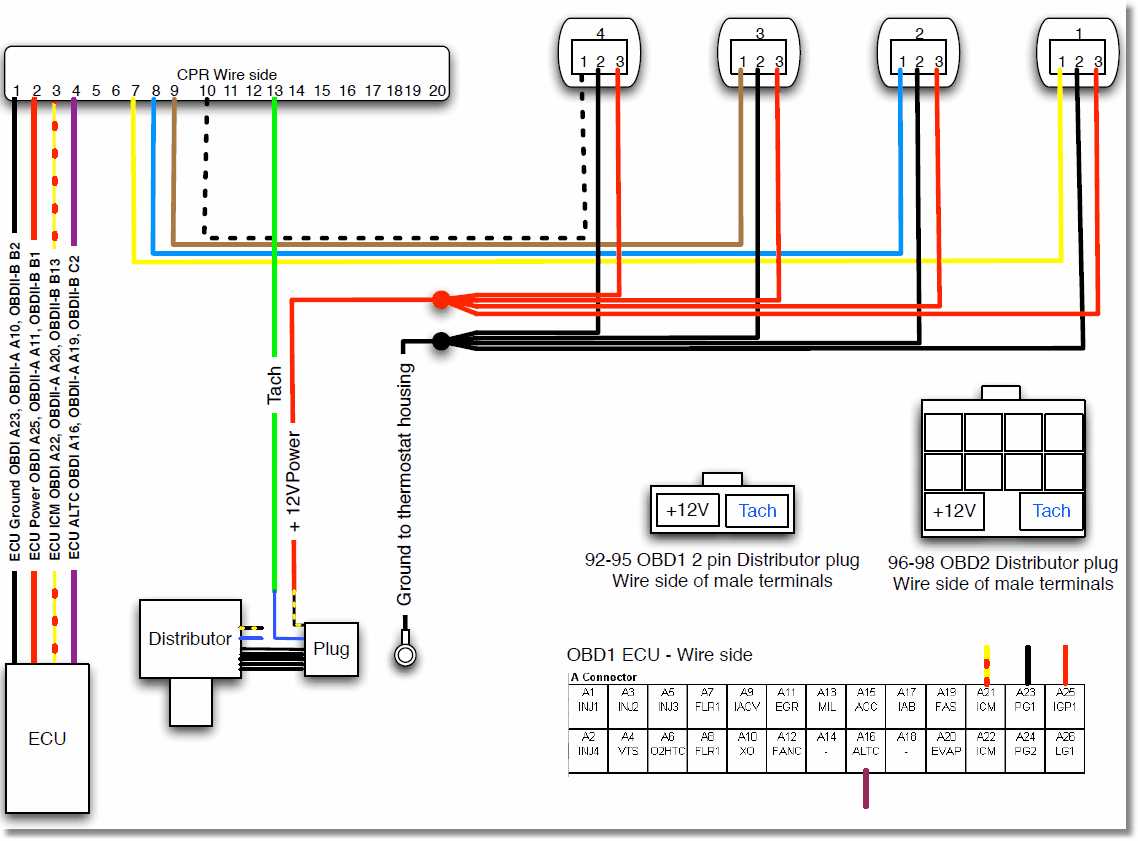
Connect the two signal leads from the ignition trigger unit directly to the coil and ignition control module according to terminal polarity. One lead carries the pulse signal that switches the coil field, while the second lead provides ground reference for the trigger pickup. Reversing these conductors can stop spark generation or produce unstable timing, so terminal markings on the coil and module should be checked before attaching any connectors.
Most classic ignition trigger assemblies with two conductors operate through a magnetic pickup or hall sensor placed inside the rotating ignition housing. As the shaft turns, the sensor sends timed pulses to the ignition module. The module then interrupts current flow through the coil primary circuit, producing high voltage for the spark plugs. Stable grounding and clean connector contacts prevent signal loss and reduce erratic ignition timing during engine load changes.
During installation, inspect insulation, connector pins, and routing near the engine block. Leads placed too close to exhaust parts may soften or crack after repeated heat cycles. Use insulated clips to secure the conductors along the engine harness path. Measure continuity with a multimeter between the pickup leads and module terminals to confirm correct routing before attempting engine start.
2 Wire Distributor Wiring Diagram With Coil Ignition Module and Terminal Connections
Connect the two leads from the ignition trigger unit so that the signal lead reaches the ignition module input and the return lead attaches to the module ground or coil negative terminal. This layout allows the module to interrupt current flowing through the coil primary circuit and generate spark at the correct crankshaft position.
Most two-lead ignition pickups operate through a magnetic sensor positioned inside the rotating ignition housing. As the shaft rotates, a reluctor wheel passes the sensor and produces an electrical pulse. The module reads this pulse and briefly collapses the magnetic field in the ignition coil, sending high voltage toward the spark plugs.
Identify the conductors before making connections. In many harnesses, the signal lead uses a colored insulation such as green or white, while the return path often uses black. Verify polarity using a multimeter set to AC voltage while cranking the engine. Reversed polarity can shift timing or prevent spark formation.
The coil normally has two primary terminals marked positive and negative. The positive side receives switched battery power from the ignition switch. The negative side connects to the ignition module, which controls current flow through the coil windings.
Mount the ignition control module on a metal surface with thermal paste if the design requires heat transfer. These modules regulate coil switching and produce heat during operation. Poor mounting contact may cause misfire after several minutes of engine operation.
Route the two conductors from the trigger assembly along the engine harness away from alternator output cables and starter motor leads. High current lines can introduce electromagnetic interference that distorts the pulse signal reaching the module.
Check resistance across the pickup sensor terminals before connecting the harness. Many magnetic pickup units show resistance between 400 and 1200 ohms depending on design. A reading far outside this range suggests internal sensor damage or broken conductors inside the harness.
After completing all connections, rotate the engine while monitoring the coil negative terminal with a test light or oscilloscope. A flashing light or repeating voltage pulse confirms that the trigger sensor, ignition module, and coil primary circuit interact correctly.
Identifying the two wires on a distributor and their connection to the ignition coil terminals
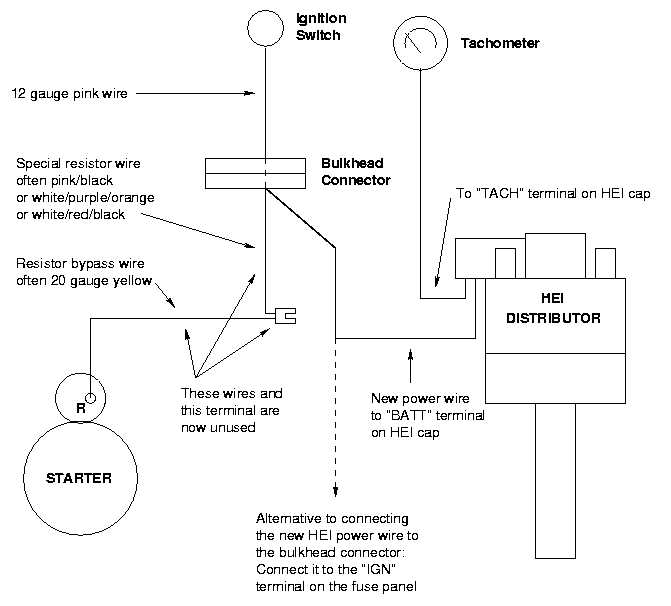
Identify the two conductors coming from the ignition trigger assembly and connect them correctly to the coil primary terminals and ignition module. One conductor carries the pulse signal from the pickup sensor, while the second acts as the return path. Correct polarity keeps ignition timing stable and allows the coil field to collapse at the proper moment.
Locate the pair of conductors exiting the ignition housing near the base of the rotating shaft. They usually terminate in a small connector leading toward the ignition module harness. To determine their roles, inspect insulation colors and trace their path through the engine harness.
- Signal lead from pickup sensor → ignition module trigger input
- Return lead from pickup sensor → module ground or coil negative terminal
- Ignition coil positive terminal → switched battery power from ignition switch
Confirm polarity with a multimeter during engine cranking. Place meter probes across the two pickup leads and observe the small AC voltage pulse generated as the reluctor passes the sensor. If polarity must be identified, note which conductor produces the rising signal when the engine rotates.
- Locate the two-conductor connector leaving the ignition housing
- Trace both conductors toward the ignition module harness
- Attach the signal lead to the module trigger input
- Attach the return lead to module ground or coil negative
- Verify spark by observing voltage pulses at the coil negative terminal
After completing these connections, secure the conductors along the engine harness with insulated clips. Keep them separated from alternator output cables and starter motor power lines to reduce electrical interference that may disturb the pickup signal.