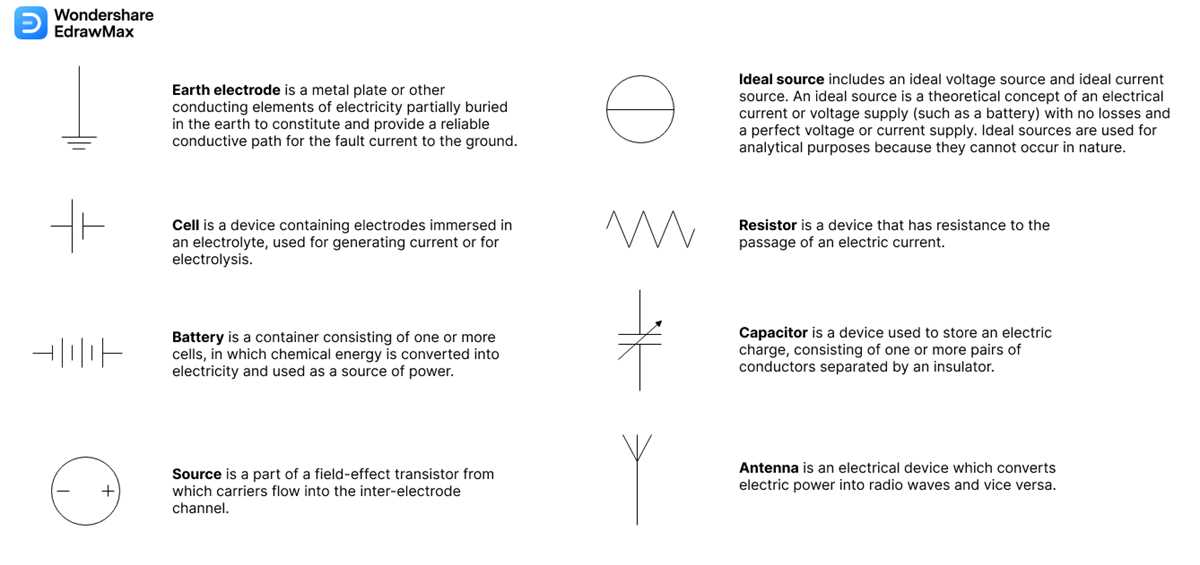
Start by memorizing the shapes used to represent resistors, capacitors, and diodes. Consistent recognition of these forms allows faster reading and assembly of complex boards.
Trace each line connecting the components to understand current paths and signal flow. Following these paths ensures that power, ground, and data lines are correctly assigned.
Use color codes or annotations to differentiate voltage levels and types of components. Marking each element helps prevent mistakes when combining multiple modules into a single network.
Check each junction point for continuity before energizing the system. Confirming connectivity reduces the risk of shorts and ensures reliable operation of all attached devices.
Understanding Component Representations in Electrical Layouts
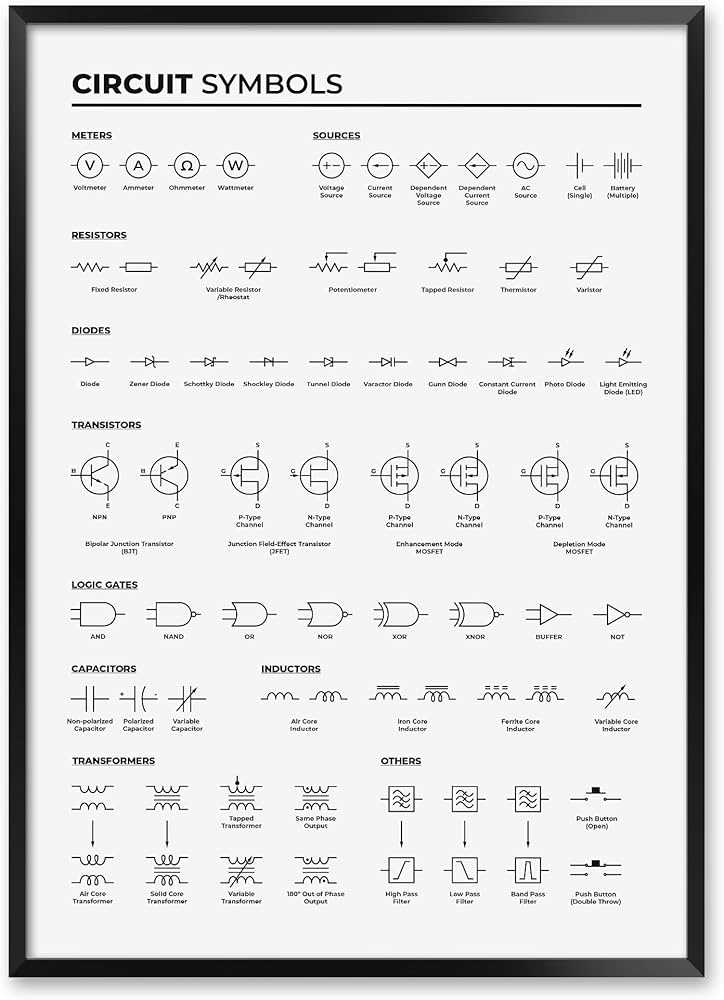
Identify resistors by their rectangular or zigzag shapes. Note the value markings next to each element to determine resistance and ensure proper placement in the network.
Capacitors are often represented as two parallel lines, sometimes with a curved side for polarized types. Check voltage ratings and polarity before installation to prevent malfunction or damage.
Diodes are shown with a triangle pointing to a line, indicating the allowed direction of current. Observe orientation carefully to avoid reversing connections, which can block current or harm other components.
Inductors appear as coiled lines. Measure inductance when replacing parts to match the original design and maintain correct signal response.
Transistors are depicted with three terminals and a directional arrow. Confirm collector, emitter, and base leads to prevent improper operation and possible thermal issues.
Power sources, such as batteries or voltage supplies, use short and long parallel lines. Verify polarity to maintain correct flow through all modules and prevent short circuits.
Ground connections are usually drawn as a set of descending lines or a triangle. Ensure proper grounding to reduce noise, protect sensitive components, and maintain stable operation across the layout.
Identifying Common Symbols and Their Roles
Begin by recognizing resistors as zigzag or rectangular shapes with value markings. Use these values to calculate voltage drops and current limits within each section of the layout for proper operation.
Capacitors, diodes, and transistors have distinct representations that indicate function and orientation. Confirm polarity and connection points to maintain correct signal flow and prevent damage to other components in the assembly.