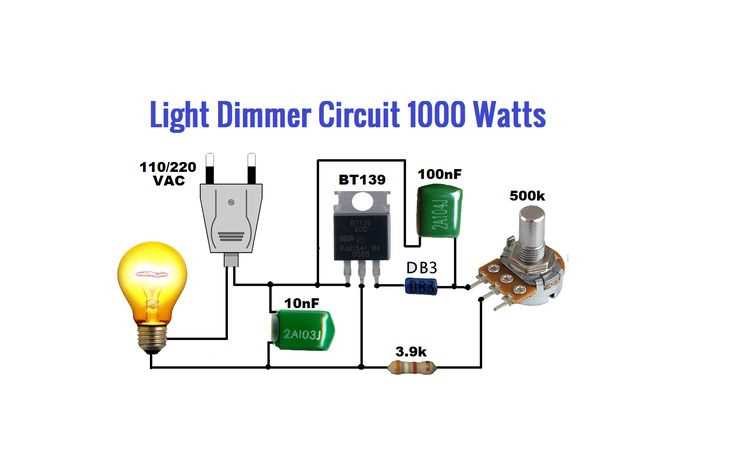
For controlling the brightness of bulbs, a practical solution is using a variable resistor or a solid-state device to adjust the voltage. This adjustment allows you to fine-tune the intensity based on your needs, which is especially useful in various home and industrial settings.
To build a functional system for this purpose, start by selecting the right components. A common setup includes a potentiometer, which allows for manual adjustment, or a triac-based switch for smoother operation in AC-powered environments. Both options offer simplicity and reliability when installed correctly.
When designing such a setup, pay attention to the maximum voltage and current ratings of each component to avoid overheating or circuit failure. Always choose components that are rated for higher values than those expected in normal operation to ensure longevity and safety.
Light Control Circuit Setup and Components
To begin setting up a system for adjusting brightness, the first step is selecting the appropriate resistor or control device. A potentiometer or a triac can be used depending on the type of load and the power source, such as AC or DC. A triac is commonly preferred for AC setups, as it provides smooth and efficient control.
For an AC-powered system, ensure that the triac has a sufficient voltage and current rating. It should exceed the expected load to prevent overheating and potential failures. Also, place a heat sink on the triac if necessary to ensure it remains cool during operation.
Choosing the Right Resistor
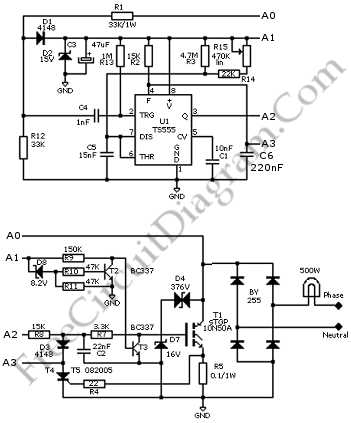
If using a variable resistor, ensure it has the correct resistance range to control the full spectrum of brightness levels. Typically, resistors with a range from 0 to 1M ohms work well for small to medium-sized applications.
The resistor should be able to handle the power dissipation without overheating. To calculate power dissipation, use the formula P = I²R, where P is power, I is current, and R is resistance. A resistor that gets too hot will fail, potentially damaging the entire setup.
Wiring and Connections
Proper wiring is crucial for the longevity and functionality of the system. Connect the potentiometer or triac in series with the light source. Ensure all connections are solid and insulated to avoid shorts, especially in AC setups where high voltages are involved.
For added safety, incorporate fuses or circuit breakers into the design. This will protect against potential overloads or short circuits, which can cause damage to the components or even start a fire.
- Ensure all wires are rated for the expected voltage and current.
- Double-check all connections, especially in AC circuits, for proper insulation.
- Use a multimeter to test connections before powering on the system.
Testing the setup is a key part of the process. Before turning on the system fully, check each part with a multimeter to verify resistance, voltage, and continuity. This step helps ensure everything is wired correctly and ready for operation.
Once the system is tested and everything is working properly, you can fine-tune the brightness. Make any adjustments to the control device to match your desired lighting levels, ensuring smooth operation across the entire range.
How to Design a Basic Light Control System for Home Use
To create a basic setup for adjusting the intensity of bulbs, start with a variable resistor, also known as a potentiometer. This allows you to control the amount of current flowing through the light source, adjusting the brightness. For an AC system, use a triac for smoother and more efficient control, particularly when handling higher voltages.
For this design, you’ll need a resistor with a wide enough range to allow for a full range of brightness settings. For AC power, ensure the triac is rated for the maximum voltage and current expected from the load. Proper insulation and secure connections are critical, especially for high-voltage applications, so double-check all components before powering up the system.