
To build a reliable switching system that alternates between two outputs, focus on using a bi-stable configuration. This type of setup allows for two stable states, switching between them with each trigger pulse. Select components that support low power consumption while handling the required switching speed.
For the core of the design, consider using a combination of transistors or MOSFETs. These are key in achieving fast and efficient transitions between the two states. Proper selection of resistors and capacitors will also impact the switching frequency and stability of the system.
Make sure the control signal is appropriately conditioned to trigger the transition between states. A clean, noise-free signal ensures reliable operation. A simple debounce circuit may be necessary to avoid unintended switching caused by mechanical relay contact bounce.
Once the basic components are in place, ensure that proper protection is provided. Overvoltage and current protection mechanisms will help prevent component failure. Incorporate fuses or diodes in the design to safeguard against surges or incorrect voltage levels.
Flip Flop Relay Circuit Design
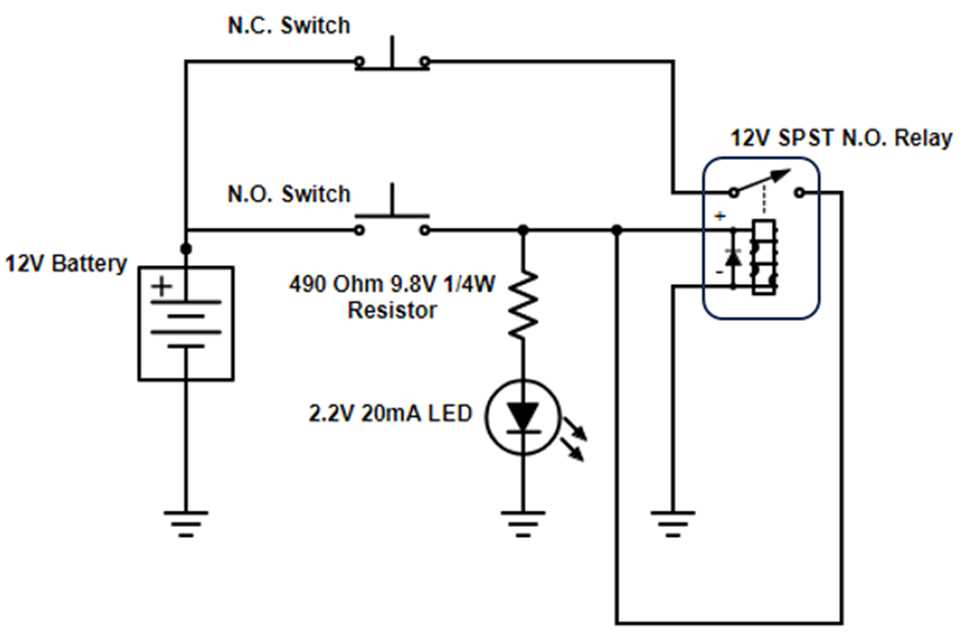
Start by selecting two transistors or MOSFETs that will switch the system between two states. Ensure each component is capable of handling the voltage and current required for your design. Connect the transistors in a bistable configuration, where each one controls the state, switching between the two outputs based on the input signal.
Use resistors to limit the base or gate current of the transistors, preventing them from overloading. Capacitors are also necessary to filter the input signal, ensuring that the system switches cleanly and without noise. A well-placed capacitor can help to smooth transitions and avoid erratic behavior in the system.
Protection from voltage spikes is vital for preventing damage to the components. Place diodes across the transistors to absorb any back EMF or voltage surges. Adding a fuse to the system provides an additional layer of protection in case of short circuits or excessive current draw, ensuring the longevity of the design.
How to Wire a Flip Flop Relay for Bidirectional Switching
To achieve bidirectional switching, first, configure two switching elements in a bistable setup. These components, typically transistors or MOSFETs, must be connected in such a way that one controls the direction of current flow while the other holds the state. The basic principle is that each switch alternates between two stable positions, and the system will change direction every time a pulse is received.
Wire the positive terminal of the power supply to the common terminal, then connect each switching element to the load. The negative terminals of both switches will be linked together and connected to the common ground. By doing this, when one switch is activated, it will allow the current to flow in one direction, while the other switch does the same in the opposite direction when activated.
Using Control Signals

Ensure that the control signal is able to trigger both switches independently. This is typically achieved by sending a pulse to each switch at the appropriate time. A simple microcontroller or a push button can be used to generate the signal, but make sure it is free of noise to avoid multiple triggering. Also, add debounce circuits to ensure the switches respond correctly without erratic behavior.
For smooth operation, use diodes across the switches to protect against back electromotive force (EMF) that might damage the components. A current-limiting resistor should also be placed in line with the base or gate of each transistor to prevent excessive current flow that could lead to overheating.
Once the components are wired and the system is protected, test the system under load. Monitor the voltage and current to ensure that the system switches correctly without overloading. A multimeter or oscilloscope can be helpful in confirming that the switching action is occurring as expected.