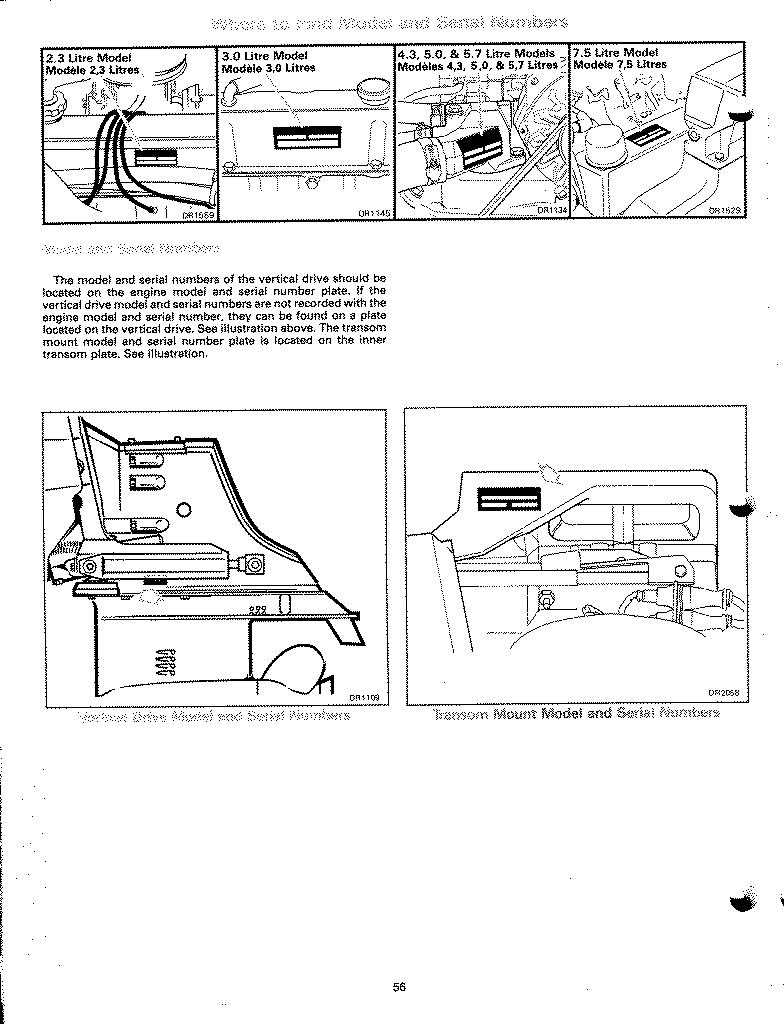
For any boat owner, maintaining the drive system is crucial for optimal performance. A thorough understanding of the mechanical elements involved will help avoid unnecessary repairs and ensure smoother operation. Pay particular attention to the assembly of gears, seals, and shafts within the lower unit. These parts are integral to the transfer of power from the engine to the propeller, making their precise configuration critical for your boat’s efficiency.
When troubleshooting or servicing, always refer to a detailed illustration that breaks down the positions of each critical component. It’s recommended to start by identifying the main gear set and the supporting bearings. Misalignment or wear in these components can lead to poor handling or even complete system failure. The propeller shaft, which connects to the output shaft of the engine, is another area to inspect for signs of wear, particularly where it meets the seals and bearings.
The shifting mechanism is equally important for seamless gear changes. Ensure that the linkage and shift cable are adjusted correctly. Small issues here can lead to problems with engaging forward or reverse gears, affecting your boat’s maneuverability. Regular maintenance, such as lubrication of moving parts and checks for corrosion, will go a long way in preserving the system’s longevity.
In addition to mechanical components, understanding the proper torque settings for various bolts and fasteners will help prevent common issues. Over-tightening or under-tightening can cause parts to fail prematurely. Using the correct specifications ensures the system runs smoothly and avoids damage from improper assembly.
Detailed Breakdown of Drive Assembly Components
To ensure seamless maintenance and smooth operation, understanding the individual components within the drive system is critical. The lower unit houses the gear set, which connects to the propeller shaft. The bearings are essential for stabilizing rotation, and seals prevent water entry, ensuring the longevity of internal parts. The shifting mechanism, typically controlled by a lever, interacts with the gear system to change speeds or directions.
The drive shaft serves as the main connector between the engine and the propeller, transmitting power efficiently. Lubrication is key to maintaining smooth functioning, so regular checks and fluid changes are recommended. The exhaust system, which routes gases out of the unit, must be clear of obstructions to maintain engine performance.
Regular inspection of the propeller, its hub, and blades is critical. Any damage to these parts can result in decreased efficiency and performance. The thrust washer and nut secure the propeller, ensuring it remains in place during operation.
The trim and tilt assembly allows for easy adjustments of the drive’s angle, which helps to optimize performance in varying water conditions. Hydraulic systems are typically employed to adjust the angle quickly and with minimal effort.
For a comprehensive understanding, refer to the manufacturer’s schematic for the exact layout and detailed part identifiers specific to your model. This will aid in accurate replacements and avoid unnecessary downtime.
Understanding the Key Components of an Omc Outdrive
To maintain optimal performance, it’s vital to recognize the core elements of your lower unit. These are responsible for delivering power from the engine to the propeller, ensuring smooth movement through the water.
- Gearcase: Houses the gears that transfer rotational force from the engine to the propeller. The gearcase also protects the internal components from water and debris.
- Propeller Shaft: Transmits power from the gears to the propeller. Regular inspection of this part for wear can prevent significant damage and loss of efficiency.
- Water Pump: Provides cooling to the system by circulating water through the engine and the drive mechanism. A malfunctioning pump can lead to overheating.
- Drive Shaft: Transfers rotational energy from the engine to the propeller shaft. It is vital to inspect for corrosion or misalignment that may affect performance.
- Trim and Tilt Mechanism: Enables adjustments to the drive unit’s angle, optimizing the boat’s performance in different water conditions. Regular checks on the hydraulic system ensure proper functioning.
- Seal Assembly: Prevents water from entering the lower unit and causing damage to the internal components. Seal integrity must be checked regularly, especially after prolonged use in saltwater.
- Shift Mechanism: Controls the engagement of forward, neutral, and reverse gears. Proper calibration and maintenance of the shift system prevent gear engagement issues and ensure smooth transitions.
By focusing on these components and performing regular inspections, you can ensure that your propulsion system functions without complications, maintaining both performance and longevity.
How to Interpret the Omc Outdrive Parts Diagram for Maintenance and Repairs
Identify each component’s function by its shape and position. Components like the propeller shaft, gearcase, and bearings are usually placed in a clear sequence, from the drive unit to the propeller. Check the labels and part numbers, as they will guide you to the exact location of replacement parts.
When examining the assembly, focus on connections and interfaces between parts. Seals and gaskets, for example, play a critical role in keeping moisture out and ensuring smooth operation. Be sure to identify where each seal sits and note any worn-out or cracked gaskets that may require replacement.
Pay close attention to fasteners, bolts, and nuts. Their proper torque specifications are essential for ensuring all parts stay secure and work as intended. Look for parts that may require periodic lubrication or tightening as part of regular upkeep.
If the diagram shows exploded views, use them to understand the order in which components should be reassembled. Incorrect assembly can lead to operational issues or premature wear, so following the order is key.
For repairs, focus on damaged or worn-out components first. If parts show significant signs of wear or corrosion, prioritize their replacement. Regular inspection of the gear mechanisms and bearings will help prevent future breakdowns.
Lastly, verify alignment and calibration details provided in the schematic to ensure proper function after repairs. Misalignment can lead to reduced performance or even complete failure if left unaddressed.