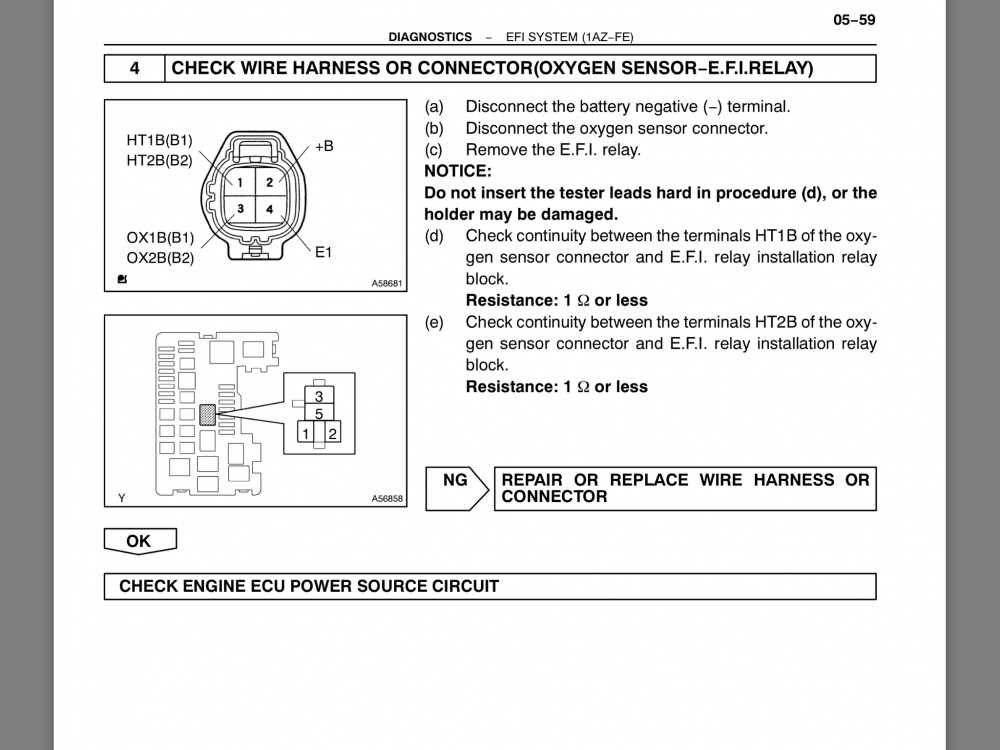
Verify the vehicle ignition is off before handling any leads. Disconnect the battery to prevent shorts and ensure accurate measurements during installation.
Identify each lead by color and pin position, matching them to power, ground, and signal terminals. Use a multimeter to confirm continuity and correct polarity before securing connections.
Route all cables away from hot exhaust components and moving parts. Use clips or protective sleeves to prevent abrasion and maintain reliable electrical contact.
Test the component after reconnection by running the engine and monitoring voltage readings at the control unit. Check for stable signals and absence of error codes to confirm proper installation.
O2 Sensor Electrical Connections and Installation Instructions for Vehicles
Disconnect the vehicle battery before handling any electrical leads. Ensure no power is present to prevent shorts or accidental damage to the control unit.
Identify each conductor by color and pin position. Match the power, ground, and signal lines according to the manufacturer specifications for accurate connection.
Inspect the connector terminals for corrosion or bent pins. Clean or realign terminals to guarantee proper contact and prevent intermittent signals that could trigger engine faults.
Route the leads carefully along existing harnesses. Secure with clips or ties and avoid contact with exhaust components or moving parts to maintain longevity and prevent damage.
Tighten threaded connections to manufacturer torque settings. Use anti-seize compound on the threads to allow future removal without damaging the threads or surrounding components.
Reconnect the battery and check voltages at the control unit terminals. Monitor the signal readings to confirm the component responds correctly to air-fuel changes in real time.
Perform a road test or idle check and observe engine behavior. Verify absence of error codes and ensure all leads remain secure after engine vibrations and temperature changes.
Identifying Sensor Wires and Connector Pins
Locate the component harness and note the number of leads and their colors. Compare them to the manufacturer’s specifications to ensure accurate identification of each line.
Check the connector shape for alignment features. Identify locking tabs or keyways that prevent incorrect insertion and maintain correct pin orientation.
Use a multimeter to confirm continuity between the control module terminals and each conductor. Label each line to avoid confusion during installation or testing.
Observe signal wires for expected voltage ranges. Apply reference voltage if required and monitor fluctuations to verify correct identification of power and feedback lines.
Inspect grounding leads for secure attachment. Ensure metal-to-metal contact at the chassis or dedicated ground point to maintain accurate readings.
Trace each lead along the harness to detect any splices or damage. Repair or replace faulty segments before connecting to the control module.
Double-check pin assignments using a pinout chart or service manual. Mark the connector ends with tape or tags to prevent misconnection during assembly.
Test the fully connected leads by powering the control unit and monitoring live data. Verify that all connections provide stable readings and no error codes appear before finalizing installation.