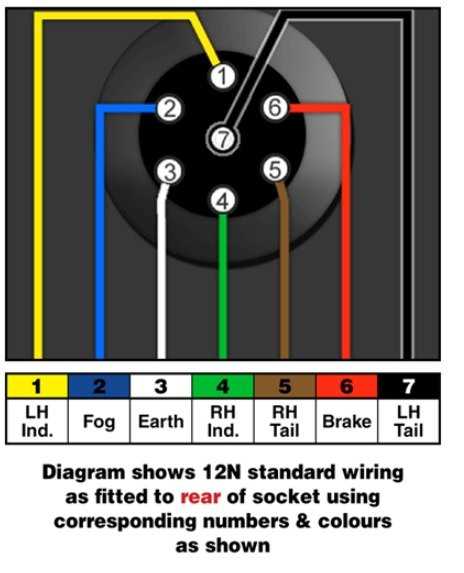
Match each terminal on the 7-way connector to the correct circuit before attaching any cable. A wrong connection can disable brake lamps, turn indicators, or electric brake control. The seven-contact socket used on most tow vehicles in North America follows a fixed layout that assigns a separate line for ground, tail lamps, left signal, right signal, brake controller output, reverse lights, and a 12-volt auxiliary feed.
The round seven-contact coupler typically carries seven color-coded conductors. White is ground, brown powers running lights, yellow feeds the left indicator, green feeds the right indicator, blue runs the brake controller line, purple or black is commonly used for reverse lamps, and red or black may supply constant 12-volt power. Cable gauge also matters: lighting circuits usually use 16–18 AWG, while the brake control line and auxiliary power often require 12–14 AWG to handle higher current.
Pin orientation must be checked from the socket face rather than the rear terminals. Misreading the layout flips left and right signals or sends voltage to the wrong circuit. A printed connection layout, a voltage tester, and labeled conductors prevent errors during installation or repair of the towing electrical interface.
Routine inspection helps avoid road failures. Corrosion on copper contacts, loose terminals inside the coupler, or damaged insulation can interrupt signals between the tow vehicle and the towed unit. Cleaning contacts with electrical cleaner, tightening terminal screws, and sealing entry points with dielectric grease keeps the seven-pin connector working reliably.
7 Trailer Plug Wiring Diagram With Pin Layout Wire Colors and Connection Guide
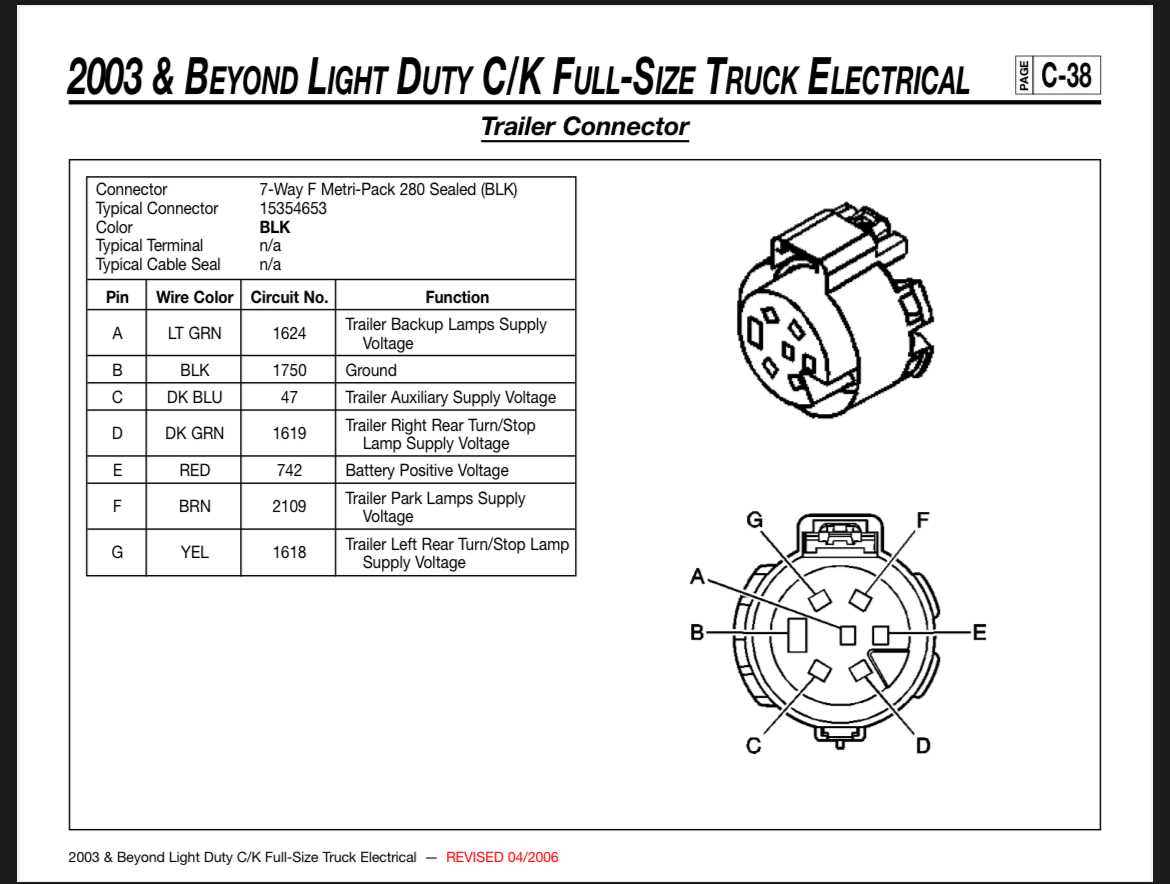
Identify each terminal on the 7-pin round vehicle connector before attaching any conductor. The contact layout remains consistent on most RV-style sockets used in North America. Looking at the socket face, the ground terminal usually sits at the lower position, while lighting and signal circuits occupy the outer ring. A center contact often supplies reverse light power.
The standard color scheme allows quick recognition of each circuit. Match conductor insulation to the correct terminal to avoid crossed signals or lighting faults.
- White – ground return line connected to vehicle chassis
- Brown – tail and running lamps
- Yellow – left turn signal and left brake lamp
- Green – right turn signal and right brake lamp
- Blue – electric brake controller output
- Black or red – constant 12-volt auxiliary power
- Purple – reverse light circuit
Select proper conductor thickness for each circuit. Lighting lines normally use 16–18 AWG copper, while the brake controller and auxiliary 12-volt feed require 12–14 AWG because those circuits carry higher current. Using thin cable on brake control lines can cause voltage drop and weak braking response.
Correct terminal orientation prevents signal reversal. View the socket from the front face rather than the rear terminals during installation. Many connection errors happen when installers follow the rear view and mirror the layout.
Attach each conductor using crimped ring terminals or screw clamps inside the connector housing.
- Strip about 10–12 mm of insulation
- Insert copper strands into the terminal
- Crimp using a ratcheting tool
- Tighten the terminal screw firmly
- Check that no copper strands remain exposed
Seal the rear cable entry with dielectric grease and a rubber grommet. Moisture entering the connector housing can corrode contacts and increase electrical resistance, leading to dim lamps or intermittent brake controller signals.
After installation, test each circuit using a multimeter or test light while activating vehicle signals. Confirm that every terminal carries the correct function before connecting the towed unit electrical harness.
7 Pin Trailer Plug Pinout Functions and Standard Wire Color Codes
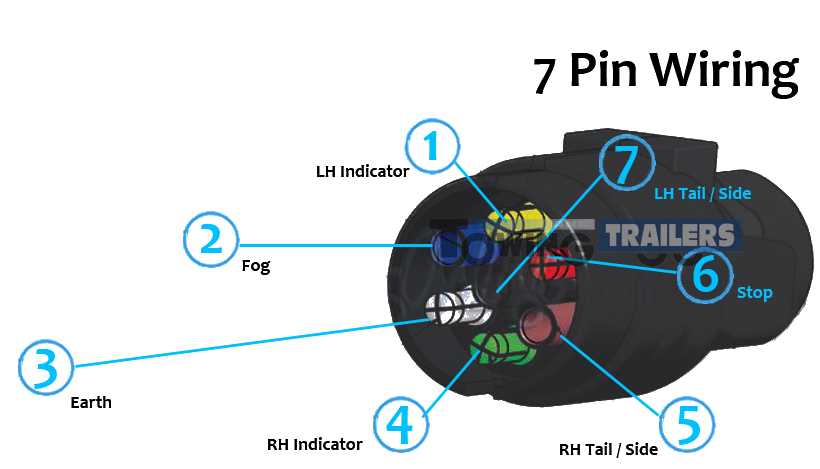
Match each terminal on the seven-contact vehicle socket to its designated circuit before connecting any conductor. The round RV-style connector used on many tow vehicles assigns fixed functions to seven contacts. White serves as the ground return connected to the chassis. Brown powers tail and running lamps. Yellow feeds the left turn signal and left brake light, while green feeds the right signal and right brake light. Blue carries the output from the brake controller that activates electric braking systems on the towed unit.
The remaining two contacts supply auxiliary circuits. Black or red insulation typically indicates a constant 12-volt power line used for battery charging or interior lights, and purple insulation usually connects to the reverse lamp circuit triggered when the vehicle shifts into reverse. Checking the terminal layout from the front face of the socket prevents mirrored connections. A multimeter set to DC voltage helps confirm each function by activating lights, turn signals, brake pedal, and reverse gear while probing the contacts.