Connect the sensor’s power lead directly to a stable 12V source, ensuring minimal resistance to prevent inaccurate readings. Use a high-quality connector rated for automotive use to maintain a consistent current flow and avoid voltage drops.
Attach the ground wire to a clean metal chassis point, free of paint or corrosion. Secure the connection with a star washer to guarantee solid contact and reduce electrical noise that could interfere with the gauge response.
Link the signal output from the float mechanism to the instrument panel input. Route the lead away from high-current lines such as ignition or starter circuits to prevent erratic readings caused by electromagnetic interference.
Double-check continuity using a multimeter before powering the system. Confirm resistance changes smoothly as the float moves to ensure the sensor accurately represents the tank level throughout its full range.
Clamp or secure all connectors to prevent vibration-induced disconnections. Inspect periodically for frayed insulation or corrosion, as even minor damage can cause signal fluctuations or complete failure of the level indicator.
3 Wire Fuel Level Sender Configuration
Connect the three terminals according to color codes: green for the gauge signal, black for ground, and red for the ignition feed. Incorrect connection can cause erratic readings or dashboard errors.
Use 16-18 gauge insulated conductors to maintain voltage stability over longer runs. Thin cables can produce fluctuating meter values under load.
Ensure the metallic body of the sensor contacts the chassis or engine block. This creates a reliable reference point for the measurement circuit and avoids false empty readings.
Insert an in-line fuse rated 2-3 amperes between the ignition source and the sensor. This prevents damage from accidental short circuits during installation or maintenance.
Route the leads away from high-heat components, such as exhaust manifolds or turbo housings. Heat exposure can degrade insulation and create intermittent signal issues.
Secure connections with ring terminals and proper crimping tools. Loose contact at any terminal can cause the gauge to jump from full to empty unpredictably.
After installation, test the system with the tank partially filled. Monitor the dashboard for smooth, linear progression from low to high levels to confirm sensor accuracy.
Periodic inspection every 12 months is recommended. Look for corrosion at the terminals, frayed insulation, or shifts in the mounting bracket that could interfere with accurate readings.
Identifying Each Conductor and Its Function
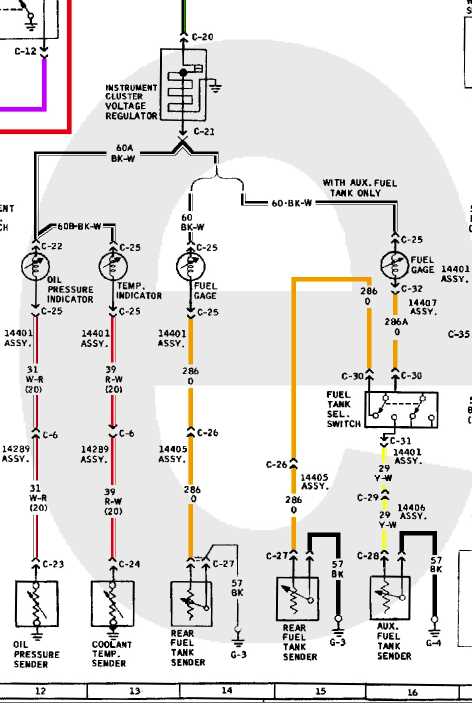
Connect the red lead to the positive terminal; it transmits the main voltage to the sensor mechanism for level detection.
The black strand serves as the ground, providing a stable return path for electrical current and preventing erratic readings.
Green cables typically carry the signal to the gauge, translating the float’s position into a readable measurement inside the dashboard.
Verify each connection using a multimeter before assembly. Measure resistance between terminals to confirm proper signal routing and avoid misfires.
- Red: Power supply, usually 12 volts in automotive systems.
- Black: Chassis ground, ensuring circuit completion.
- Green: Output to meter, variable resistance proportional to level.
Twist-on connectors and heat-shrink tubing improve contact reliability and reduce exposure to vibration-induced disconnections.
Color codes can vary slightly across manufacturers; always cross-check the factory manual or markings stamped near the plug ends.
After installation, test the gauge through its full range. Observe smooth transitions without sudden jumps to confirm the integrity of each path.