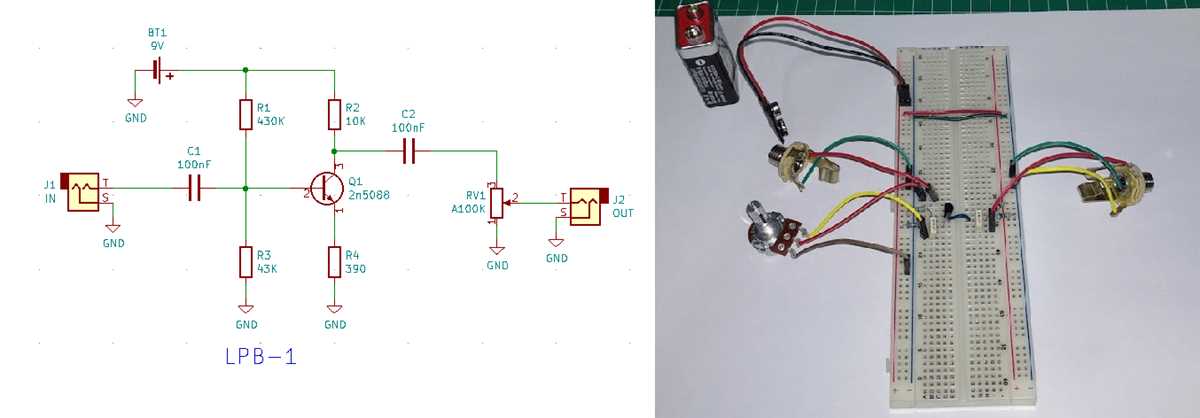
Use a dual-transistor approach to achieve tighter clipping and smoother tonal saturation. Selecting matched silicon transistors with hFE values between 150–200 minimizes noise while preserving harmonic richness. Pairing this with a low-noise op-amp in the input stage enhances signal clarity without compromising grit.
Fine-tune the gain network by adjusting series and shunt resistors around the clipping stage. For a warmer response, increase the value of the series resistor feeding the diode bridge to around 10kΩ, while keeping the shunt resistor between 1kΩ and 2kΩ. This setup balances headroom and compression effectively.
Integrate a true bypass switch with a 3PDT footprint to maintain signal integrity when the effect is disengaged. Avoid using SPDT switches, as they often introduce unwanted loading that dulls dynamics. Additionally, decouple power rails with 100nF ceramics close to the active components to reduce high-frequency oscillations.
Experiment with capacitor selection in the tone-shaping stage. Swapping a 22nF capacitor with a 33nF film unit subtly shifts the midrange contour, giving the output more punch without harshness. Coupling capacitors of 1µF polyester maintain low-end fullness while preventing mud in the mix.
Distortion Pedal Circuit Blueprint
Use a 1N4148 diode pair in series with a 10k resistor to shape the gain stage; this setup produces tight clipping without excessive noise. Position the diodes right after the op-amp output to achieve immediate signal saturation.
For the main amplification node, an LM741 op-amp works well with a 100k feedback resistor combined with a 1nF capacitor to control high-frequency spikes. Adjusting the resistor between 68k and 120k subtly changes the warmth of the overdrive effect.
Incorporate a 0.022µF input capacitor to prevent DC from reaching the preamp section. This small value maintains the low-end punch while avoiding muddiness, especially when paired with a 1M input resistor to preserve signal integrity.
Tone Shaping Network
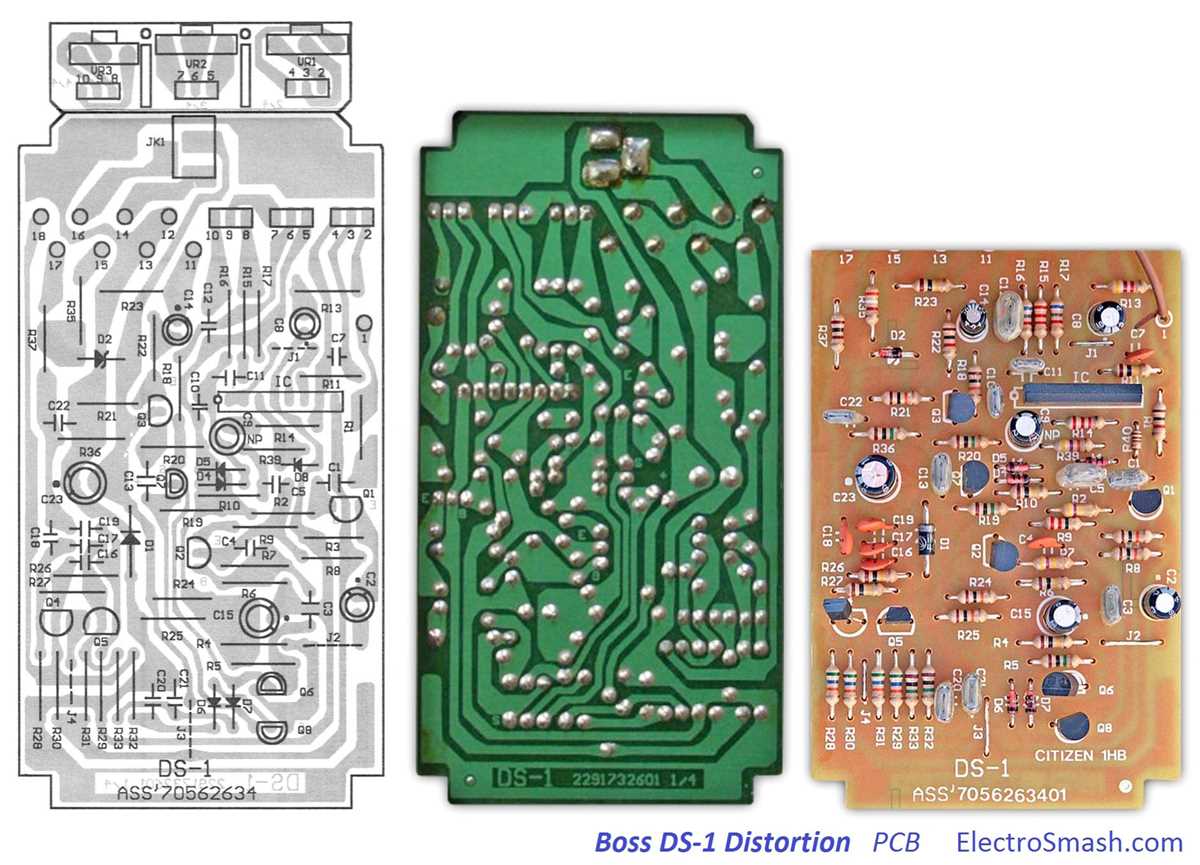
Use a dual-gang potentiometer alongside a 0.01µF and a 0.047µF capacitor to build a responsive treble/bass filter. Connect the low side of the pot to ground and the wiper to the op-amp inverting input for precise tonal sculpting. This arrangement prevents harsh peaks at higher gain levels.
Include a 4.7µF output capacitor before the final stage to remove residual DC offsets, ensuring the signal remains clean while feeding the next effect or amplifier. Pair it with a 10k series resistor to limit current surges during hot peaks.
Power and Stability
Use a regulated 9V supply with a 100µF bypass capacitor near the op-amp to minimize ripple and hum. For extra protection, a 1N4001 diode on the supply line guards against accidental reverse polarity, maintaining the longevity of the transistors and op-amp throughout frequent use.
Choosing Components for Optimal Distortion Tone
Use silicon diodes like 1N4148 for a tighter, more aggressive clipping, or germanium diodes such as 1N34A to achieve a warmer, smoother response. Pairing two diodes in series increases headroom, while parallel configurations intensify harmonic saturation. Pay attention to forward voltage: 0.3 V for germanium and 0.7 V for silicon changes the onset of signal compression significantly.
Transistors shape gain and tonal character. NPN types like BC109 provide bright, articulate crunch, whereas BC183 or AC128 inject a round, creamy midrange. Biasing resistors between 10 kΩ and 100 kΩ determine the dynamic response, with lower values tightening low-end punch and higher values accentuating harmonic richness.
Capacitor Selection
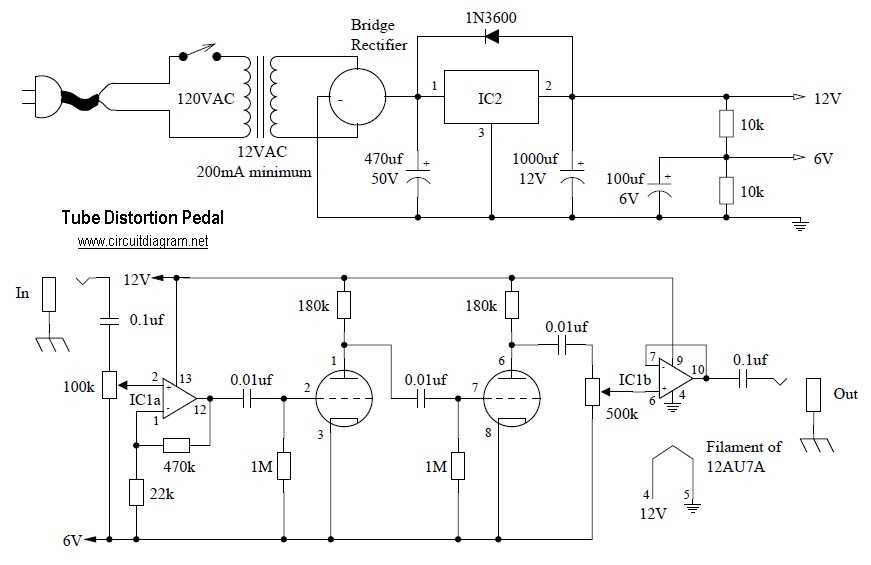
Electrolytic capacitors in the signal path influence low-frequency roll-off; 1 µF to 4.7 µF is ideal for retaining warmth without muddiness. Film capacitors, such as polyester types, sharpen attack and maintain clarity in the high mids. Adjusting the coupling capacitor allows fine-tuning between smooth sustain and aggressive bite, directly impacting note definition.
Resistors controlling feedback loops and tone shaping should not be overlooked. Metal film resistors reduce noise, while carbon composition elements introduce subtle harmonic distortion. Experimenting with values between 1 kΩ and 470 kΩ in these positions can drastically change the intensity and texture of overdrive, giving each design its unique voice.