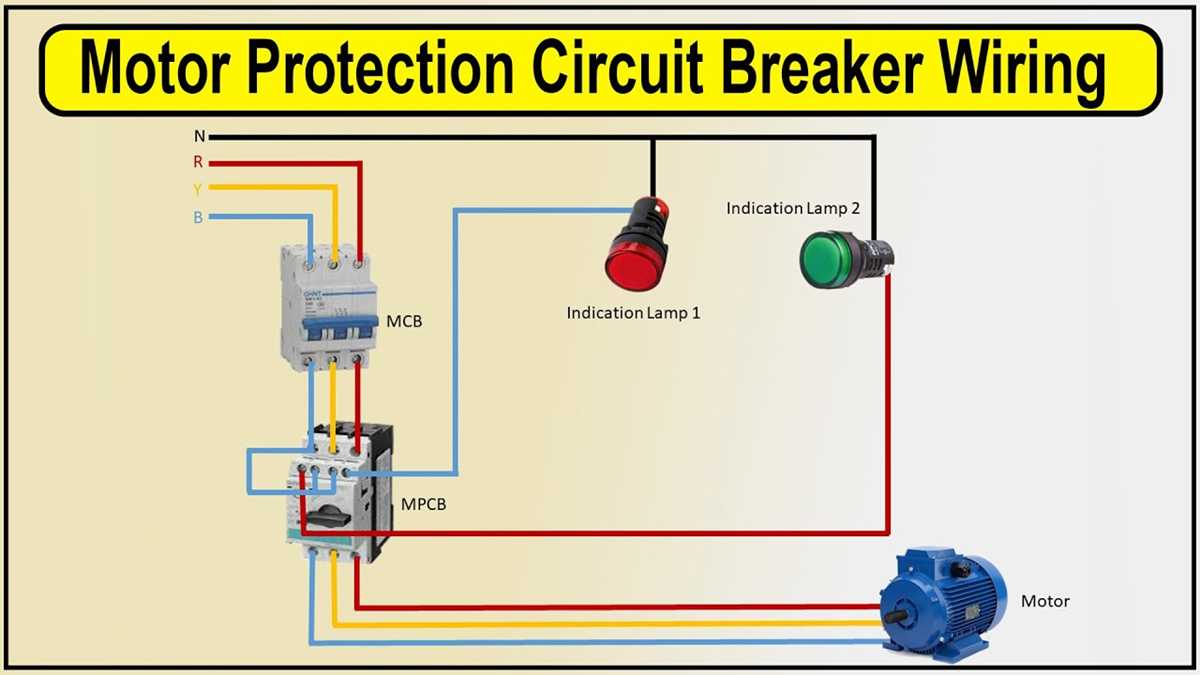
Connect the incoming power conductor to the line terminal of the protective switch and attach the outgoing branch conductor to the load terminal. This arrangement allows the device to interrupt current during overload or short-circuit conditions. Tighten terminal screws to the torque specified on the device label, commonly between 20 and 36 lb-in depending on model and conductor size.
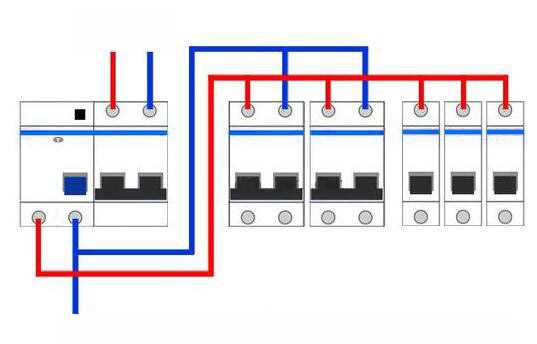
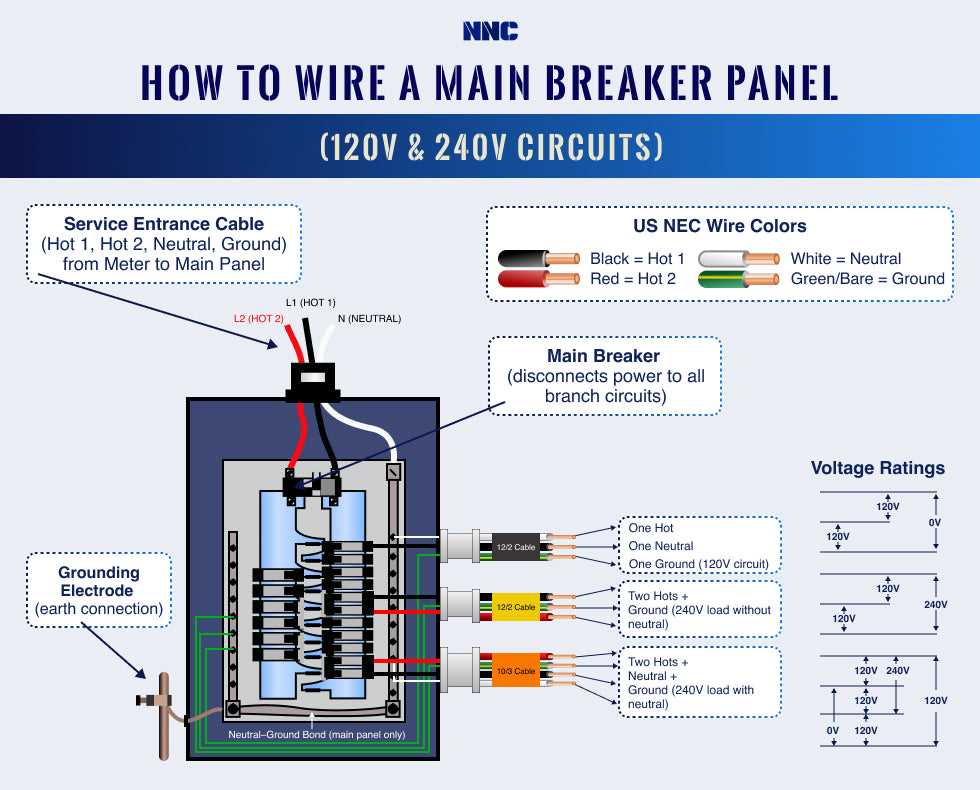
A typical residential panel uses two energized bus rails that supply 120/240-volt service. Each protective switch clips onto one rail or bridges both rails depending on its type. Single-pole units deliver 120 volts for lighting or receptacle lines, while double-pole units connect across both rails and deliver 240 volts for appliances such as electric ranges, dryers, or water heaters.
Conductors feeding these protective devices follow common sizing rules. Lighting lines frequently use 14 AWG copper paired with a 15-amp unit. Receptacle lines typically use 12 AWG copper with a 20-amp unit. Larger appliances often require 10 AWG copper with a 30-amp two-pole device. Matching conductor size to device rating prevents insulation damage and excessive heat at terminals.
Grounded conductors attach to the neutral bar inside the panel enclosure, while equipment grounding conductors attach to a bonded ground bar connected to the metal cabinet. Neutral and grounding paths must remain separate in subpanels so return current flows only through the neutral conductor. Correct placement of these conductors keeps fault current paths predictable and allows protective devices to trip during abnormal current flow.
Circuit Breaker Wiring Diagram With Line Load Neutral and Ground Connections
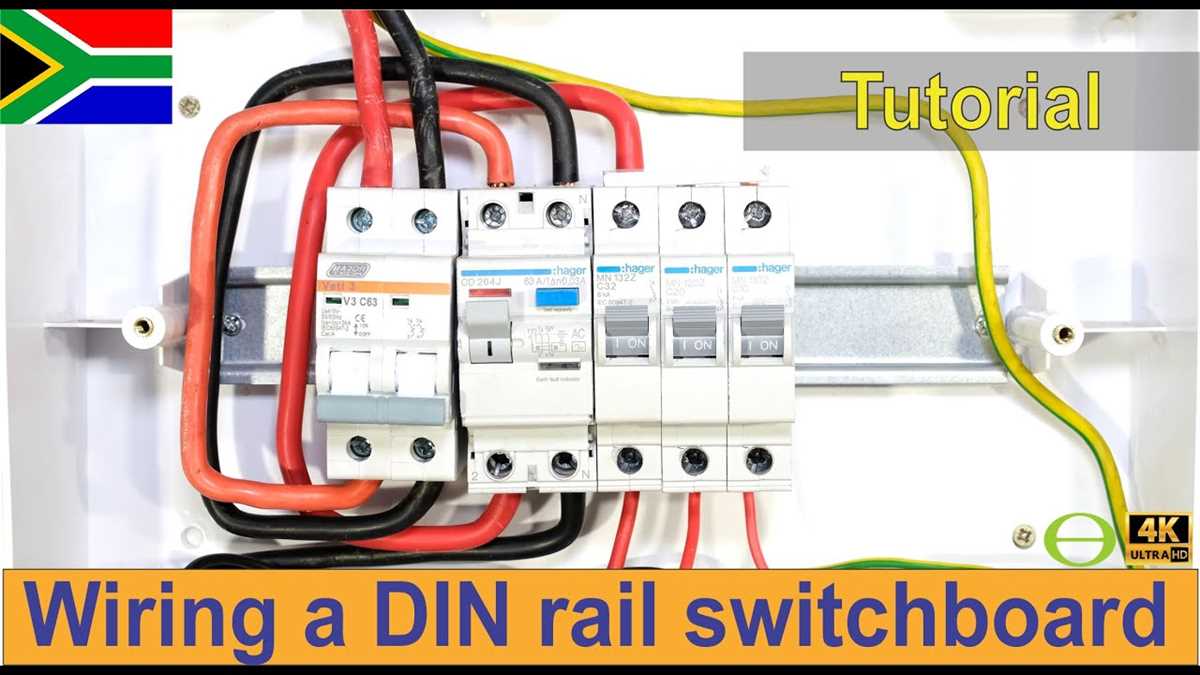
Attach the incoming supply conductor to the line terminal of the protective switch and connect the outgoing branch conductor to the load terminal. The device sits on the energized bus rail inside the distribution panel and disconnects power during overload or short fault conditions. Use conductor sizes that match the device rating: 14 AWG copper for 15-amp protection, 12 AWG copper for 20-amp protection, and 10 AWG copper for 30-amp appliance lines. Tighten terminal screws with a torque driver according to the manufacturer label, usually between 20 and 36 lb-in, which prevents loose connections and overheating at the contact point.
The grounded conductor from the branch line attaches to the neutral bar, while the equipment grounding conductor connects to the bonded grounding bar fixed to the metal enclosure. Single-pole protection units draw power from one bus rail and supply 120 volts, while two-pole units bridge both rails and supply 240 volts for heavy equipment such as electric ranges or water heaters. Maintain separation between neutral and grounding paths in any downstream panel; only the main service enclosure contains the bonding connection between these bars.
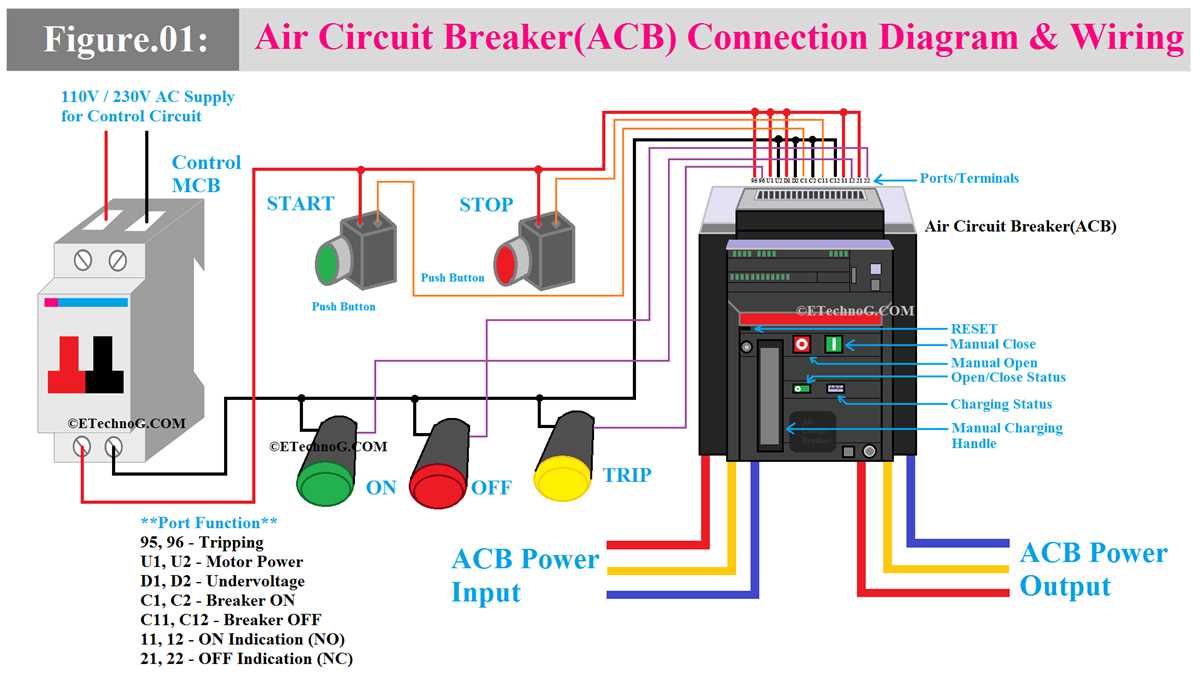
Line and Load Terminal Connections on a Standard Circuit Breaker
Attach the incoming supply conductor to the terminal marked LINE and connect the outgoing branch conductor to the terminal marked LOAD. The supply conductor carries power from the service bus inside the distribution panel, while the outgoing conductor feeds lighting outlets, receptacles, or fixed appliances. Tighten the terminal screw using the torque value printed on the device body, commonly between 20 and 36 lb-in for residential units.
Strip insulation carefully so that about 10–12 mm of bare copper enters the terminal clamp. Insert the conductor fully beneath the pressure plate and confirm that no bare copper remains exposed outside the terminal area. Incorrect insertion can lead to overheating at the contact point and reduced clamping force during long-term operation.
Typical Conductor Sizes for Terminal Connections
Residential branch lines usually follow these pairings between conductor size and protection rating:
15 amp protection with 14 AWG copper for lighting lines, 20 amp protection with 12 AWG copper for receptacle lines, and 30 amp protection with 10 AWG copper for equipment such as dryers or water heaters. Larger appliances may use 8 AWG or 6 AWG conductors connected to two-pole protection units that draw power from both bus rails.
Route conductors along the panel edges rather than across the bus area. This keeps terminals accessible, prevents pressure against installed devices, and maintains airflow around energized components. Proper conductor routing also allows each protective switch to seat firmly onto the panel rail without obstruction.