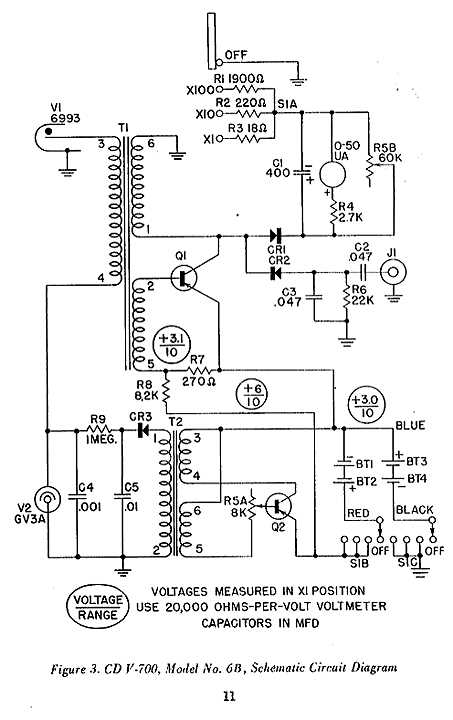
Use a high-voltage supply of 400–600 volts to energize the tube for accurate ionizing particle detection. Ensure the power source provides minimal ripple to prevent false pulses, and add a 10 MΩ series resistor for stable operation.
Pulse shaping is critical: connect a fast-response capacitor across the tube terminals to filter transient spikes and feed the signal to a transistor amplifier with a gain of 50–100. A low-leakage, high-speed NPN transistor works best for amplifying single particle events.
Output interface optimization can be achieved with a simple LED or piezo buzzer stage, triggered via a small coupling capacitor of 100–220 pF. This ensures visible or audible feedback without loading the high-voltage section.
Shielding and grounding: enclose the high-voltage components in a metallic case and connect the negative rail to chassis ground. This minimizes electromagnetic interference and stabilizes pulse detection, improving reproducibility for precise measurements.
Fine-tuning the assembly requires adjusting series resistances and coupling capacitances to maintain clear pulses under varying radiation intensities. Using a multimeter to monitor tube current and a fast oscilloscope to check pulse shape guarantees optimal performance.
Radiation Detection Assembly Layout
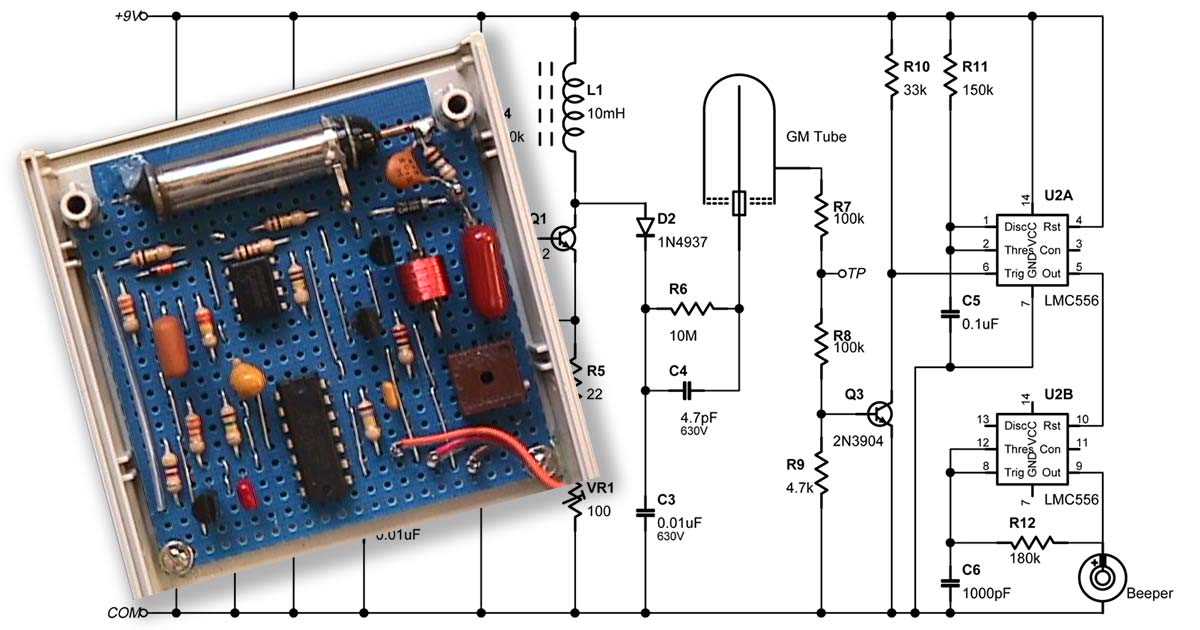
Use a high-voltage supply around 400–500V to energize the tube; a 100MΩ resistor in series will stabilize the pulse output. Include a fast-switch transistor like 2N3904 to amplify the signal, and connect a 10nF capacitor across the output to filter noise. This setup provides clear single-pulse readouts suitable for both audio and visual indicators.
For the sensing element, select a thin-walled cylindrical tube filled with inert gas and a central anode wire. Wire the tube in series with a safety resistor and decoupling capacitor. Integrate a piezo speaker or LED through a simple transistor switch for immediate pulse detection. Avoid excessive wiring length to reduce signal attenuation.
Optional enhancements include:
- Microcontroller interface for counting and logging events.
- Dual-stage transistor amplification for very low-level radiation detection.
- Battery operation with a step-up module to maintain stable high voltage.
- Shielded enclosure to prevent electromagnetic interference from affecting readings.
Choosing the Right Geiger-Müller Tube for Your Circuit
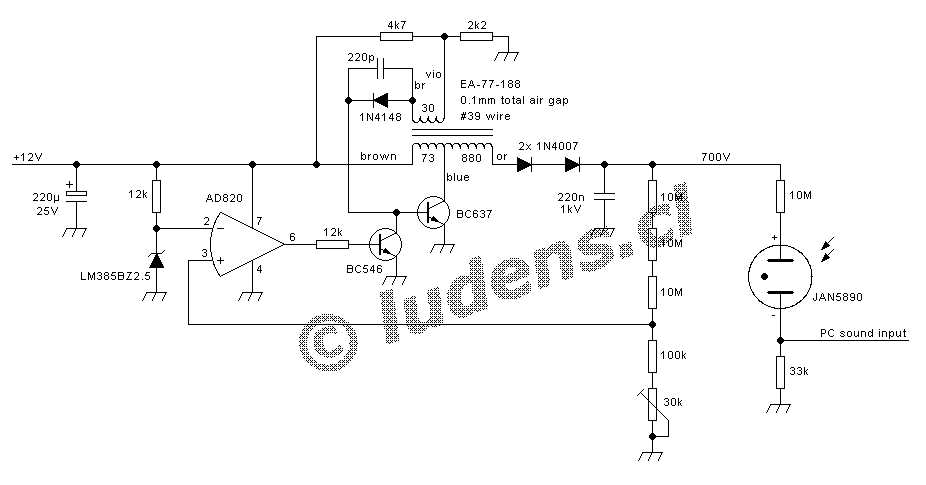
Select a tube with a suitable operating voltage range matching your power supply. Standard models require 400–600 V, while specialized variants, like thin-walled beta detectors, often operate around 350–450 V. Using a tube outside its nominal voltage can cause spurious counts or shorten its lifespan.
Consider the type of radiation you intend to detect. End-window tubes excel at alpha and beta particles due to their thin mica windows, whereas windowless or side-window designs favor gamma detection. Tube diameter also affects sensitivity: larger diameters increase the count rate but demand higher voltage and current stability.
Response time and dead time are critical for rapid event detection. Tubes with dead times below 100 µs handle high-intensity sources without saturation, while conventional 200–300 µs tubes suffice for environmental monitoring. Manufacturer datasheets typically provide plateau slope and background count rate, helping to evaluate long-term stability under continuous operation.
Environmental factors influence tube selection. Hermetically sealed tubes resist humidity and pressure variations, whereas open designs are lighter but vulnerable to moisture. Temperature ratings often span –20 °C to +50 °C; exceeding these can alter discharge characteristics. For mobile instruments, low-mass tubes minimize mechanical stress and simplify high-voltage power supply requirements.