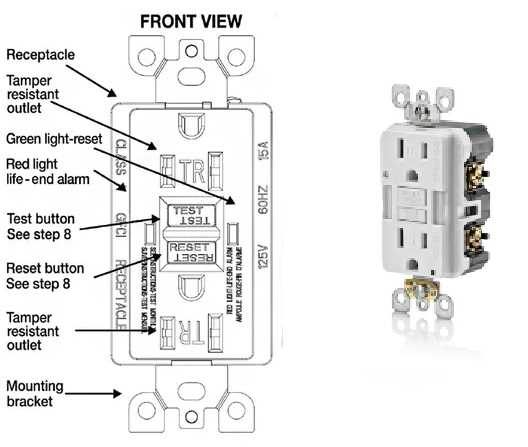
Connect the hot and neutral conductors correctly to prevent electrical faults and tripping. Identify the feed line entering the box and label it before attaching any terminals. Use insulated tools to reduce the risk of shock during connections.
Attach the load terminals only if downstream protection is needed. Verify that all wires are stripped to the recommended ¾ inch length and firmly secured under the screws. Loose connections can trigger frequent interruptions or damage devices.
Confirm grounding continuity by connecting the green or bare conductor to the receptacle’s ground terminal. Ensure the metal box, if present, is bonded properly. Proper earthing minimizes the chance of electric shock in damp areas.
Test the installed device immediately after wiring using a portable tester or the built-in test button. Check both trip and reset functions to guarantee that the unit responds correctly to faults before restoring regular use.
Connection Setup for a Safety Receptacle
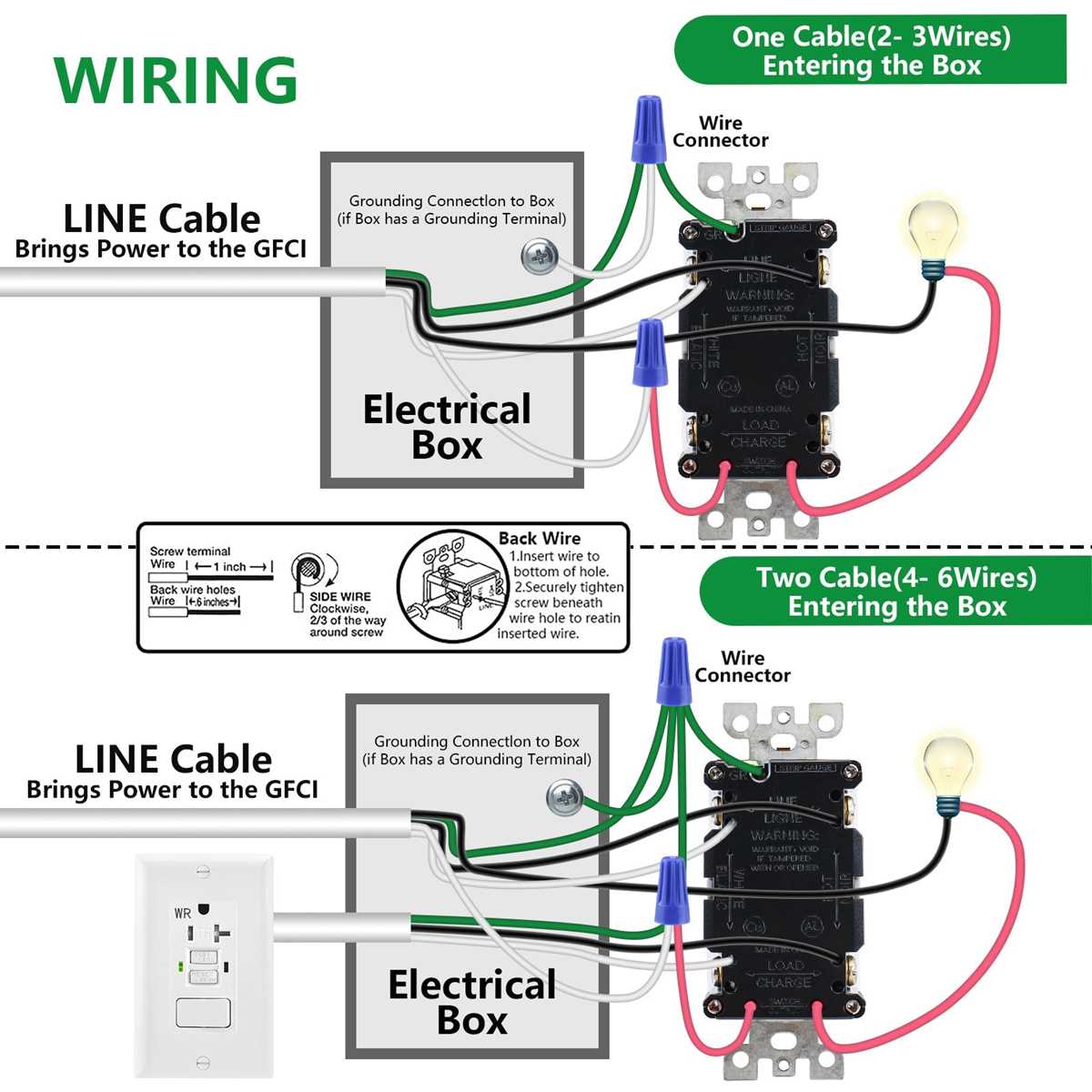
Attach the incoming hot conductor to the brass terminal and the neutral to the silver terminal to ensure proper fault detection. Do not interchange these leads, as reversing them can prevent the unit from tripping during a ground fault. Verify that the terminals are tightened to 12 inch-pounds torque to maintain stable contact.
Use the downstream terminals only for protecting additional devices. Strip insulation to ¾ inch and insert wires fully under the screws. Check each connection with a continuity tester before securing the cover plate to confirm the circuit responds correctly to simulated fault conditions.
Identifying Line and Load Conductors for a Safety Receptacle
Determine which cables carry incoming power by turning off the main breaker and testing each wire with a voltage detector. Label the hot and neutral leads before touching any terminals to prevent confusion during installation.
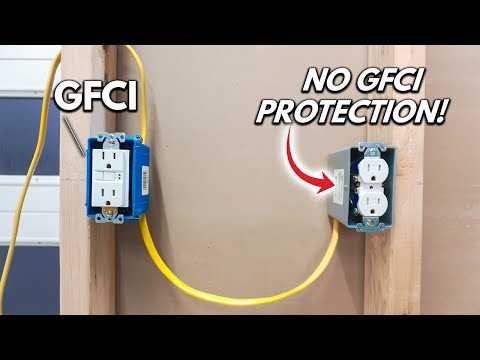
Check for downstream protection connections by tracing wires that continue to other devices. Use a continuity tester to identify which cables will activate when the safety unit trips. Only connect these to the load terminals to extend ground fault protection safely.
- Hot wire identification: typically black or red insulation, connects to brass screws.
- Neutral wire identification: usually white, connects to silver screws.
- Ground connection: green or bare copper, secured to the green terminal or metal box.
Double-check all labels and connections before restoring power. Incorrect identification can prevent tripping or damage appliances. Perform a test using the built-in trip button to confirm that the unit detects faults correctly along both line and load paths.