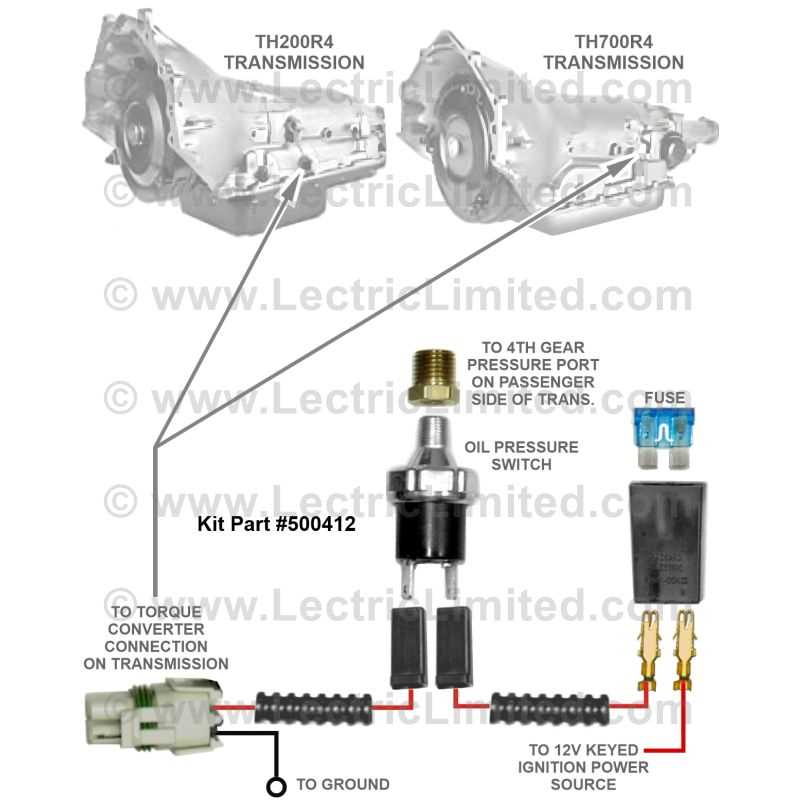
Connect the solenoid control line directly to a switched 12V source with a 3-amp inline fuse. Use 18-gauge stranded wire for accurate signal delivery and minimal voltage drop to ensure reliable torque converter operation.
Identify each terminal on the control unit before making connections. Typically, one terminal is for signal input from the vehicle computer or speed sensor, while the other provides ground reference. Confirm continuity with a multimeter to avoid miswiring and prevent solenoid failure.
Route all conductors along factory harness paths and secure them with zip ties. Protect exposed sections with split loom tubing to reduce abrasion, and avoid proximity to high-heat components like the exhaust manifold or engine block.
Test the solenoid output under operational load using a voltmeter or test light. Engage the control manually if possible, and observe voltage stability at the terminal. Apply dielectric grease to connections to prevent corrosion and ensure consistent engagement of the torque converter.
Identifying 700R4 Lockup Solenoid Terminals
Label each terminal on the solenoid before connecting any line to prevent confusion between signal input and ground. Typically, one pin receives a 12V control signal from the vehicle computer, while the other is tied to chassis ground. Use a multimeter to confirm continuity before applying power.
Check for factory markings or color codes on the connector. The positive signal wire is often black with a tracer, and the ground is usually solid white. Accurate identification prevents overheating and ensures proper engagement of the torque converter clutch.
Secure all connections with clean terminals and dielectric grease to minimize oxidation. Route the conductors along existing harness paths, avoiding heat sources. Testing each pin individually under voltage verifies correct function and prevents solenoid malfunction during operation.
Step-by-Step Connections for Lockup Control
Connect the control input wire directly to a switched 12V source with a 3-amp inline fuse to protect the solenoid. Use 18-gauge stranded wire and crimped terminals to ensure secure, low-resistance connections that maintain proper engagement of the torque converter clutch.
- Identify the positive signal wire from the vehicle computer or speed sensor.
- Attach the wire to the solenoid input terminal, confirming continuity with a multimeter.
- Connect the ground terminal to a clean chassis point using a lock washer and bolt.
- Route the conductors along the factory harness path and protect them with split loom tubing.
- Apply dielectric grease to each terminal to prevent oxidation and maintain reliable contact.
Test the solenoid activation by applying voltage to the input. Confirm that the torque converter engages without delay and that no excessive current draw occurs. Inspect connections for heating or loose terminals, and secure any loose lines with zip ties to ensure safe and consistent operation under load.
Testing and Troubleshooting Lockup Circuits
Start by checking the main power line to the solenoid with a digital multimeter. Ensure it delivers a stable 12 volts under load and that voltage drop does not exceed 0.5 volts. Excessive drop can indicate loose connections or corroded terminals.
Verify the ground terminal continuity to the chassis. A poor ground can cause intermittent operation, delayed engagement, or complete failure. Clean the contact surfaces and tighten the bolt to maintain a solid connection.
Test the control signal line individually using a test light or voltmeter. Apply voltage and confirm that the solenoid activates immediately. Unexpected readings may indicate a short circuit, broken conductor, or damaged solenoid coil.
Inspect connectors and terminals for corrosion or overheating. Oxidized pins can increase resistance, causing delayed torque converter engagement. Clean contacts with electrical cleaner and apply dielectric grease to prevent further oxidation.
Check the current draw of the solenoid under operation. Excessive amperage may indicate binding in the torque converter clutch or internal solenoid damage. Replace the solenoid if readings exceed manufacturer specifications to prevent circuit overload.
After repairs, retest the circuit under normal operating conditions. Ensure smooth engagement and disengagement of the clutch at appropriate speeds. Secure all conductors along the harness path and protect exposed sections with split loom tubing to maintain long-term reliability.