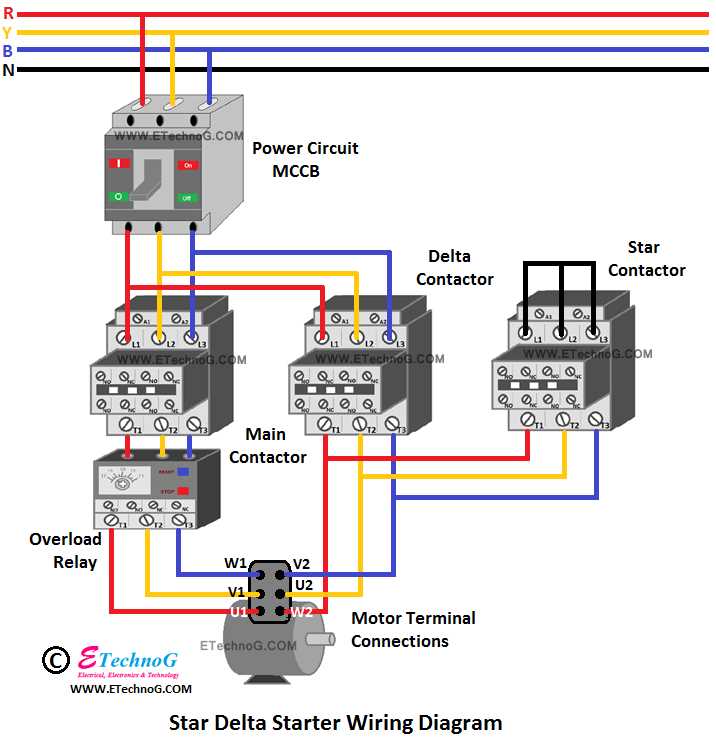
To connect a motor using a reduced voltage method, begin with understanding the basic wiring setup. Use a set of three contactors for controlling the switching between the two configurations. The key is to connect the motor windings in a way that reduces the starting current, limiting stress on the motor and the electrical supply.
Start by wiring the motor windings to the first contactor in a specific pattern that will initially connect them in a “Y” shape, which ensures lower voltage during startup. After the motor reaches a certain speed, switch the configuration to a “∆” pattern to allow full voltage and optimal power. Ensure that the switching happens smoothly by using a time delay relay to avoid short circuits or power surges.
It’s important to use correct-sized wiring for each connection, especially for the high-current terminals. This will prevent overheating and ensure the longevity of both the motor and the entire system. Check the insulation ratings of cables and ensure that the grounding is solid, reducing the risk of electrical hazards.
Star Delta Motor Connection Setup
The primary goal in this setup is to reduce the inrush current at startup by initially using a lower voltage configuration. Begin by connecting the motor windings in a “Y” pattern to reduce the applied voltage to approximately 58% of its full value. This will limit the starting current while ensuring the motor gradually accelerates to operating speed.
As the motor reaches the required speed, switch the connection to a “∆” pattern to allow full voltage across the windings. This change should be done automatically with the help of a relay or timer system that ensures smooth transition without damaging the equipment or causing electrical surges.
Make sure that the wiring used is capable of handling the motor’s full operating current in the “∆” configuration. This requires selecting appropriately rated cables that can withstand high voltage and current without overheating. Proper insulation is critical to ensure the safety of the system and avoid shorts between conductors.
It is important to include safety features like fuses or circuit breakers in both configurations. These should be placed near the power source and the switching mechanism to protect against overcurrent or short circuits. Testing the system before full operation ensures that these safety components function correctly under load.
Use a time-delay relay to avoid simultaneous switching between the two configurations. This component prevents the motor from being exposed to high voltages during the transition and avoids a sudden surge in current. A delay of approximately 5 to 10 seconds is typical for this type of setup.
Finally, maintenance checks should include regularly inspecting the contactors, relays, and wiring for wear or corrosion. If the system has been in operation for extended periods, consider testing the insulation resistance and cleaning the contact points to maintain optimal performance and reliability.
Step-by-Step Wiring Process for Star Delta Connection
Start by identifying the three main components: the motor, the control panel, and the contactors. First, connect the motor windings to the terminals on the contactor in a “Y” configuration. This will reduce the voltage across each winding and limit the initial current draw during startup. Securely attach the motor leads to the contactor terminals, ensuring they are properly insulated and rated for the expected load.
Wiring the Control Panel and Relays
The control panel will house the relays and timers responsible for switching between the reduced voltage and full voltage modes. Begin by wiring the first relay to control the initial “Y” connection, then wire the second relay to switch to the “∆” pattern once the motor reaches a specified speed. Make sure to use a time-delay relay to prevent abrupt transitions between the two configurations, which could cause electrical damage.
Safety and Final Checks
After completing the wiring, it’s critical to integrate protective components such as fuses or circuit breakers. These should be placed near the power input and along the output lines to safeguard the system against overloads and faults. Double-check all connections for loose wires or incorrect configurations, then perform an initial test to ensure the motor operates as expected, switching between configurations smoothly without issues.