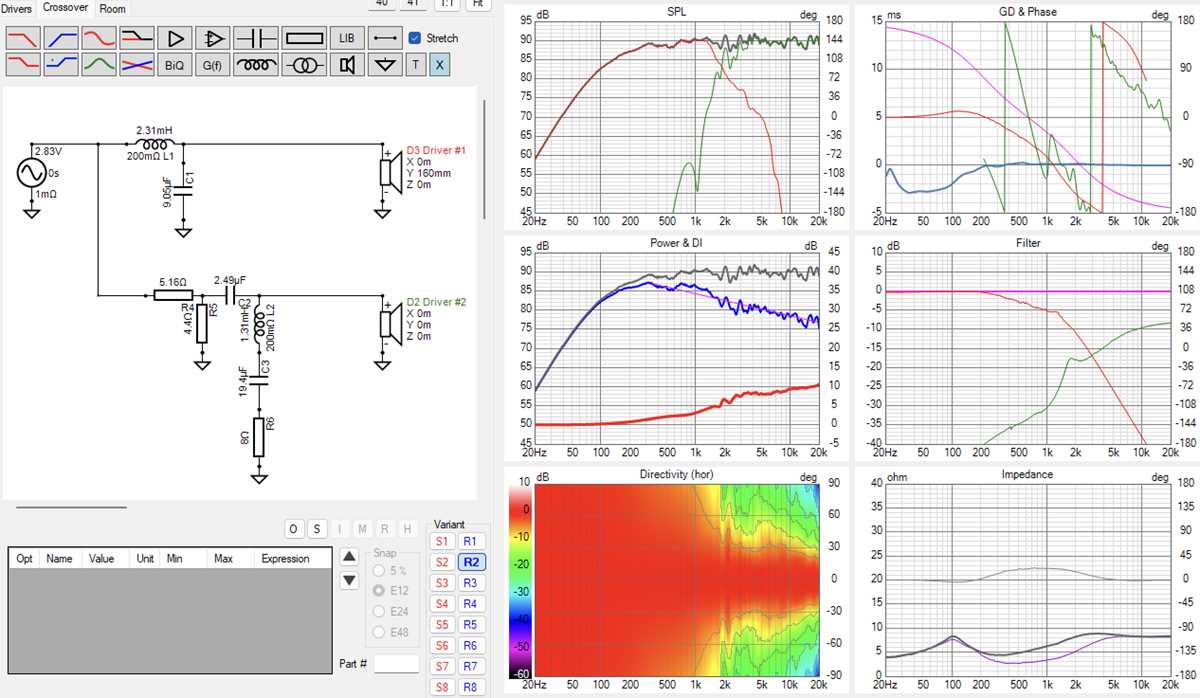
Use high-quality capacitors and inductors rated for at least 20% above your amplifier’s output to maintain stable signal separation and prevent distortion in mid and high ranges.
Arrange components in a compact layout to minimize lead lengths and reduce interference between low and high tone pathways, ensuring cleaner transitions between the woofer and tweeter.
Match inductor values to your speaker specifications by calculating impedance and cutoff frequencies with precision formulas, targeting smoother attenuation of undesired frequency bands.
Test the assembly at low volume first and measure output with a multimeter or audio analyzer to verify that each driver receives its intended frequency range before final installation.
Use quality connectors and secure soldering to prevent signal loss and maintain consistent performance over time, especially in setups exposed to vibration or temperature changes.
2 Speaker Frequency Divider Assembly
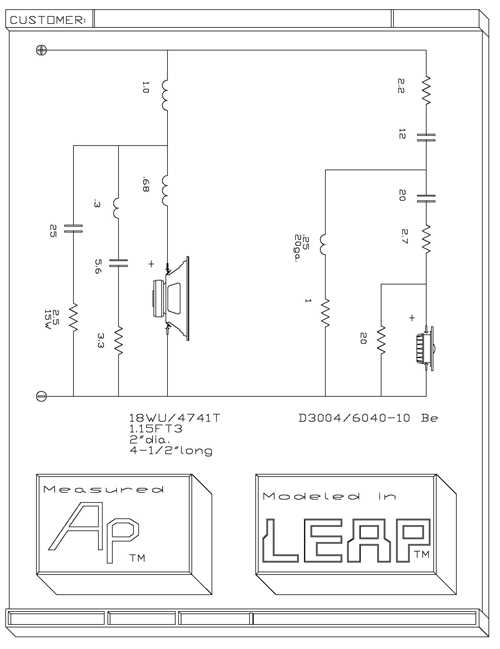
Choose inductors with low DC resistance to reduce power loss in the low-frequency path, targeting values between 0.5 mH and 2 mH depending on the woofer impedance and desired cutoff point.
Capacitors in the high-frequency branch should have voltage ratings at least 50% higher than the amplifier output and tolerance under 5% to maintain precise attenuation of unwanted bass signals.
Arrange the components in a star layout with minimal conductor overlap to prevent magnetic coupling, which can distort signal separation between the tweeter and woofer.
Verify calculated cutoff frequencies using the formula f = 1 / (2π√(L × C)), adjusting inductor or capacitor values to align with the speaker’s resonance and impedance curve.
Solder all connections carefully with a clean flux-free joint to avoid signal degradation and intermittence, particularly in high-vibration environments like car audio setups.
Test each branch individually using a signal generator and oscilloscope or frequency analyzer to confirm that low tones reach the woofer while high tones are delivered to the tweeter without overlap or attenuation errors.
Mount the assembly on a rigid board to minimize mechanical vibration, keeping inductors upright and capacitors flat to maintain consistent electrical characteristics and long-term stability.
Selecting Components for Accurate Frequency Separation
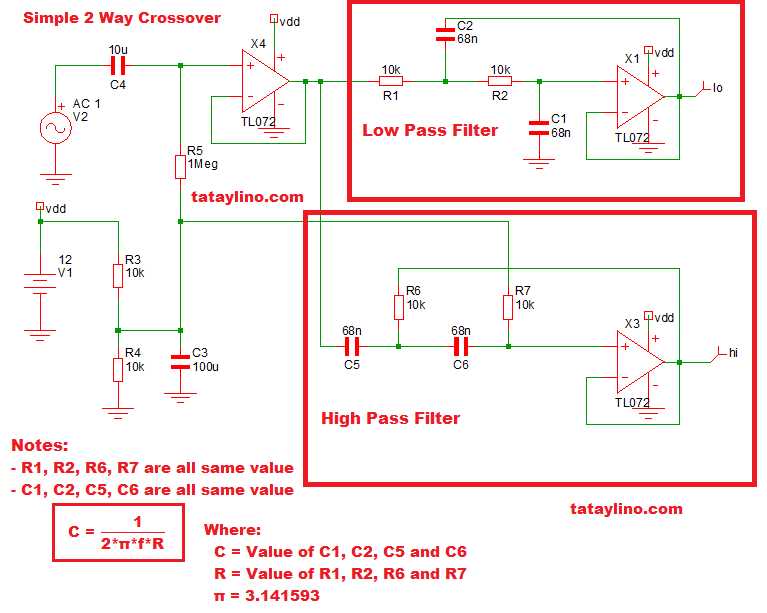
Start with precise inductors that match your speaker’s impedance and target cutoff frequency. Choose air-core or low-resistance iron-core types to reduce distortion and signal loss.
Use capacitors rated for higher voltage than your amplifier’s peak output. Film or polypropylene types offer stable performance across a wide frequency range and minimize phase shift.
Resistors can fine-tune attenuation between drivers. Metal oxide or wirewound types are recommended for consistent performance and thermal stability under prolonged load.
- Calculate the low-frequency inductor: L = Z / (2πf), where Z is speaker impedance, f is desired cutoff
- Calculate the high-frequency capacitor: C = 1 / (2πfZ)
- Adjust resistor values to balance output levels between the woofer and tweeter
Arrange components to minimize mutual interference. Keep inductors separated from capacitors and route leads to prevent magnetic coupling that can alter frequency response.
Test each component individually before assembly. Measure inductance, capacitance, and resistance to ensure values are within 3–5% of the design target, improving overall audio clarity.