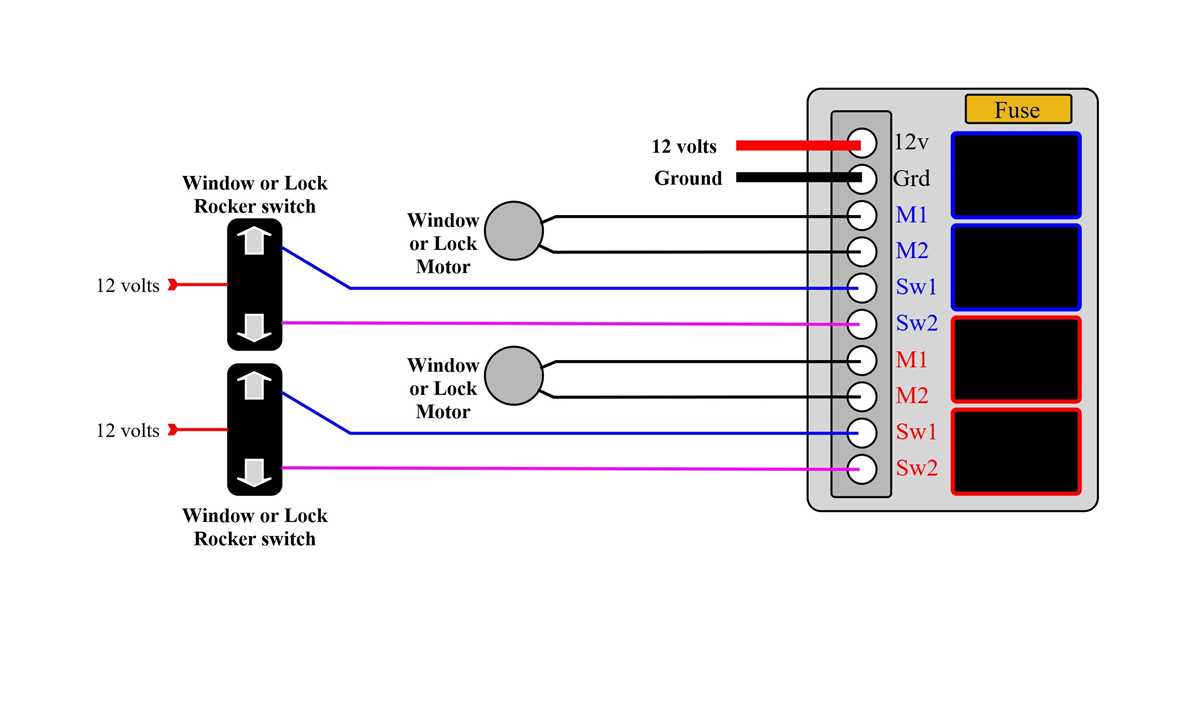
Connect the motor terminals directly to a fused 12V supply and verify polarity with a multimeter to avoid reversing the panel switch operation. Use 16-18 gauge stranded copper wire for runs under 3 feet; longer circuits benefit from 14 gauge to prevent voltage drop.
Integrate a relay with the driver-side toggle to reduce current load through the switch. Ensure the relay coil receives a constant ignition-switched voltage, while contacts handle the peak motor amperage, which can reach 20A during initial movement.
Secure all connectors with corrosion-resistant terminals and apply dielectric grease at every contact point. Label each wire with its function–up, down, common ground–to simplify future troubleshooting and prevent cross-connections.
Route the harness away from heat sources, moving parts, and sharp edges. Use split loom tubing for protection and maintain a gentle bend radius of at least 2 inches at all corners. Fasten the wiring every 6 inches with nylon clips to reduce vibration-induced fatigue.
Include a fuse near the battery positive terminal rated 25% above the maximum current draw of the motors. Confirm continuity and motor operation before final panel reassembly to prevent hidden faults and ensure smooth operation under load.
Electrical Layout for Vehicle Window Actuators
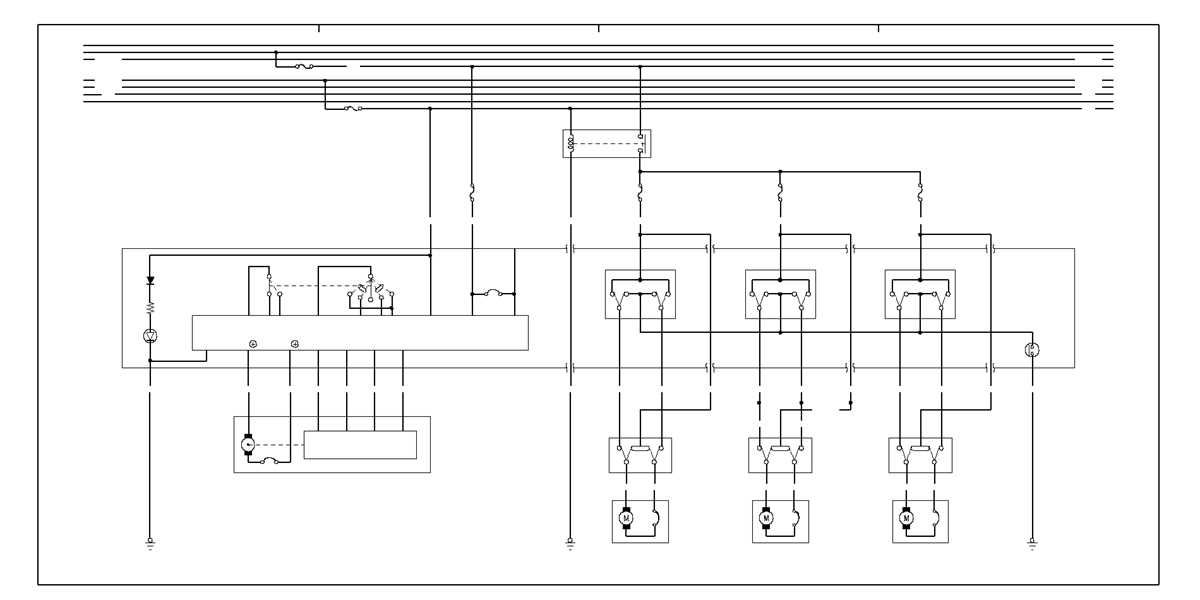
Directly connect the 12V supply to the main relay controlling each door motor, with a 15–20A inline fuse per circuit. Route the feed through the master console switch, then branch to individual actuators using 16 AWG stranded copper wire. Secure ground points to bare metal with ring terminals to maintain stable current flow.
Troubleshoot malfunctions systematically:
- Measure continuity from the battery to the switch terminals with a multimeter.
- Confirm output voltage at each door module while toggling the switch.
- Inspect connectors for corrosion, bent pins, or loose crimps.
- Check actuator current draw; readings above 8A indicate binding or mechanical resistance.
- Test limit switches inside the motor assembly to ensure proper up/down cutoff.
Label each line with color codes: red for positive, black for chassis ground, blue for signal lines. Use quick-disconnect terminals on door harnesses to simplify removal and replacement. Maintain a separation of at least 2 inches from high-current circuits like headlights to reduce electromagnetic interference and prevent erratic operation.
Identifying Key Wires and Connectors in Your Vehicle
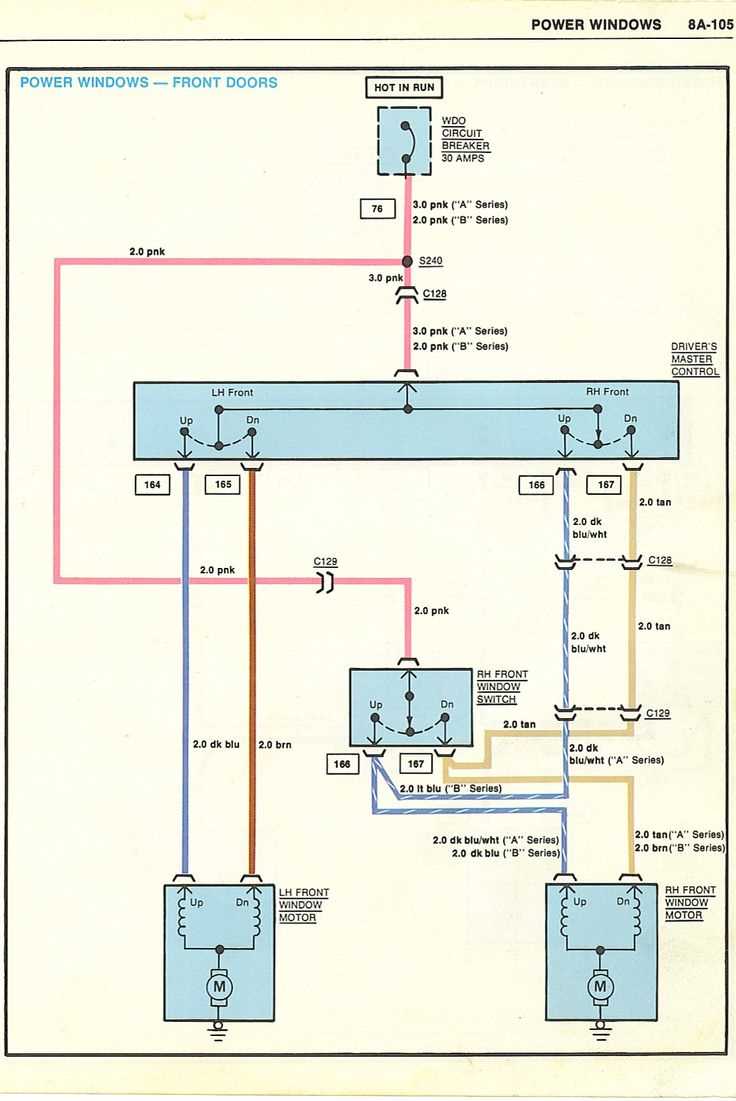
Locate the main feed line from the fuse box first; it is usually red with a white stripe and carries constant 12V. Trace it to the master control unit near the driver’s door. Check the connectors for corrosion or loose pins, as these are the most common points of failure affecting window operation.
Focus on the signal lines running to each door actuator. These are typically green with black tracers for the driver side and yellow with red tracers for the passenger side. Gently wiggle connectors while testing continuity with a multimeter to identify intermittent breaks that may not be visually obvious.
Don’t overlook the grounding points. A solid connection to the chassis, usually through a black wire bolted to a frame stud, ensures that current returns efficiently. If multiple doors fail simultaneously, verify that the main ground lug near the footwell is secure and free of paint or rust that could impede conductivity.