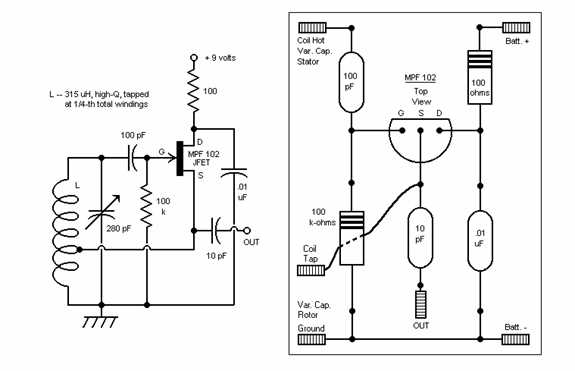
To build a working radio receiver, start by understanding the basic components: the antenna, the tuning coil, and the detector. These parts form the core of the design, each contributing to the overall function. The antenna captures radio waves, while the coil helps tune into specific frequencies, and the detector demodulates the signal into audio.
Next, focus on the arrangement. The antenna should be positioned to maximize reception, typically at a height and distance from other electrical objects. The coil’s winding should be precise, as its inductance plays a significant role in selecting frequencies. Test different coil configurations to find the best reception range.
Lastly, don’t forget to check the detector connection carefully. This component, often a diode, rectifies the signal so that it can be converted to sound. Ensure it’s connected correctly to avoid issues with signal clarity. Once all components are in place, fine-tune the system to get the best reception possible without interference.
Crystal Set Circuit Diagram
The first step is to understand the basic structure. The most important components include the antenna, coil, and detector. The antenna collects the incoming radio signal, the coil tunes it to a particular frequency, and the detector rectifies the signal into audible sound. Ensure each part is correctly positioned for optimal performance.
Use a high-quality wire for the coil to avoid resistance losses. The wire should be thin, but long enough to achieve the required inductance. Coil windings should be evenly spaced and tightly wound to prevent signal loss or interference.
The detector, typically a diode, plays a key role in converting the radio signal into an audio waveform. Ensure the diode is connected correctly, as incorrect placement can result in poor or no reception. Often, a simple germanium diode works well for this purpose.
Test the system by connecting the components and tuning the coil. The audio signal should become clearer as you adjust the coil. Pay attention to any interference, which can be minimized by adjusting the antenna placement and coil winding for better signal clarity.
Building a Simple Crystal Set with Basic Components
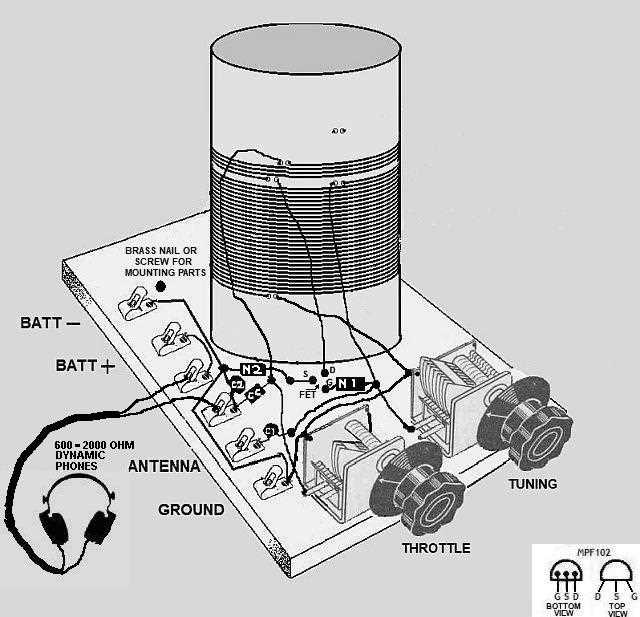
Begin by gathering the key components for a basic radio receiver. You will need an antenna, a coil of wire, a diode, and a pair of earphones. The antenna collects the incoming electromagnetic waves, while the coil, typically wound around a core, tunes to specific frequencies. The diode serves as the rectifier, and the earphones convert the electrical signal into sound.
Start by winding the coil. Use thin, insulated copper wire and wrap it around a cylindrical object like a plastic tube. Aim for about 50-100 turns to create the necessary inductance. Make sure the windings are tight and evenly spaced to ensure proper signal reception. The number of turns will affect the tuning range, so adjust accordingly to find the best reception.
Next, connect the antenna to one end of the coil. The other end of the coil will be connected to the diode. A germanium diode works best due to its low forward voltage, which is suitable for weak signals. Attach the anode of the diode to the coil and the cathode to the earphones. The diode should be oriented correctly to allow current to flow in only one direction.
Now, connect the earphones to the other part of the circuit. Make sure they are good quality, as low-impedance earphones are needed to hear the weak signal clearly. The earphones will act as a load for the rectified signal, converting it into sound. Ensure the connections are secure, and no wires are loose or touching other components.
Once the components are in place, test the receiver by adjusting the coil to tune into different frequencies. You may need to reposition the antenna for better reception, especially when tuning to weak stations. The signal strength can vary depending on the antenna’s position and the coil’s inductance.
Lastly, verify the system’s functionality by listening for audio. If the sound is weak, try adjusting the number of coil turns or the antenna’s position. Troubleshoot by checking all connections and ensuring the diode is properly placed. Fine-tuning each component will help you build a reliable and simple radio receiver.