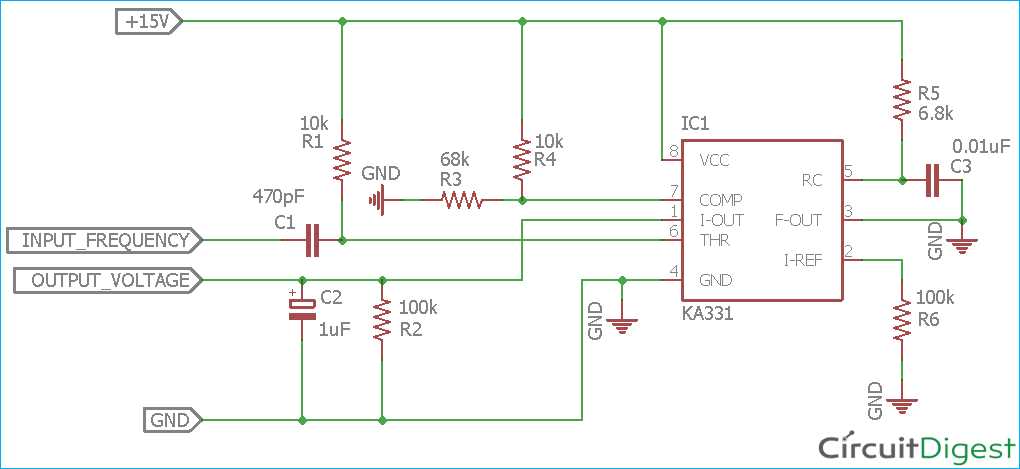
Connect the input signal directly to the timing module to generate a proportional analog response. Ensure the waveform amplitude does not exceed the module’s maximum rating to avoid distortion or damage.
Choose precision resistors and capacitors to maintain linearity and reduce error across the range of measurements. Variations in component values can significantly affect the accuracy of the resulting analog level.
Stabilize the reference supply using a low-noise regulator. This minimizes fluctuations that could introduce ripple or drift in the output signal, ensuring consistent readings over time.
Test the system using known input frequencies and measure the corresponding output with a calibrated meter. Adjust scaling resistors if the output deviates from the expected proportionality.
Isolate all sensitive connections and shield the module from electromagnetic interference to prevent spurious signals from affecting performance. Use twisted-pair cables for signal lines when possible.
Document all connections and component values for future reference or replication. Keeping a detailed log allows quick troubleshooting and ensures consistent performance when reproducing the setup.
Signal to Analog Output Module Guide
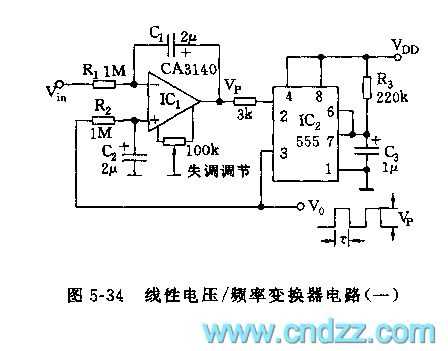
Connect the input waveform directly to the timing stage while ensuring the signal amplitude remains within safe limits. Overvoltage can distort the output and damage sensitive components.
Select precision resistors and capacitors to maintain consistent scaling across the measurement range. Minor variations in component values can introduce significant error in the proportional output.
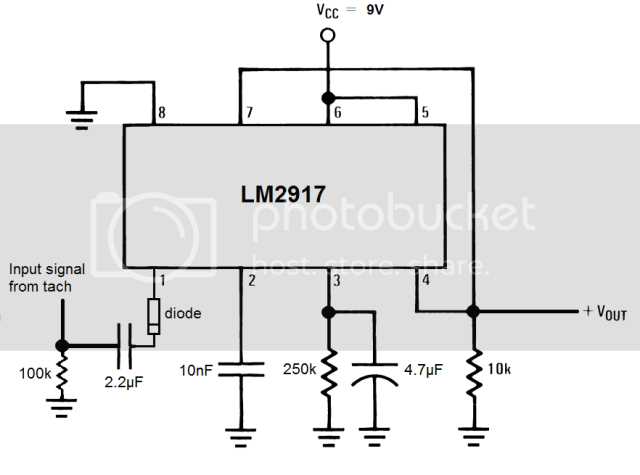
Stabilize the reference supply with a low-noise regulator. This reduces ripple and drift in the analog output, providing more reliable readings for measurement devices.
Verify performance using known signal sources and monitor the corresponding analog response with a calibrated meter. Adjust scaling components if the output deviates from expected linearity, and document all settings for future reference.
Selecting Components for Accurate Conversion
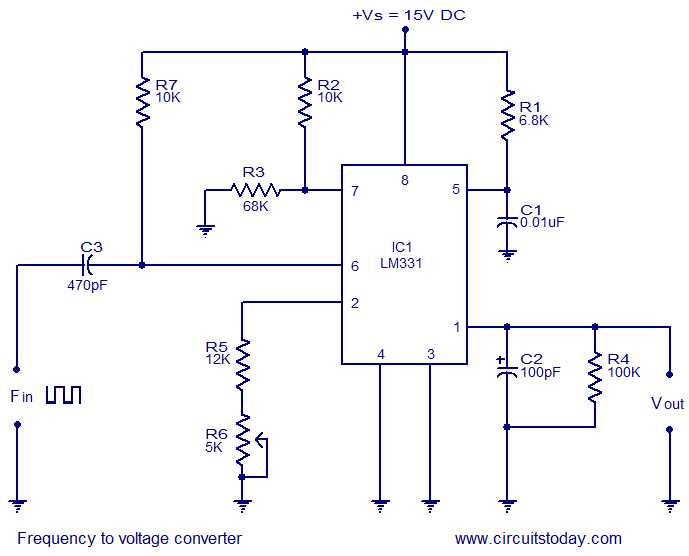
Choose precision resistors with 0.1% tolerance to maintain consistent scaling of the analog output. Standard 1% resistors can introduce measurable error at higher input rates, affecting the linearity of the response.
Use low-leakage capacitors for the timing and filtering stages. Film or ceramic types are preferred over electrolytic for stability across temperature changes and long-term operation.
Pick operational amplifiers with low offset and low drift characteristics. These ensure the analog response remains proportional across varying input signal conditions without introducing baseline errors.
Verify component ratings against maximum expected signal amplitude and ensure each can handle current without thermal stress. Document selected values to maintain repeatable performance during assembly or future upgrades.