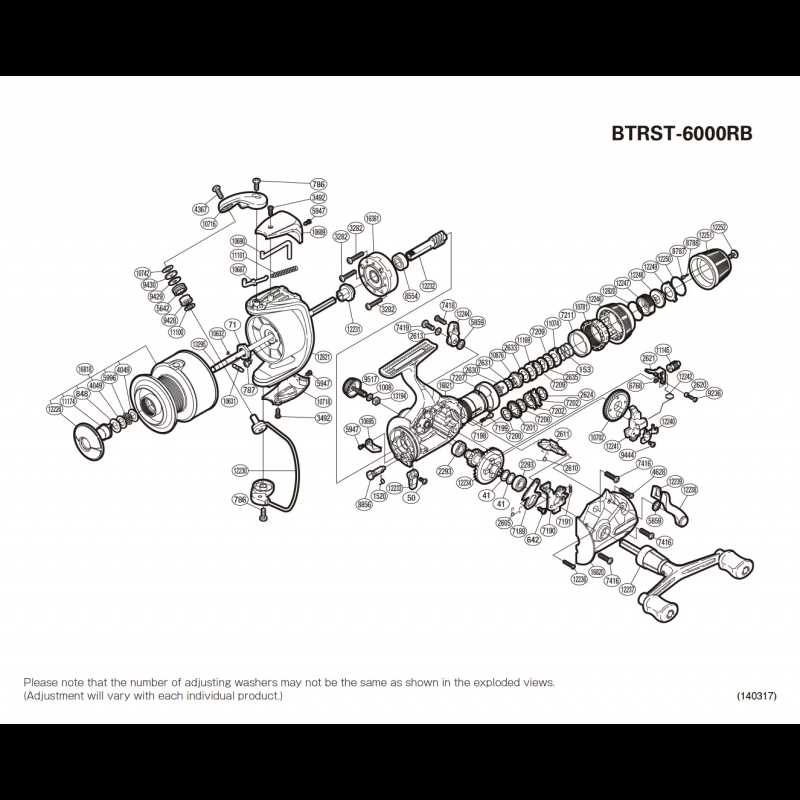
For those looking to maintain or repair their casting mechanisms, it’s vital to get acquainted with its components. A solid grasp of how the individual elements interact ensures better performance and longevity. Focusing on the gear, brake system, and spool setup will help prevent common issues like backlashes or line tangles.
One of the first steps is examining the drive assembly, which controls the spool’s rotation. It consists of gears and bearings that need to be lubricated regularly to ensure smooth operation. Regular checks will prevent wear that can lead to inconsistent casting distance or erratic retrieval.
Another area to focus on is the tension adjustment mechanism. This component regulates the spool’s speed during the cast and affects how the line is released. Keeping it calibrated is essential to avoid sudden jerks or backlash that can ruin a good cast. Make sure the brake system is correctly aligned, as it governs the deceleration of the spool after the line is released.
Finally, ensure that the spool itself is in optimal condition. It should move freely without any wobble, and the drag system should apply the right amount of resistance during the fight. Any misalignment or friction can decrease your casting efficiency, making it more difficult to handle larger catches.
Key Components of a Casting Mechanism
The handle should be firmly secured to the axle, allowing smooth operation with minimal wobbling. Ensure the spool tension knob is adjusted to your preferences, controlling the tightness of the spool during use.
The brake system consists of several parts that help prevent backlashes. The centrifugal brake, typically located inside the spool, uses a series of small pins that engage as the spool accelerates. These pins create friction, slowing down the spool. The magnetic brake works similarly but applies adjustable magnetic force to control speed more precisely.
Inside the gear housing, the main gear and pinion work together to translate the rotation of the handle into the movement of the spool. These gears must mesh smoothly to avoid any jerky motion. Check the grease regularly to ensure smooth operation.
The spool itself should spin freely on its bearings. It’s important to clean the bearings regularly and replace them if any rust or damage occurs. A smooth spool is key to minimizing line tangles and achieving longer casts.
Another critical component is the thumb bar, which disengages the spool from the gear system when pressed, allowing you to cast. It’s essential that this mechanism engages and disengages smoothly without resistance or delay.
The drag system, consisting of washers and a drag star or lever, adjusts the amount of resistance applied to the line when pulling out. Keep the drag washers clean and lubricated for optimal performance, as well as ensure the drag system is set to an appropriate tension for the type of fishing.
For maintenance, pay attention to the bushings and bearings. These smaller components ensure everything runs smoothly but can wear down over time. Regularly inspect them and replace if necessary to keep the system functioning at its peak.
Identifying Key Components of a Baitcasting Reel
The frame is the foundation, providing support for all other mechanisms. It’s typically made of aluminum or graphite for strength and lightness.
The spool is the core element for line storage, designed to hold the fishing line while ensuring smooth and even casting. It rotates as the line is released or retrieved.
The handle and knob allow for reel manipulation, providing leverage during retrieval. These components are designed for comfort, with materials like rubber or EVA cushioning the grip.
The drag system controls the tension on the line, helping to prevent breakage when a fish pulls hard. It’s often made up of washers or discs, which can be adjusted for varying resistance levels.
The gear mechanism is responsible for turning the spool during line retrieval. These are typically made of brass or stainless steel to withstand the forces involved.
The levelwind system distributes the line evenly across the spool. It’s a small arm that moves back and forth as the spool rotates, ensuring consistent lay of the line.
The brake system prevents backlashes by controlling the speed of the spool’s rotation. Magnetic or centrifugal brakes are common, with adjustable settings for different conditions.
The bearing system ensures smooth operation by reducing friction between moving parts. Higher-quality reels use ball bearings made of stainless steel or ceramic for durability.
The clutch mechanism is used for switching between free-spool and retrieval modes, allowing the spool to rotate freely when casting.
The anti-reverse switch locks the handle, preventing backward movement when retrieving. This feature ensures that the line is not lost if a fish pulls hard on the line.
How to Troubleshoot Common Issues in Fishing Reel Mechanisms
Check for any misalignment or excessive wear in the gear system. If the gears are grinding or slipping, inspect them for any damage. Replace worn components immediately to avoid further strain.
If the line guide malfunctions, it may cause uneven spooling. Ensure that the line guide is properly lubricated and moves freely. If the guide is stuck, disassemble the unit and clean it thoroughly. Reassemble with fresh lubricant, ensuring smooth movement across the line.
Sluggish casting often occurs due to friction in the spool assembly. Check the spool bearings for wear and replace them if necessary. Also, verify that the drag system is functioning properly. If the drag is too tight or too loose, it will affect casting distance and accuracy. Adjust accordingly to maintain consistent tension.
Pay attention to the spool tension knob. If it’s too tight or loose, the casting distance can suffer. Adjust the knob to achieve a balance between smooth casting and proper braking. Ensure that the spool tension is set appropriately for the line weight you are using.
If the braking system doesn’t engage properly, inspect the brake pads for wear. Clean or replace them as needed. Also, make sure that the adjustment dial is set correctly for your casting style and environment.
Inspect the handle and drag assembly for tightness. A loose handle can lead to inefficient power transfer, while a faulty drag system will cause inconsistent performance. Tighten or replace components as needed to ensure smooth operation.
For smooth retrieval, verify the integrity of the anti-reverse mechanism. If it’s malfunctioning, check for debris or damage that may be impeding the function. Clean or replace the part as needed.